24/7 Air Purification: Real Home Benefits
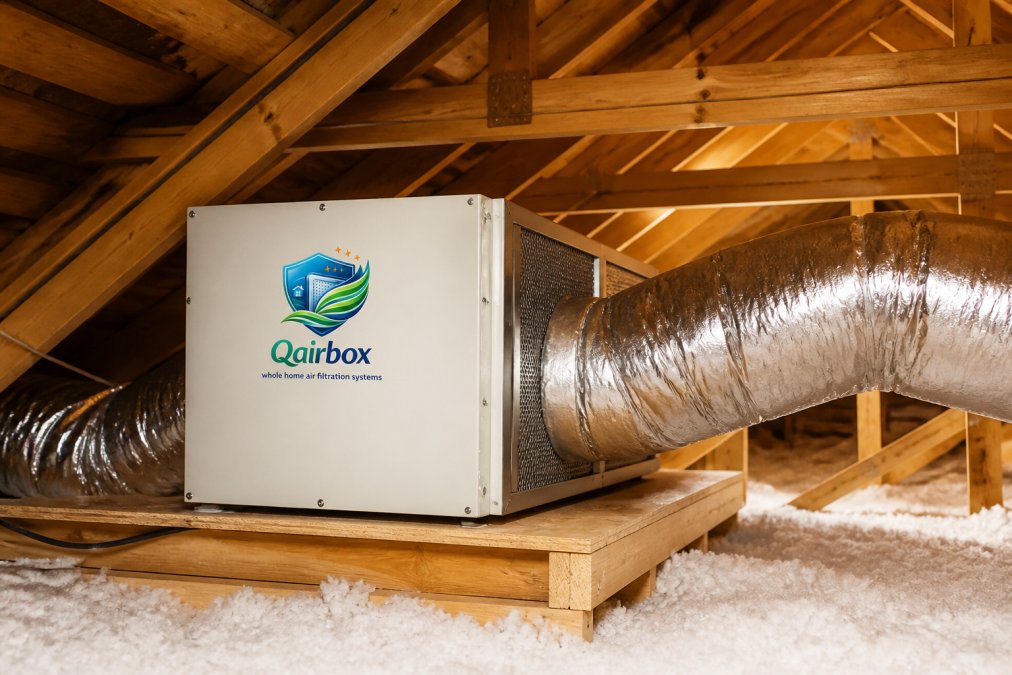
Table of Contents
- What 24/7 Air Purification Actually Does for Your Home
- Continuous Operation vs. Running a Purifier Only When You're Home
- Indoor Air Quality for Allergy Sufferers: Why Consistency Wins
- How to Reduce Dust in the Home with Whole-Home Filtration
- The Benefits of Hospital-Grade Air Filtration at Home
- Energy Use, Noise, and Maintenance: The 24/7 Practicalities
- The Long-Term Payoff: Sleep, Costs, and Peace of Mind
- Conclusion: Is Continuous Whole-Home Purification Worth It?
- Frequently Asked Questions
Last Updated: September 8, 2026
What 24/7 Air Purification Actually Does for Your Home
Indoor air is often two to five times more polluted than outdoor air, a gap that widens in tightly sealed desert homes. The benefits of 24/7 air purification for homes go far beyond fresher-smelling rooms; consistent operation captures airborne particles continuously rather than allowing them to settle and recirculate. At Qairbox, we engineer standalone whole-home systems that run quietly in the attic around the clock.
When a system runs only intermittently, pollutant levels rebound quickly between cycles. Continuous operation keeps contaminant concentrations low at all times, which matters most for vulnerable household members. Below, we break down what that consistency delivers, from allergy relief to lower dust accumulation, and what it costs in energy and upkeep.
Continuous Operation vs. Running a Purifier Only When You're Home
Most people assume they only need purification while awake and active in the house. That assumption misses where real exposure happens: pollutant sources like cooking fumes, cleaning products, and pet dander release particles throughout the day, and dust accumulates whether anyone is home to notice it.
Running a system only during waking hours creates a sawtooth pattern: air quality improves while the unit runs, then degrades when it shuts off. Continuous operation smooths out those peaks and valleys, maintaining a steady baseline of clean air.
Consistency also protects you while you sleep, when respiratory rate slows and your body is most vulnerable to airborne irritants. A whole-home system operating 24/7 means every room, including bedrooms with closed doors, receives the same treatment.
Indoor Air Quality for Allergy Sufferers: Why Consistency Wins
For allergy sufferers, indoor air quality hinges on reducing exposure to triggers like pollen, dust mites, and mold spores. Intermittent filtration gives those triggers time to accumulate to symptom-provoking levels, while consistent air purification keeps allergen concentrations low enough that many people notice fewer reactions.
Asthma triggers and allergy symptoms are dose-dependent; the more allergen particles you inhale, the stronger the response. A system that runs only a few hours a day allows particle counts to climb during the off period, exposing you to higher doses right when you walk through the door or wake up.
Consistency also helps with invisible pollutants. Volatile organic compounds off-gas continuously from furniture, paints, and household cleaners. A 24/7 whole-home system captures these chemical irritants as they are released. For families with young children or older adults, this steady reduction translates into fewer symptom flare-ups and more comfortable daily living.
How to Reduce Dust in the Home with Whole-Home Filtration
Dust is a mixture of skin cells, fabric fibers, soil tracked indoors, and airborne particles that drift in from outside. In desert climates, fine particulate matter makes dust accumulation a constant battle. Most homeowners respond by dusting and vacuuming more often, which addresses the symptom rather than the source.
To reduce dust in the home effectively, you must capture particles before they settle. Whole-home filtration does this at a central point, processing air from every room. When the system runs continuously, fewer particles remain airborne long enough to land on shelves, electronics, and bedding.
The practical payoff is measurable: less frequent dusting, fewer visible particles on surfaces, and less dust accumulation inside electronics and appliances. A standalone attic-mounted system is particularly effective because it draws air from the entire house through a single purification core.
The Benefits of Hospital-Grade Air Filtration at Home
Hospital-grade air filtration refers to systems capable of removing the smallest and most harmful airborne particles, including pathogens and ultrafine particulate matter. Its benefits at home extend beyond allergy relief to broader respiratory health and peace of mind.
High-efficiency filtration captures particles measured in fractions of a micron, including many airborne pathogens, smoke particles, and combustion byproducts. For homes near busy roads, wildfire-prone areas, or industrial zones, this level of filtration provides protection that standard furnace filters cannot match.
Bringing this technology home means your living space gets the same air treatment standard used in clinical environments. For households with immunocompromised members, severe allergy sufferers, or anyone recovering from respiratory illness, this margin of protection can be genuinely meaningful. A whole-home approach ensures that protection extends to every room.
Energy Use, Noise, and Maintenance: The 24/7 Practicalities
The most common hesitation about continuous operation is the assumed cost: higher energy bills, constant noise, and frequent filter changes. These concerns depend heavily on system design. Let's look at the actual mechanics of running a whole-home system around the clock.
The Real Energy Draw of Continuous Operation
A professionally installed, standalone whole-home system is engineered for efficiency. The primary energy consumer is the fan motor. A typical high-efficiency ECM (Electronically Commutated Motor) draws roughly 60 to 120 watts on its low setting, the mode used for 24/7 baseline filtration, comparable to a standard incandescent light bulb.
Running that motor 24/7 consumes approximately 43 to 86 kilowatt-hours (kWh) per month. The monthly operating cost is a stark contrast to the assumption that continuous purification will spike a utility bill.
The Environmental Impact: A Nuanced View
The instinctive concern is that running any appliance constantly increases your carbon footprint. However, a lifecycle assessment reveals a more complex picture.
First, producing a single, robust whole-home unit requires significantly less raw material and energy than manufacturing five or six separate portable purifiers. Second, one central unit with a single, larger filter and a high-efficiency motor will almost always consume less total energy than multiple portable units running simultaneously.
Third, there is the filter waste stream. While a whole-home filter is larger, it is replaced a few times a year. Portable units often require two or three filter changes per year, per unit. For a home with five portables, that is 10 to 15 filters discarded annually, compared to 2 to 4 for a single whole-home system.
Noise: The Out-of-Sight Advantage
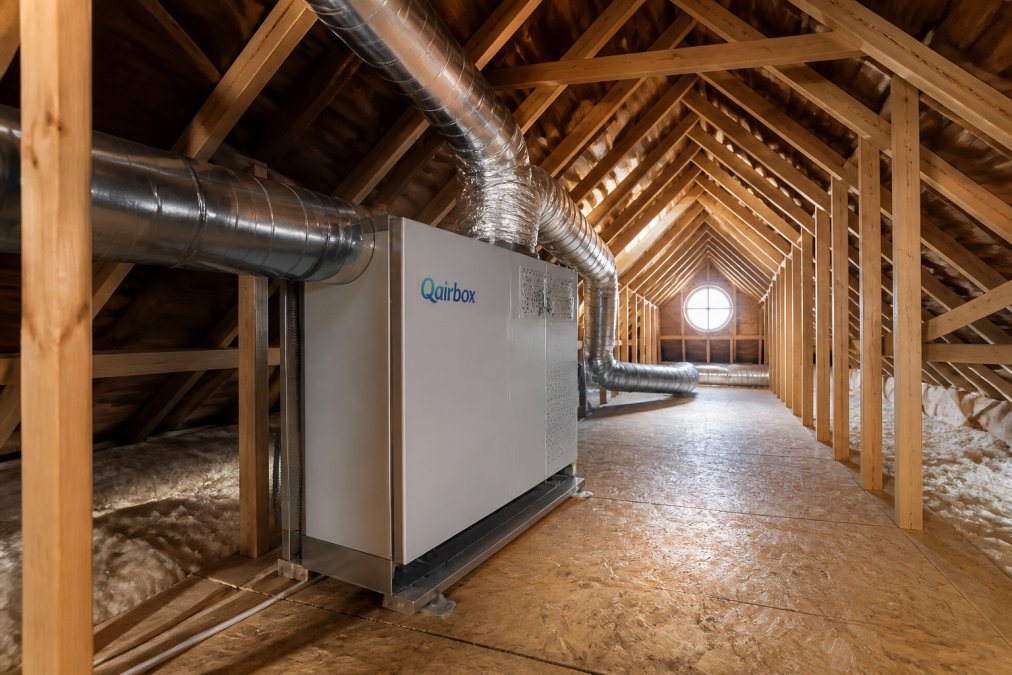
Noise is a critical factor for 24/7 operation, especially for light sleepers. The advantage of an attic-mounted system is that the primary noise source, the fan and motor, is physically isolated from living spaces. The sound that transmits through the ceiling is typically a low-frequency hum.
Most homeowners report that the sound of a properly installed attic system is imperceptible over normal household ambient noise. With a whole-home system, you do not have to choose between clean air and a quiet bedroom.
Maintenance: A Few Times a Year, Not a Monthly Chore
Filter maintenance for a whole-home system is straightforward. The pre-filter may need a quick vacuum or rinse every 2-3 months. The main high-efficiency filter typically needs replacement every 6 to 12 months, depending on the dust load in your climate.
This schedule is a significant simplification compared to managing multiple portable units, each with its own filter replacement indicator and staggered schedule.
The Long-Term Payoff: Sleep, Costs, and Peace of Mind
The case for continuous purification strengthens when you look beyond immediate comfort to long-term outcomes. This section examines the specific mechanisms linking air quality to sleep, the financial logic of a single system, and the intangible value of a healthier home.
The Sleep Connection: More Than Just White Noise
Most articles mention that clean air helps you sleep, but they rarely explain why. During sleep, your respiratory rate slows, and your body's defenses against inhaled irritants are less active. If you are sensitive to dust mites, pet dander, or pollen, elevated nighttime particle levels can trigger nasal congestion or a subtle increase in airway resistance. This may not wake you fully, but it fragments your sleep architecture, pulling you out of deep, restorative stages.
Second, there is the acoustic environment. A whole-home system running at low speed in the attic produces a consistent, low-level ambient hum that acts as white noise, masking sudden, disruptive noises. This can improve sleep continuity, particularly for light sleepers.
By addressing both the chemical and acoustic environment, a 24/7 whole-home system contributes to more restful, uninterrupted sleep, which cascades into improved mood, better focus, and a stronger immune system.
The Financial Logic: One System vs. Many
From a pure cost perspective, a professionally installed whole-home system simplifies your air quality strategy. Consider the total cost of ownership over a 10-year horizon.
A homeowner seeking whole-home coverage with portable units would need multiple devices, each requiring frequent filter replacements. A whole-home system requires fewer filter changes over the same period.
There is also the durability factor. Portable units are often moved and bumped into furniture, while a professionally installed, stationary attic unit is protected from daily wear and tear, leading to a longer operational lifespan.
The Value of a Clean Baseline
There is also a less tangible benefit: peace of mind. Knowing that your home's air is being cleaned continuously, even when you are away or asleep, removes the mental load of remembering to turn units on and off.
A consistent reduction in airborne dust also means less frequent deep cleaning, less dust accumulation inside computers and entertainment centers, and a cleaner overall environment.
Conclusion: Is Continuous Whole-Home Purification Worth It?
The benefits of 24/7 air purification for homes come down to a simple principle: consistent exposure to clean air produces consistently better outcomes. Intermittent operation leaves gaps where allergens, dust, and chemical irritants accumulate, while continuous whole-home filtration maintains a steady baseline throughout every room.
Qairbox delivers this through a standalone system professionally installed in your attic, running quietly on its own without touching or modifying your existing HVAC or A/C. It is designed for hot, tightly sealed desert homes where indoor air quality is hardest to maintain, and it requires less maintenance than juggling multiple room purifiers. If you are ready to breathe easier at home, schedule a consultation with Qairbox to learn how whole-home purification can fit your family's needs.
Frequently Asked Questions
Should you run an air purifier 24/7?
Yes, running a whole-home air purification system continuously is the most effective way to maintain clean indoor air. Airborne pollutants like dust, dander, and VOCs are generated constantly through daily activities, cooking, and cleaning. A system that cycles on and off allows contaminant levels to build up between cycles. A dedicated standalone system designed for 24/7 operation, like an attic-mounted whole-home purifier, keeps particulate matter consistently low without putting strain on your HVAC equipment.
Do home air purifiers really make a difference?
Yes, but the difference depends on the system's capacity and placement. Portable room units only clean the air in that specific room, leaving the rest of the home untreated. A standalone whole-home system, professionally installed in the attic, is designed to process air for the entire square footage of the house. This approach ensures every room, including those with closed doors, benefits from the same level of filtration, which is critical for reducing airborne allergens and dust accumulation throughout the home.
How does continuous air purification improve sleep quality for allergy sufferers?
Continuous air purification helps reduce nasal congestion, sneezing, and itchy eyes that often disrupt sleep. When a purification system runs all night, it maintains a low level of airborne allergens like pollen and dust mite debris. This consistent environment allows your respiratory system to relax, leading to fewer nighttime awakenings and more restorative sleep. For families in dusty climates, this means waking up feeling rested rather than congested.
Will a standalone attic-mounted system affect my energy bills?
A professionally installed standalone system is designed to be energy-efficient, but the exact impact on your bill depends on your local utility rates and home size. Unlike portable units that run inefficiently in a single room, a whole-home system is sized for your specific square footage. Many homeowners find the cost is offset by lower dust-related cleaning and the ability to run their main HVAC system less frequently, as the purifier handles air quality independently.