Air Purification for Pet Odors: Does It Really Work?
Table of Contents
- How Air Purification Reduces Pet Odors
- Best Air Purifier for Pet Odors: What Matters Most
- Standalone Whole-Home Purification: The Effective Approach
- How to Remove Pet Smell From Your House: A Practical Strategy
- The Science Behind Volatile Organic Compounds and Pet Waste
- Filter Replacement Cycles and Long-Term Value
- Frequently Asked Questions
Last Updated: August 31, 2026
How Air Purification Reduces Pet Odors
Pet odors signal that volatile organic compounds and microscopic particles are circulating through your home. When pets spend time indoors, they shed dander, leave traces of waste, and release odor-causing molecules that linger long after the initial source is gone. A whole-home air purification system addresses this differently than portable units or standard filters. Rather than cleaning one room at a time, a standalone system works continuously throughout your entire home, capturing airborne particles and neutralizing odor molecules at the source.
Understanding pet odor sources
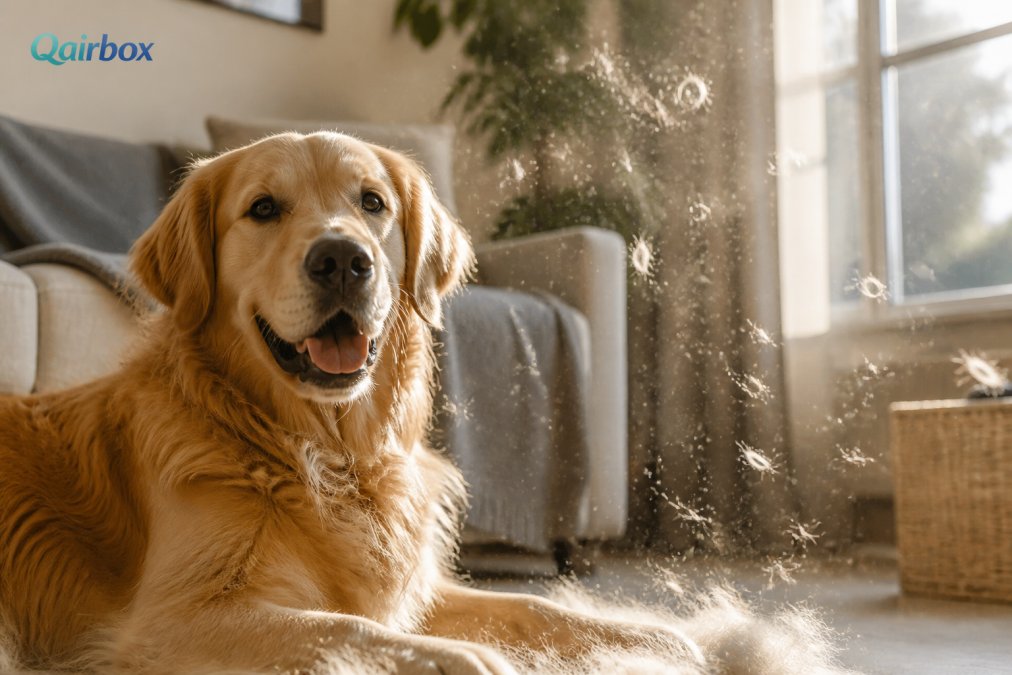
Pet odors come from multiple sources. Urine contains urea and uric acid, which break down into volatile organic compounds that create ammonia-like smells. Feces release hydrogen sulfide and other gases. Pet dander, the dead skin cells your pet sheds continuously, carries proteins that trigger allergic reactions and contribute to indoor air quality problems. Saliva, sweat, and bacteria on your pet's skin all emit odor-causing molecules into the air.
These particles don't simply disappear. They settle on surfaces, get trapped in fabrics, and recirculate through your home's air. In tightly sealed homes where air exchange happens slowly, a single day of pet activity can leave microscopic pollutants suspended in your indoor air for weeks. That's why a room-level approach often fails, it addresses one area while odors continue circulating elsewhere.
The role of activated carbon and HEPA filtration
Two filtration technologies work together to eliminate pet odors: activated carbon and HEPA filters. HEPA filtration captures particulate matter, the visible and microscopic particles that carry odor molecules. A true HEPA filter removes 99.97% of particles 0.3 microns or larger, including pet dander, dust, and allergens.
Activated carbon does the chemical work. Its porous microscopic structure creates enormous surface area that traps volatile organic compounds, the actual odor molecules themselves. As air passes through a carbon bed, odor-causing molecules adhere to the carbon surface through adsorption. A deeper carbon layer in a whole-home system can handle continuous odor neutralization across an entire residence for months before requiring replacement, compared to weeks for thin portable filters.
The combination is essential. HEPA alone captures particles but leaves odor molecules in the air. Carbon alone doesn't remove particulate matter that carries allergens and dander. Together, they address both visible and invisible components of pet odors. Most pet owners notice results within days.
Best Air Purifier for Pet Odors: What Matters Most
When evaluating air purification for pet odors, focus on three factors: the depth of carbon filtration, the efficiency of HEPA capture, and whether the system actually reaches every room in your home.
Carbon filter depth and odor-neutralization capacity
Carbon filter depth directly determines how long your system can neutralize odors before saturation. A thin carbon layer, common in portable units, becomes saturated quickly in homes with multiple pets or persistent odor sources. Once saturated, the carbon stops adsorbing new odor molecules.
A whole-home system uses a significantly deeper carbon bed, allowing it to function for 6-12 months or longer depending on the number of pets and home size. When carbon becomes saturated, it stops working, but you won't necessarily notice immediately. A deeper carbon bed extends the period before this happens and handles odor spikes better. If you cook heavily or have multiple pets, you need carbon depth that can absorb those peaks without immediate saturation.
HEPA filtration for pet dander and allergens
HEPA filtration addresses the particle side of the odor problem. Pet dander is a major allergen and odor carrier. When you remove dander from the air, you're removing one of the primary sources of pet-related airborne contaminants. A true HEPA filter captures 99.97% of particles at 0.3 microns, where most pet allergens cluster.
The effectiveness of HEPA filtration depends on air flow. A whole-home system's air exchange rate, how many times per hour the entire home's air passes through the filter, determines real-world effectiveness. A system that cycles your home's air multiple times daily removes far more dander and particulates than a portable unit that only cleans one room.
For allergy-sensitive households, HEPA filtration is non-negotiable. Pet dander is one of the most common indoor allergens. Removing it from the air reduces symptoms and improves overall indoor air quality, especially for children and older adults who spend significant time indoors.
Standalone Whole-Home Purification: The Effective Approach
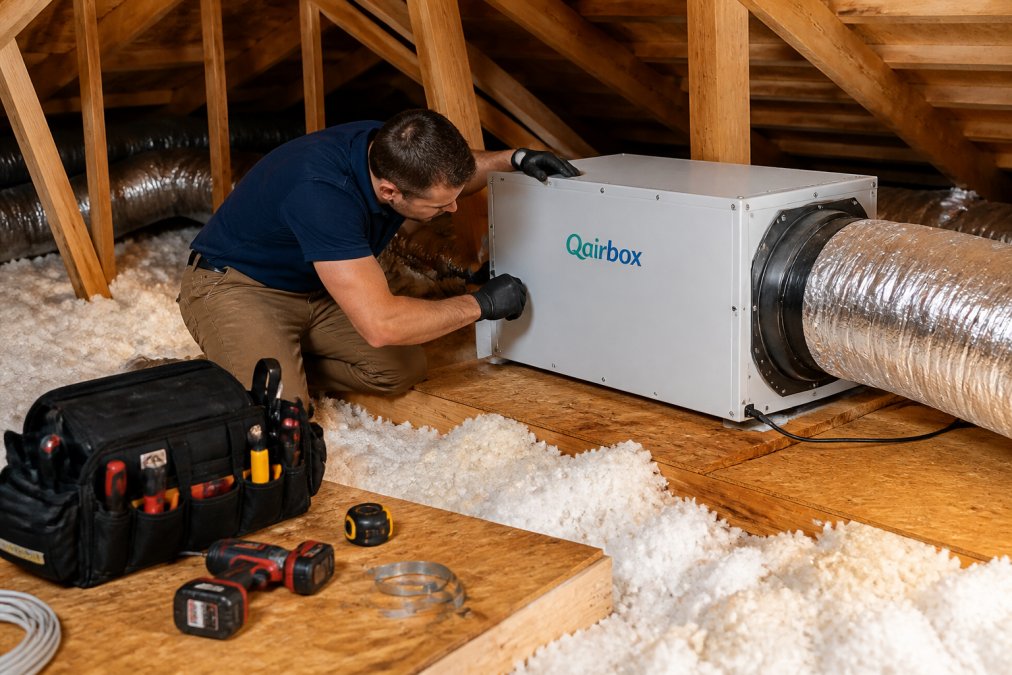
A standalone whole-home air purification system operates independently from your home's existing systems. It's professionally installed in your attic, out of sight and out of mind, running 24/7 on its own schedule. It doesn't modify, integrate with, or depend on your HVAC or air conditioning system.
For pet odors specifically, a standalone system excels because it can dedicate itself entirely to odor neutralization. It doesn't compromise on carbon depth to fit into existing ductwork. It doesn't rely on your furnace running to push air through the filter. It simply works continuously until the carbon is saturated and needs replacement. For homeowners in desert climates with tightly sealed homes, this independence is essential, you get whole-home purification without the complexity and limitations of system modifications.
How to Remove Pet Smell From Your House: A Practical Strategy
Eliminating pet odors requires identifying where the odors are strongest, then ensuring your purification system is actually reaching those areas.
Identifying problem areas and odor sources
Pet odors concentrate in specific zones. Litter boxes create obvious hotspots, but so do sleeping areas where pets spend hours, spots where accidents have occurred, and anywhere food or water bowls sit. In homes with multiple pets, these zones multiply. Odors don't stay localized, they circulate and settle throughout your home over time.
Before installing any purification system, walk through your home and identify where you notice smells strongest. These are your baseline areas. After purification is running, check the same spots regularly. You should notice a gradual decline in odor intensity over the first week or two as the system cycles air multiple times and captures accumulated particles and odor molecules.
Some odor sources are hidden. Urine that's soaked into subflooring or walls will continue releasing odor molecules into the air for months or years until the source material is treated or replaced. A purification system can't fix that underlying problem, but it can manage the airborne odors while you address the source.
Whole-home air circulation and filter maintenance
A whole-home system works by continuously circulating air throughout your home. Unlike a portable unit that only cleans one room, a standalone system pulls air from multiple areas, filters it, and returns it. This continuous circulation ensures the same air passes through the filter multiple times, with each pass removing more contaminants.
Filter maintenance is straightforward. Your carbon filter will eventually saturate, and you replace it, no complicated procedures, no system modifications. A deeper carbon bed means fewer replacements than portable units, reducing both cost and hassle. Many homeowners find that quarterly or semi-annual filter checks keep their system running optimally.
The maintenance advantage over multiple portable units is significant. A household with several portable purifiers needs to monitor and replace filters for each unit separately. A single whole-home system has one filter to manage. For allergy-sensitive families and homes with young children, that simplicity matters.
| Purification Type | Filter Replacement Frequency | Coverage Area | Maintenance Load |
|---|---|---|---|
| Portable unit | Every 2-3 months (pet households) | Single room | High (multiple units) |
| Whole-home standalone | Every 6-12 months | Entire home | Low (one system) |
The Science Behind Volatile Organic Compounds and Pet Waste
Volatile organic compounds, or VOCs, are the molecules you smell. They're not visible, but they're absolutely real, and understanding them explains why simple air circulation doesn't solve pet odor problems.
Pet waste produces several VOCs. Ammonia from urine is the most obvious. Hydrogen sulfide from feces creates that rotten-egg smell. Trimethylamine smells fishy or musty. Indole and skatole, produced by gut bacteria in feces, smell fecal and unpleasant. These chemical compounds persist in your home's air until something removes them.
VOCs are volatile, they evaporate readily and stay suspended in air. They don't settle like dust or dander. They circulate with your home's natural air movement and your HVAC system's operation. A fan or open window moves them around but doesn't remove them. Only activated carbon filtration actually captures these molecules and prevents them from recirculating.
This is why a whole-home system matters for pet households. Continuous operation ensures VOCs are being captured repeatedly. The deeper carbon bed means the system can handle the continuous stream of odor molecules without rapid saturation. In a typical pet household, odor molecules are released continuously. A purification system that runs 24/7 with adequate carbon depth actually keeps pace with that continuous release.
Filter Replacement Cycles and Long-Term Value
Filter replacement is where homeowners often underestimate the true cost of air purification. A portable unit might seem inexpensive initially, but ongoing filter costs add up quickly, especially in pet households where filters saturate faster.
A whole-home system's filter lasts longer because of the deeper carbon bed and dedicated design. Rather than replacing filters every 2-3 months like portable units, a whole-home system might need replacement every 6-12 months depending on your household. That's fewer replacements, less hassle, and a more manageable total cost of ownership.
An underpowered or poorly maintained portable unit doesn't eliminate odors effectively, so you end up buying multiple units or replacing filters constantly in a losing battle. A professionally installed whole-home system is sized to your home and designed to handle the odor load in pet households. You get results rather than a cycle of diminishing returns.
For families with allergy-sensitive members, the health benefit adds another dimension. Reducing airborne allergens and odors improves indoor air quality and potentially reduces allergy symptoms. Many homeowners in desert climates find that a whole-home system becomes cost-effective within the first year or two when you factor in the elimination of multiple portable units and the reduction in filter replacements.
Pet odors are a persistent problem because they're a combination of particulate matter and volatile organic compounds that circulate continuously through your home. A whole-home air purification system addresses both components with dedicated HEPA and activated carbon filtration running 24/7. A standalone system operates independently in your attic, delivering hospital-grade purification throughout your entire home without touching your existing systems. If you're dealing with persistent pet odors and want a low-maintenance solution that actually works, schedule a consultation with Qairbox to see how whole-home air purification can transform your indoor air quality.
Frequently Asked Questions
Do air purifiers actually eliminate pet odors?
Yes, but only if they use activated carbon filtration deep enough to neutralize volatile organic compounds from pet waste and dander. Standard HVAC filters alone do not remove odors, they catch particles. A whole-home air purification system with substantial carbon bed depth can neutralize odor-causing molecules throughout your entire house, not just in one room. The key is continuous air circulation and sufficient contact time between air and carbon.
What is the best air purifier for pet odors?
The best air purifier for pet odors combines a thick activated carbon filter with HEPA filtration and whole-home coverage. Look for systems designed to handle the air exchange rate of your entire home, not just a single room. Standalone whole-home systems installed professionally deliver better odor control than portable units because they process all air continuously. Ensure the carbon bed is deep enough and the system runs 24/7 to maintain consistent odor neutralization.
How often do I need to replace filters in a pet-odor air purification system?
Filter replacement frequency depends on pet activity, home size, and air quality. Homes with multiple pets or high indoor odor sources may need carbon filter changes every 3-6 months, while others can extend to 6-12 months. Pre-filters trap pet hair and larger particles, extending carbon filter life. A whole-home system reduces the burden compared to multiple room purifiers because it processes air centrally. Check your system's air quality index readings to gauge when replacement is needed.
Will a whole-home air purification system work in a tightly sealed home?
Yes, a standalone whole-home air purification system is ideal for tightly sealed homes common in desert climates. Because it operates independently of your existing HVAC system, it does not interfere with your home's heating or cooling efficiency. The system circulates and purifies air continuously without requiring modifications to your current setup. This means you get odor and allergen reduction while maintaining your home's energy efficiency and climate control.