Best Air Purifier for Cat Litter Box Odors
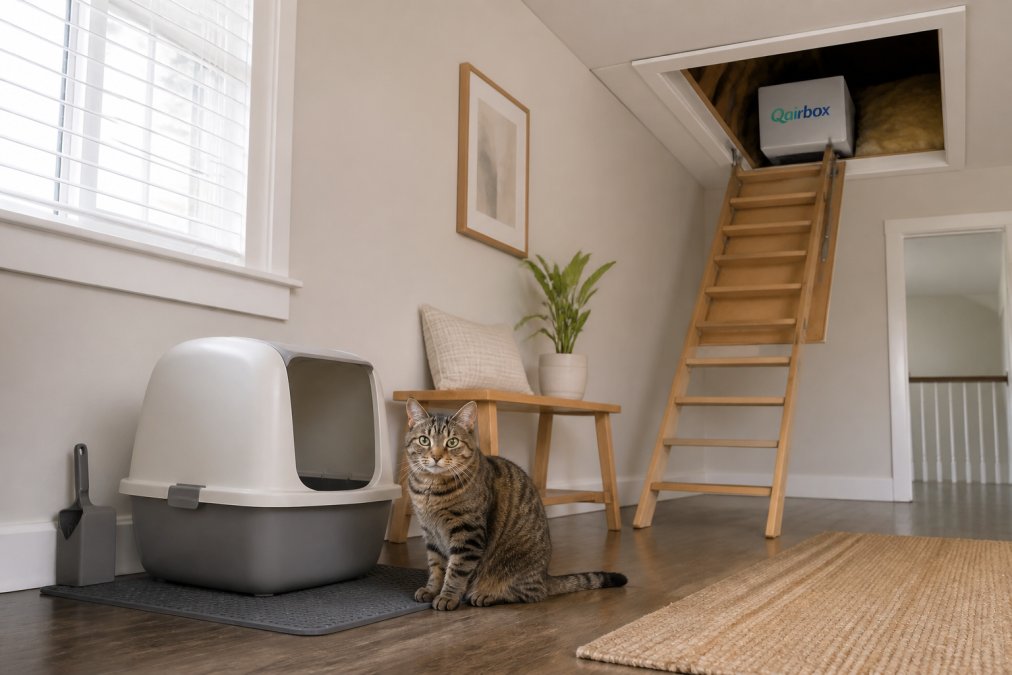
Table of Contents
- Why Cat Litter Odors Linger in Your Home
- How to Remove Pet Odors from Your House: A Whole-Home Approach
- Activated Carbon and HEPA Filtration: What Actually Works
- Standalone Air Purification vs. Portable Units: Which Solves the Problem
- How Whole-Home Systems Handle Ammonia and Airborne Litter Dust
- Maintenance and Filter Longevity in Pet Households
- Conclusion: A Permanent Solution to Litter Box Odors
Last Updated: August 25, 2026
Why Cat Litter Odors Linger in Your Home
Cat litter odors are notoriously difficult to eliminate because they originate from multiple sources and spread throughout your living space in ways most homeowners underestimate. The ammonia smell comes from urine breaking down in litter, while fecal odors release volatile organic compounds that diffuse into the air and settle into fabrics, carpeting, and walls. Unlike cooking smells or temporary odors, litter box emissions persist because they're continuously generated and airborne particles carry them far beyond the immediate area.

The real problem isn't just the smell itself, it's that traditional solutions only address the surface. Scented litters, baking soda, and frequent scooping help, but they don't stop airborne particles from circulating through your home. In tightly sealed homes (especially common in desert climates where air conditioning keeps windows closed year-round), these odor molecules get trapped and recirculated by your existing HVAC system, making the problem worse over time.
At Qairbox, we've analyzed how odors behave in sealed homes, and the pattern is consistent: standard room-level solutions fail because they're fighting a whole-home problem. A single portable air purifier in the bedroom or living room can't capture what's already distributed throughout your entire house. You're treating symptoms, not the source.
The best air purifier for cat litter box odors must address both the immediate source and the systemic circulation problem. This means capturing ammonia and volatile compounds at the point where air moves through your home, not just filtering a single room.
How to Remove Pet Odors from Your House: A Whole-Home Approach
Removing pet odors effectively requires understanding that odors travel through air circulation. In homes with central air systems, odors move through ductwork and return vents, spreading far beyond the litter box location. The most effective approach addresses three layers: source control, air circulation, and filtration.
Start with source control, this is non-negotiable. Scoop litter daily, use unscented or lightly scented litter (heavily perfumed litters often mask rather than eliminate odors), and consider litter boxes with covers or hood designs that contain dust. Some households benefit from multiple smaller litter boxes distributed throughout the home, which reduces concentration of odors in any single area.
Next, understand your home's air circulation. In sealed homes, air naturally moves from living areas through return vents back to your HVAC system. This circulation is constant, whether your air conditioning is running or not, air is moving. Any purification system must intercept this airflow to be effective.
This is where the distinction between portable units and whole-home solutions becomes critical. A portable air purifier placed in one room captures odors only in that immediate space. The rest of your home's air continues circulating untreated. For cat litter odors, which are distributed throughout the entire house, this creates an endless cycle where the purifier cleans one room while odors from other areas keep replenishing the air.
A whole-home approach means filtration happens at the point where all your home's air circulates, not in isolated rooms. This stops odors before they settle into furniture, clothing, and walls.
Activated Carbon and HEPA Filtration: What Actually Works
Two filter technologies dominate air purification: HEPA filters and activated carbon. They work differently, and for cat litter odors, you need both.
HEPA filtration captures particulate matter, the dust, dander, and litter particles suspended in air. HEPA filters trap particles as small as 0.3 microns, which includes airborne litter dust and pet dander (the EPA). This is essential for households with allergy-sensitive members, particularly children and older adults who react to pet allergens. A high-quality HEPA filter removes visible dust and fine particles that contribute to respiratory irritation.
However, HEPA alone doesn't eliminate odors. Odor molecules are gases, not particles. They pass straight through a HEPA filter because they're too small and too light to be trapped by mechanical filtration.
Activated carbon solves this problem. Activated carbon is treated charcoal with a massive internal surface area, one pound of activated carbon can have a surface area exceeding 3,000 square feet (peer-reviewed research). Odor molecules (ammonia, volatile organic compounds from fecal matter, and other gas-phase contaminants) adhere to this surface through a process called adsorption. This is why activated carbon is the industry standard for odor removal.
The distinction matters: absorption is when a substance soaks into something (like water into a sponge). Adsorption is when molecules stick to a surface (like odor molecules clinging to activated carbon). Activated carbon uses adsorption, which is why it's so effective for odors.
For cat litter box odors specifically, you need multi-layer filtration. Pre-filters capture larger dust particles and litter debris. HEPA filters handle fine airborne particles and allergens. Activated carbon handles the gas-phase odors, ammonia and volatile compounds that HEPA can't touch. Some advanced systems use pelletized activated carbon, which offers more surface area than carbon sheets and lasts longer before saturation.
The best air purifier for cat litter box odors combines all three layers. A system with only HEPA will reduce allergens but leave odors. A system with only activated carbon will reduce odors but miss the dust and dander that trigger allergies.
Standalone Air Purification vs. Portable Units: Which Solves the Problem
This distinction determines whether you're solving the problem or just managing it temporarily.
Portable units are floor-standing or tabletop devices placed in a single room. They pull air from that immediate space, filter it, and return it to the same room. Their coverage is limited to the room they're in, typically 300-500 square feet for mid-range units. In a 2,000-square-foot home, a portable purifier cleans one room while odors circulate freely through the rest of your house.
The practical problem: cat litter odors don't stay in one room. They travel through air circulation, settling into bedrooms, living areas, and fabric surfaces throughout your home. You'd need multiple portable units (one per room) to address whole-home odors, which becomes expensive, creates noise issues, and still leaves gaps in coverage.
Portable units also require frequent filter changes. Because they're processing air at high velocity in a limited space, filters clog faster. Replacement filters add up in cost and maintenance burden.

Standalone whole-home air purification systems operate differently. Installed professionally in the attic or a utility space, these systems integrate with your home's natural air circulation without modifying your existing HVAC system. As air naturally moves through your home, returning to where your air conditioning system is located, the standalone purifier intercepts that airflow, filters it, and returns clean air to your living spaces.
This approach solves the whole-home problem because it addresses the air circulation pattern that already exists in your house. You're not fighting against your home's natural air movement; you're using it to your advantage.
The difference in effectiveness is substantial. A whole-home system filters all the air in your home continuously, not just the air in one room. For cat litter odors distributed throughout a house, this means odors are captured at the source of circulation, before they settle into fabrics and walls.
Installation is professional, which means the system is properly integrated and optimized for your specific home layout. There's no moving units between rooms, no cord management, and no visual clutter in your living spaces. The system runs quietly in the background, 24/7, without the noise issues that come with portable units running at high speed in bedrooms or living areas.
Maintenance is also simpler. A whole-home system's filters last longer because air moves through at a gentler pace than in a portable unit. You're not constantly replacing filters or managing multiple devices.
How Whole-Home Systems Handle Ammonia and Airborne Litter Dust
Ammonia from cat urine and airborne litter dust are the two primary challenges in addressing cat litter odors. A properly designed whole-home system handles both.
Ammonia is a gas with a pungent, alkaline smell. It bonds readily to activated carbon because of ammonia's molecular structure, it's highly reactive and adheres strongly to carbon's surface. In a whole-home system with adequate activated carbon filtration, ammonia is captured continuously as air circulates. Because the system runs 24/7, ammonia doesn't accumulate; it's removed as soon as it enters the air.
Airborne litter dust is particulate matter, tiny fragments of litter material and crystallized urine that become suspended in air. This is where HEPA filtration becomes critical. A whole-home system with proper HEPA filtration captures these particles before they settle onto surfaces. For households with young children or older adults, this reduces respiratory irritation and allergen exposure.
The key advantage of a whole-home approach is continuity. A portable purifier runs when it's on and in a specific room. A whole-home system filters continuously as air naturally circulates through your home. This means ammonia and dust are being captured 24/7, not just when you remember to turn on a device in the bedroom.
In tightly sealed homes (common in desert climates), this continuous filtration is especially important. Air circulation is constant but slow, sealed homes don't have natural ventilation like older homes with drafts and air leaks. A whole-home system optimized for this environment ensures that the air moving through your home is being filtered continuously, preventing odor and dust accumulation over time.
Qairbox systems are designed specifically for sealed desert homes where this air circulation pattern is the norm. The system integrates with your home's natural airflow, capturing ammonia and litter dust as air moves, without requiring modifications to your existing HVAC system.
Maintenance and Filter Longevity in Pet Households
Filter maintenance is often overlooked when evaluating air purification, but in pet households, it's a significant factor in long-term effectiveness and cost.
Portable unit filters clog quickly in homes with pets. Because portable units pull air at high velocity through a small filter surface area, pet dander and litter dust accumulate rapidly. Most portable units require filter changes every 3-6 months in pet households, sometimes more frequently. At replacement costs ranging from $30-$75 per filter, this adds up. A household replacing filters every 4 months spends $90-$225 annually on filters alone.
Whole-home system filters last longer because air moves through at a gentler pace across a larger filter surface area. Filters in whole-home systems typically need replacement every 12-18 months, depending on the system design and household conditions. This means fewer replacements, lower annual maintenance costs, and less disruption to your routine.
Filter longevity in pet households depends on filter design. Pelletized activated carbon offers more surface area than carbon sheets, allowing it to adsorb more odor molecules before saturation. A system using pelletized carbon will maintain effectiveness longer than one using carbon sheets.
Pre-filters also matter. A good pre-filter captures larger litter dust particles before they reach the main filters, extending the life of the activated carbon and HEPA layers. This staged filtration approach is standard in whole-home systems but less common in portable units.
The practical consideration: filter maintenance shouldn't be a constant burden. You should be able to install a system, maintain it with minimal effort, and have confidence that it's working effectively. A whole-home system designed for pet households handles this through longer filter life and simpler maintenance schedules.
Conclusion: A Permanent Solution to Litter Box Odors
Cat litter odors persist in homes because they're continuously generated and distributed throughout the entire space via air circulation. Portable purifiers address one room. Whole-home systems address the problem at its source.
The best air purifier for cat litter box odors must capture both ammonia gas and airborne litter dust across your entire home, continuously. This requires multi-layer filtration (pre-filter, HEPA, and activated carbon) integrated into your home's natural air circulation pattern.
If persistent litter box odors have become a quality-of-life issue in your home, affecting your comfort, your family's health, or your ability to welcome guests, a whole-home solution is the answer. Qairbox delivers hospital-grade air purification installed professionally in your attic, operating quietly 24/7 without modifying your existing HVAC system. The system continuously captures ammonia, litter dust, and other airborne contaminants as air naturally circulates through your home, reducing odors throughout every room.
EPA guidance on indoor air quality and pet allergens
Schedule a consultation with Qairbox to discuss how a whole-home air purification system can eliminate litter box odors and improve indoor air quality for your entire household.
Frequently Asked Questions
Do air purifiers actually eliminate cat litter box odors?
Yes, but only systems with multi-layer filtration work effectively. Activated carbon filters absorb ammonia and volatile organic compounds from litter, while HEPA filters capture airborne dander and litter dust. Whole-home air purification systems continuously cycle air throughout your entire house, addressing odors at the source rather than just masking them in one room. Portable units struggle because they only clean the air in their immediate area and cannot capture odors that travel through walls and vents.
How do whole-home air purification systems differ from portable room purifiers for pet odors?
Whole-home systems are professionally installed and operate 24/7 to clean air throughout your entire residence, capturing pet allergens, ammonia, and litter dust before they settle. Portable units only filter air in the room they occupy and require constant repositioning. For homes with cats, whole-home purification eliminates the problem at scale, while portable units provide temporary, localized relief. Standalone systems also reduce maintenance burden compared to managing multiple room-level devices.
What filter types remove litter box odors most effectively?
Activated carbon filters are essential for odor removal because they use chemical adsorption to trap ammonia and other volatile organic compounds. HEPA filters capture 99.97% of particles like litter dust and pet dander. The most effective systems combine both: HEPA for particle capture and activated carbon for gas-phase filtration. Multi-layer filtration designs with pre-filters extend filter longevity and improve overall air purification efficiency in homes with pets.
Will a whole-home air purification system work if my HVAC system is already installed?
Yes. A standalone whole-home air purification system operates independently and does not require modification to your existing HVAC or central air conditioning system. It is professionally installed in the attic and runs on its own, so you keep your current setup intact. This means no disruption to your home's climate control and no expensive retrofitting. The system works alongside your existing infrastructure to deliver hospital-grade purification throughout your entire house.
This article was written using GrandRanker