Do Air Purifiers Help With Pet Allergies?
Table of Contents
- How Air Purifiers Work to Address Pet Allergies
- Pet Dander: Where It Comes From and How It Spreads
- How to Reduce Pet Dander in the House Beyond Air Purification
- Whole-Home Air Purification Benefits for Pet Owners
- What Air Purifiers Cannot Do: Real Limitations
- CADR Ratings and Air Changes Per Hour: What Matters for Pet Allergies
- Pros and Cons of Air Purification for Allergy Management
- Frequently Asked Questions
Last Updated: August 27, 2026
How Air Purifiers Work to Address Pet Allergies
Do air purifiers help with pet allergies? The answer is nuanced. Air purifiers capture significant airborne pet allergens but work best as part of a broader strategy rather than a standalone solution. Understanding how they function and their limitations helps homeowners make informed decisions about indoor air quality.
Pet allergies stem from proteins in pet dander, saliva, and urine. When pets shed fur and skin cells, allergen-carrying particles become airborne and settle throughout the home. An air purifier designed for pet allergies draws air through filtration systems that trap these microscopic particles before they recirculate.
The most effective air purifiers use multiple filtration stages. A pre-filter captures larger pet hair and debris, extending the life of downstream filters. Behind that sits the HEPA filter, which removes 99.97% of particles as small as 0.3 microns, small enough to catch most allergen-carrying particles (the FDA).
HEPA Filtration and Pet Dander Capture
HEPA filters are the industry standard for allergen removal. These filters work through mechanical interception, impaction, and diffusion to trap particles. For pet owners, this matters because dander particles typically range from 1 to 10 microns, well within HEPA's capture range (peer-reviewed research).
However, HEPA filtration alone doesn't solve pet allergies completely. The filter captures particles only when air passes through it. In rooms with stagnant corners or poor air circulation, allergens accumulate undisturbed. Additionally, HEPA filters require regular replacement to maintain effectiveness.
Many homeowners overlook the pre-filter stage, yet it plays a crucial role. Pet hair clogs traditional HEPA filters quickly, reducing their lifespan significantly. A quality pre-filter catches bulk pet hair before it reaches the HEPA layer, protecting your investment and maintaining consistent air quality. Some systems add activated carbon filters, which address odors and volatile organic compounds that irritate allergic individuals.
Airborne Allergen Removal vs. Surface Allergens
Air purifiers excel at removing airborne particles, but pet allergens don't stay airborne indefinitely. Dander settles on furniture, bedding, carpets, and walls within hours. Once settled, an air purifier cannot remove it, vacuuming, washing, and targeted cleaning become necessary.
This distinction matters for allergy sufferers. Someone expecting an air purifier to eliminate pet allergies entirely will be disappointed. But someone using air purification as one layer of a multi-modal approach, combined with regular cleaning and allergen management practices, will see meaningful symptom relief.
A whole-home air purification system addresses this challenge differently than portable room units. By continuously cycling air throughout the entire house, a professionally installed system maintains consistent air quality across all rooms simultaneously. This continuous coverage reduces the time allergens spend circulating before capture, lowering overall allergen concentration in the air you breathe.
Pet Dander: Where It Comes From and How It Spreads
Pet dander is the primary culprit behind pet allergies, not the fur itself. Dander consists of dead skin cells shed by dogs, cats, and other pets. These microscopic, sticky cells adhere to pet fur and spread throughout the home via air currents, contact with furniture, and movement through rooms.
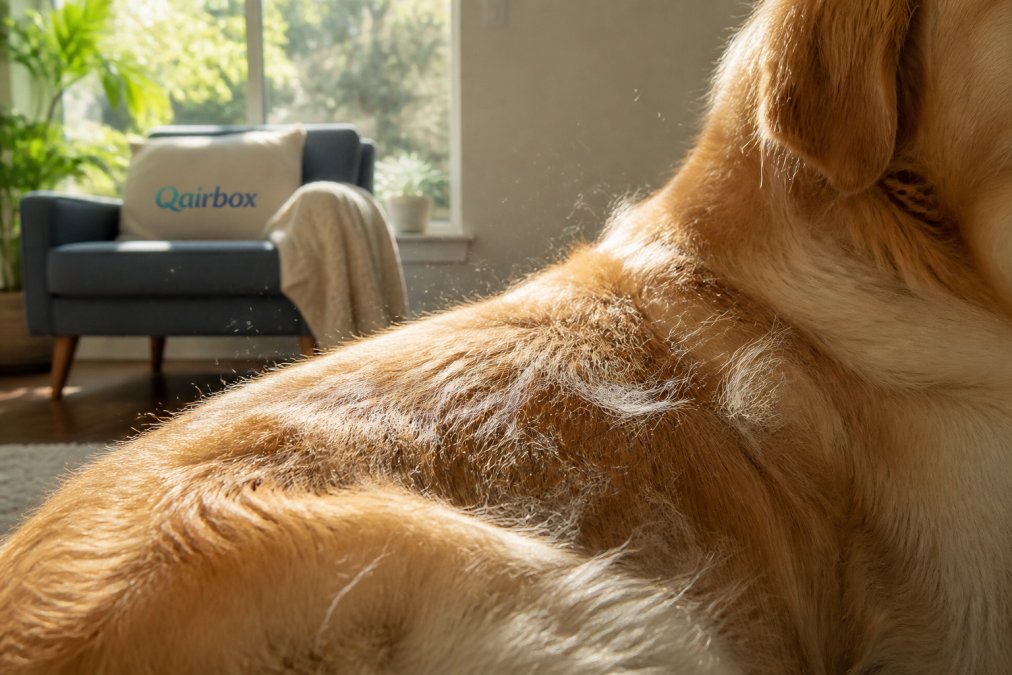
Cats are particularly problematic for allergy sufferers. Cat dander is finer and more dispersed than dog dander, remaining suspended in air longer. Additionally, cats spend more time grooming themselves, releasing more allergen-carrying saliva proteins into the air.
Within the first hour of shedding, dander particles distribute throughout the home via air circulation. Pets carry dander on their fur, transferring it to bedding, furniture, and clothing. Air currents push particles into every corner of the house, which is why allergy symptoms often worsen in poorly ventilated spaces.
Temperature and humidity influence dander behavior. In dry desert climates, dander particles remain lighter and stay airborne longer. In humid environments, particles absorb moisture and settle faster. This explains why some allergy sufferers find symptoms fluctuate seasonally or when humidity levels change.
How to Reduce Pet Dander in the House Beyond Air Purification
Air purification is one tool, but controlling pet allergens requires a multi-pronged approach. The most effective strategies target dander at its source, prevent its spread, and remove it from surfaces before it becomes airborne.
Pre-Filter Maintenance and Pet Hair Management
Pet hair clogs standard air filters rapidly. A pre-filter stage captures visible pet hair before it reaches the HEPA filter, extending the life of downstream filters and keeping your system running efficiently.
For pet owners, check pre-filters monthly and replace as needed. Some pre-filters are washable and reusable, while others are disposable. If your pre-filter becomes visibly matted with pet hair, airflow drops immediately, reducing allergen capture.
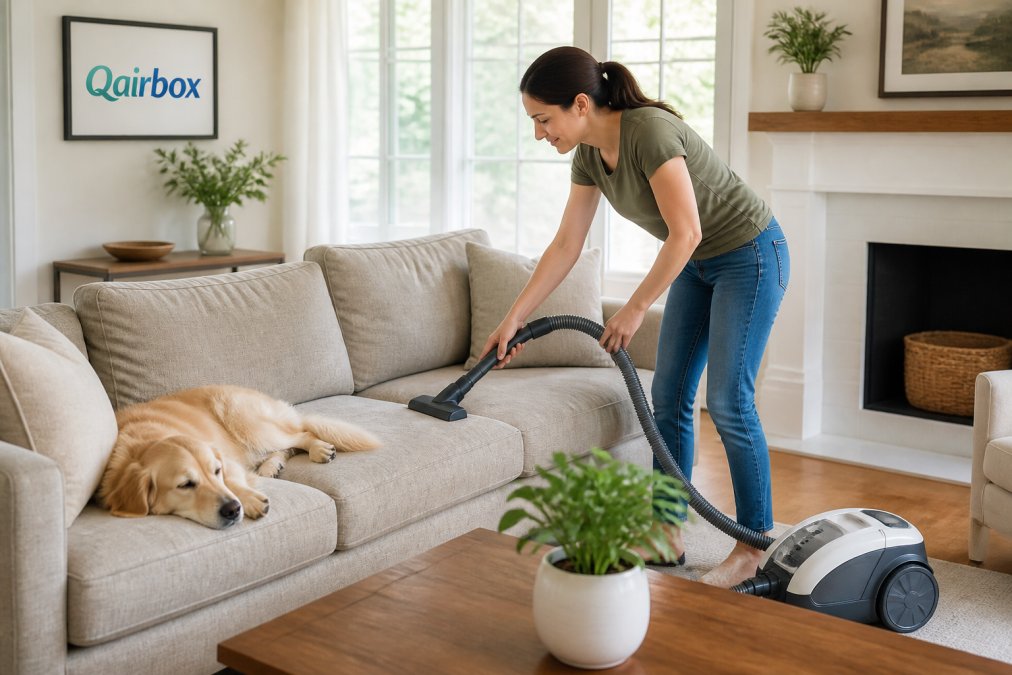
Regular grooming is non-negotiable. Brushing your pet outdoors removes loose fur before it enters the home. Even brief brushing sessions reduce indoor dander shedding. Vacuum selection matters more than most realize. A standard vacuum redistributes pet hair and allergens into the air. A HEPA-filter vacuum traps particles rather than expelling them, actually improving air quality during cleaning. Vacuum at least twice weekly in homes with shedding pets.
Environmental Control and Cleaning Practices
Wash bedding weekly in hot water to eliminate accumulated dander. Pet bedding requires even more frequent washing for allergy-sensitive households. Hot water denatures allergen proteins more effectively than cold or warm water.
Furniture upholstery traps dander extensively. Washable furniture covers, replaced weekly, reduce allergen exposure significantly. Some families restrict pets from bedrooms entirely, creating allergen-reduced zones where sensitive individuals sleep.
Air circulation patterns influence allergen distribution. Closing bedroom doors during the day prevents pet allergens from accumulating in sleep spaces. In tightly sealed desert homes where HVAC systems are essential for cooling efficiency, ensuring proper air circulation prevents stagnant pockets where dander accumulates.
Maintain indoor humidity between 30% and 50% to reduce dust mite populations, which feed on dander, and prevent mold growth (the CDC). Both can compound allergic reactions in sensitive individuals.
Whole-Home Air Purification Benefits for Pet Owners
For homeowners committed to managing pet allergies effectively, whole-home solutions offer advantages that room-based purifiers cannot match. A professionally installed whole-home air purification system runs continuously, maintaining consistent air quality throughout the entire residence.
Continuous Coverage vs. Room-Based Filtration
Portable room air purifiers work only in their immediate vicinity. Allergens in adjacent rooms continue circulating untouched. A household with multiple rooms and a shedding pet faces a practical problem: buying enough room units to cover every space becomes expensive and creates visual clutter.
Whole-home systems eliminate this limitation. By operating continuously and covering the entire home, they reduce overall allergen concentration uniformly. This is particularly valuable for allergy-sensitive individuals who spend time in different rooms throughout the day.
Qairbox delivers whole-home air purification through a standalone system professionally installed in the attic, operating quietly out of sight 24/7. Unlike room units that require repositioning and consume floor or shelf space, this approach maintains consistent performance across your entire home without visual disruption. For families with young children or older adults sensitive to allergens, continuous whole-home coverage provides meaningful peace of mind.
Odor and Chemical Irritant Reduction
Pet owners face more than allergen challenges. Pet odors contain volatile organic compounds that irritate respiratory systems, particularly in sensitive individuals.
A comprehensive air purification system using activated carbon filters addresses odors effectively. Carbon filters chemically absorb odor molecules and volatile organic compounds, not just trapping particles. This dual-action approach creates more comprehensive indoor air quality improvement than particle filtration alone.
For homes with multiple pets or in climates where windows remain closed for extended periods, odor control becomes essential for comfort and health. Whole-home systems handle this continuously, preventing odor accumulation that room purifiers might miss.
What Air Purifiers Cannot Do: Real Limitations
Honest assessment requires acknowledging what air purifiers cannot accomplish.
Air purifiers cannot remove surface allergens. Dander on furniture, bedding, and carpets remains untouched by even sophisticated filtration systems. Continuing to vacuum, wash, and clean surfaces remains essential regardless of air purification investment.
Air purifiers cannot prevent new allergen generation. Your pet continues shedding dander daily. The system reduces allergen concentration but never eliminates it completely.
Air purifiers cannot replace medication for severe allergies. Individuals with moderate to severe pet allergies often require antihistamines, nasal steroids, or immunotherapy to manage symptoms adequately. Air purification supports these treatments but doesn't substitute for them.
Air purifiers cannot address allergen transfer via contact. If you pet your dog and then touch your face, you've transferred allergens directly. Washing hands after pet contact remains necessary.
Air purifiers cannot work effectively in homes with poor air circulation. If your home has dead zones where air doesn't flow, allergens accumulate in these spaces regardless of purification. Whole-home systems address this better than portable units.
CADR Ratings and Air Changes Per Hour: What Matters for Pet Allergies
When evaluating air purifiers, two metrics appear repeatedly: CADR ratings and air changes per hour.
CADR stands for Clean Air Delivery Rate. It measures cubic feet per minute of clean air a purifier produces. For pet allergies, a CADR of at least 300 for particles is generally adequate for a medium-sized room. Larger homes or homes with multiple pets benefit from higher CADR ratings.
Air changes per hour (ACH) measures how many times a system cycles the entire room's air through filtration each hour. Industry standards recommend at least 4 ACH for allergy management, though 5-6 ACH provides better results. This metric depends on both the purifier's CADR and your room size.
For whole-home systems like Qairbox, these metrics apply across the entire residence rather than individual rooms. A whole-home system sized appropriately for your home's square footage ensures consistent air quality and adequate air changes throughout.
The relationship between these metrics and symptom relief is direct but not absolute. Better metrics correlate with improved allergen capture, but they don't guarantee symptom elimination. Individual sensitivity varies widely.
Pros and Cons of Air Purification for Allergy Management
Air purification offers genuine benefits for pet allergy sufferers, but realistic evaluation requires acknowledging both strengths and limitations.
| Aspect | Benefit | Limitation |
|---|---|---|
| Airborne allergen removal | Captures dander particles continuously | Cannot remove settled surface allergens |
| Odor control | Activated carbon reduces pet odors | Requires regular filter replacement |
| Whole-home coverage | Maintains consistent air quality throughout home | Higher initial investment than room units |
| Maintenance simplicity | Professional installation, minimal homeowner involvement | Filters require periodic replacement |
| Quiet operation | Runs 24/7 without disruption | Effectiveness depends on system sizing |
| Symptom relief | Reduces airborne allergen concentration | Works best combined with cleaning practices |
Pros:
Air purification meaningfully reduces airborne allergen concentration. For individuals with mild to moderate allergies, this reduction often provides noticeable symptom relief. Continuous operation maintains baseline air quality without requiring homeowner intervention beyond periodic filter replacement.
Whole-home systems eliminate the need to purchase and manage multiple portable units. For homes with multiple rooms or multiple pets, a single professionally installed system provides more comprehensive coverage than room-based alternatives.
Quality air purification systems operate quietly, allowing continuous operation without noise disruption. This is particularly valuable in bedrooms and work spaces.
Cons:
Air purifiers address only airborne particles. Surface allergens require separate cleaning efforts. Someone expecting air purification alone to eliminate pet allergies will be disappointed.
Filter replacement represents ongoing cost and maintenance responsibility. Filters for homes with pets require periodic replacement.
Portable room air purifiers work only in their immediate vicinity, requiring multiple units for whole-home coverage. Whole-home systems solve this but require professional installation and higher upfront investment.
Effectiveness depends on proper system sizing. An undersized purifier cannot maintain adequate air changes per hour for your home size.
Pet allergies require multi-layered management, and air purification plays an important supporting role. While air purifiers alone cannot eliminate pet allergies, they meaningfully reduce airborne allergen concentration when sized and maintained properly.
For homeowners in desert climates with tightly sealed homes, allergy-sensitive family members, or households with multiple pets, a whole-home air purification system like Qairbox offers advantages that room-based alternatives cannot match. Professionally installed in your attic and operating quietly 24/7, Qairbox delivers consistent whole-home coverage without modifying your existing HVAC system. Combined with regular cleaning, surface allergen management, and appropriate medical treatment, whole-home air purification creates a comprehensive strategy for managing pet allergies effectively.
Frequently Asked Questions
Q: Are air purifiers worth it if you have pets?
A: Air purifiers capture airborne pet allergens and dander particles, which reduces respiratory symptoms for many allergy sufferers. However, they work best as part of a multi-modal strategy that includes regular cleaning, grooming, and environmental controls. A whole-home air purification system provides continuous coverage throughout your house, making it more effective than portable units for managing pet allergies at scale. Results depend on your specific allergies, the size of your home, and how consistently you maintain the system.
Q: How does pet dander circulate throughout a home?
A: Pet dander is microscopic, often invisible to the naked eye, and becomes airborne through normal movement, jumping, and play. Once airborne, these allergen-carrying particles travel through air currents and settle on furniture, bedding, and walls. In sealed homes, especially in desert climates, indoor air circulation concentrates these particles indoors. A whole-home air purification system continuously removes these microscopic allergens from the air as they circulate, reducing the overall allergen load in your living spaces.
Q: What is the difference between room-based filtration and whole-home purification?
A: Room-based portable units clean air in a single room but leave other areas unprotected. Whole-home air purification systems deliver consistent filtration throughout your entire house without requiring you to move units between rooms or manage multiple devices. Whole-home systems are especially valuable for allergy sufferers because they maintain air quality in bedrooms, living areas, and hallways simultaneously, providing continuous relief rather than spot treatment.
Q: Can air purifiers eliminate pet odors completely?
A: Air purifiers with activated carbon filters capture volatile organic compounds that create pet odors, significantly reducing smells. However, they work on airborne odor particles, not odors embedded in furniture, carpets, or bedding. For best results, combine air purification with regular cleaning, washing pet bedding frequently, and grooming your pets. A whole-home system with multi-stage filtration handles odor control throughout your house more effectively than room units alone.