Does Whole House Air Purification Remove Viruses?
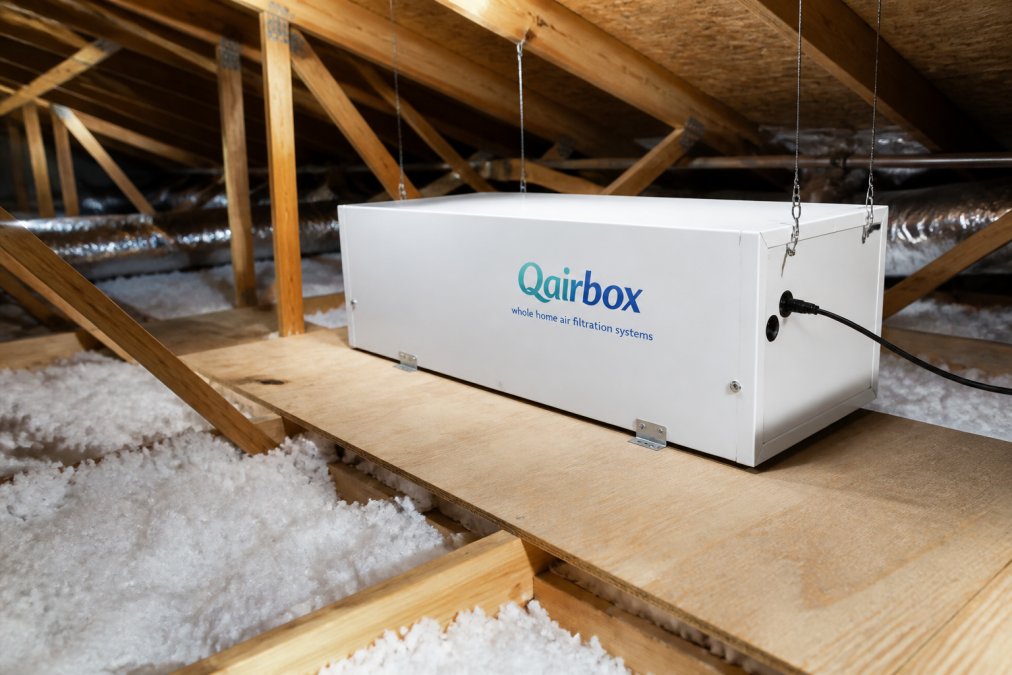
Table of Contents
- How Air Purification Removes Viruses
- HEPA Air Filtration Effectiveness Against Viruses
- Beyond Filtration: UV-C and Ionization
- Benefits of Standalone Air Purification for Whole Homes
- What Whole-Home Purifiers Cannot Do
- How to Choose a System That Reduces Airborne Pathogens
- The Bottom Line on Viruses and Whole-Home Purification
- Frequently Asked Questions
Last Updated: September 5, 2026
How Air Purification Removes Viruses
Concerned homeowners frequently ask whether whole house air purification remove viruses from their living space. Air purification systems remove viruses by capturing airborne particles and pathogens through filtration media, then circulating clean air back into the home continuously. This process relies on moving indoor air through a filter that traps contaminants as small as viruses, which typically measure between 20 and 300 nanometers in diameter.
At Qairbox, we design purification systems around the reality that most virus transmission happens indoors, where airborne particles can linger for hours without proper air circulation and filtration. The core principle is straightforward: the more times per hour your home's air passes through effective filtration, the lower the concentration of airborne pathogens available to inhale. This is why standalone systems that run continuously outperform intermittent solutions, and why attic-mounted installation matters for homes in hot, tightly sealed desert climates where windows stay closed for much of the year.
HEPA Air Filtration Effectiveness Against Viruses
True HEPA air filtration effectiveness against viruses depends on the density of the filter media, the volume of air processed, and the number of times the entire home's air volume cycles through the filter each hour. HEPA filters are engineered to capture at least 99.97 percent of particles at 0.3 microns, the most penetrating particle size, and research shows they perform even better on both larger and smaller particles due to three distinct physical capture mechanisms.
How HEPA captures virus-sized particles
Viruses themselves measure between 20 and 300 nanometers in diameter, but they rarely travel alone. When an infected person breathes, talks, or coughs, they expel respiratory droplets and bioaerosols that range from sub-micron to several microns in size. HEPA filtration captures these carriers through:
- Interception: Particles following the airstream come within one particle radius of a filter fiber and stick to it. This captures mid-sized particles efficiently.
- Impaction: Larger particles, typically above 1 micron, have too much momentum to follow the airstream around fibers, so they crash into them and are trapped.
- Diffusion: Sub-micron particles, including individual virus particles, collide with gas molecules and move in a random zigzag pattern (Brownian motion). This erratic path makes them far more likely to contact a filter fiber than a straight-moving particle would. Diffusion capture is why HEPA filters actually perform better on 0.1-micron particles than on 0.3-micron particles.
The 0.3-micron rating is the worst-case efficiency point, not the limit of the filter. A true HEPA filter captures particles both smaller and larger than 0.3 microns with greater than 99.97 percent efficiency.
Why air exchange rate matters more than filter efficiency alone
A filter that captures 99.97 percent of particles on a single pass is only meaningful if the air actually reaches the filter. This is where whole-home systems differ fundamentally from portable units. The relevant metric is the number of air changes per hour (ACH), how many times the total volume of air in the home passes through the filtration media in 60 minutes.
A portable room unit might process 200 to 400 cubic feet per minute, which is adequate for a single 200-square-foot room but negligible for a 2,500-square-foot home. A professionally installed standalone whole-home system is sized to the home's total cubic footage, pushing the entire volume of air through hospital-grade filtration multiple times per hour. The practical effect is that the concentration of airborne viruses drops exponentially with each air change, not linearly.
The math is straightforward: if a system achieves 4 ACH, then after 15 minutes, roughly 63 percent of airborne particles have been removed. After 30 minutes, that figure reaches approximately 86 percent. After one hour, over 98 percent of the original airborne viral load has been captured, assuming the system runs continuously. A system that cycles on and off with a heating or cooling schedule leaves long gaps where the viral concentration builds back up.
The role of droplet nuclei and aerosol persistence
When a person exhales virus-laden droplets, the larger ones fall to the ground within seconds. The smaller ones, under 5 microns, evaporate quickly, leaving behind "droplet nuclei" that can remain suspended in the air for hours. These droplet nuclei are precisely the particles that HEPA filtration captures most effectively through diffusion. In a tightly sealed home with limited ventilation, these aerosols accumulate over time, which is why continuous whole-home filtration is the most reliable defense against airborne transmission.
The Centers for Disease Control and Prevention guidance on ventilation and airborne transmission confirms that increasing the rate of air changes per hour reduces the concentration of airborne contaminants, including viruses. A standalone whole-home system that runs continuously provides this benefit without depending on the heating or cooling system being active.
Beyond Filtration: UV-C and Ionization
Filtration captures particles, but some advanced systems add UV-C light and ionization to neutralize pathogens. Understanding what these technologies actually do, and their limitations, matters for homeowners weighing a system that claims to "kill viruses" versus one that physically removes them from the air.
UV-C light: What it does and what it cannot do
Ultraviolet-C light, in the 200-to-280-nanometer wavelength range, damages the nucleic acids of viruses and bacteria, preventing them from replicating. The key distinction is that UV-C inactivates pathogens, it does not remove them from the airstream. A virus particle inactivated by UV-C is still physically present in the air; it simply cannot infect a host.
UV-C effectiveness depends on three variables:
- Dose: The intensity of the UV-C light multiplied by the exposure time. A quick pass through a low-intensity UV-C field may deliver an insufficient dose to fully inactivate a virus.
- Wavelength: Germicidal UV-C peaks at approximately 254 nanometers. Some systems use far-UVC (222 nanometers), which research suggests is safer for human exposure but may require longer exposure times.
- Line of sight: UV-C only inactivates pathogens that are directly exposed to the light. A virus particle shielded inside a dust clump or behind a filter fiber may not receive an adequate dose.
In a whole-home system, UV-C is most effective when applied to captured pathogens on the filter surface, where the airflow holds particles in the light path for a longer duration. This is why UV-C is a complement to, not a replacement for, mechanical filtration. The filter captures the virus; the UV-C inactivates it so it cannot survive on the filter media and potentially re-aerosolize.
Ionization: How it works and the safety question
Ionization technologies, including bipolar ionization, release charged ions into the airstream. These ions attach to airborne particles, including viruses and the droplets that carry them. The charged particles then either clump together, becoming heavy enough to fall out of the air, or become more likely to adhere to surfaces and filter media.
Some ionization systems also produce hydroxyl radicals that can damage virus surface proteins. However, the efficacy of ionization varies widely between manufacturers, and the technology has a more complicated safety profile than mechanical filtration. Certain ionization systems can generate ozone as a byproduct, a lung irritant that is particularly problematic for children, older adults, and people with asthma. The Environmental Protection Agency guidance on air cleaners and ozone advises consumers to avoid air cleaners that intentionally generate ozone and to verify that ionizing devices do not produce harmful levels as a byproduct.
The practical hierarchy for virus removal
For homeowners whose primary concern is airborne viruses, the evidence supports a clear hierarchy:
- Physical removal through filtration is the most reliable method. HEPA filtration captures virus-laden particles and removes them from the living space entirely. The captured virus is no longer a threat, regardless of whether it is alive or inactivated.
- UV-C adds value as a secondary layer when applied to the filter surface, reducing the risk of pathogens surviving on the media and extending the practical effectiveness of the filter.
- Ionization is the least proven and most variable technology. Its effectiveness depends heavily on the specific implementation, and the potential for ozone generation requires careful scrutiny.
What to look for in a combined system
If a system includes UV-C, verify that the lamp is positioned to irradiate the filter surface rather than merely passing air quickly past a small bulb. Check whether the UV-C lamp has a rated lifespan and a replacement schedule, a lamp that has dimmed past its effective output provides little protection. For ionization, request documentation showing the system meets the Underwriters Laboratories safety standard 867 for electrostatic air cleaners, which certifies that the device does not produce hazardous ozone levels. A professionally installed whole-home system should include these safety certifications as standard practice, not as an optional upgrade.
Benefits of Standalone Air Purification for Whole Homes
Standalone whole-home purification systems offer distinct advantages over portable units and HVAC-integrated options. A standalone system operates independently, running quietly on its own schedule without depending on your heating and cooling cycles. Because it runs continuously, it maintains consistent air quality rather than only purifying when your HVAC system happens to be active.
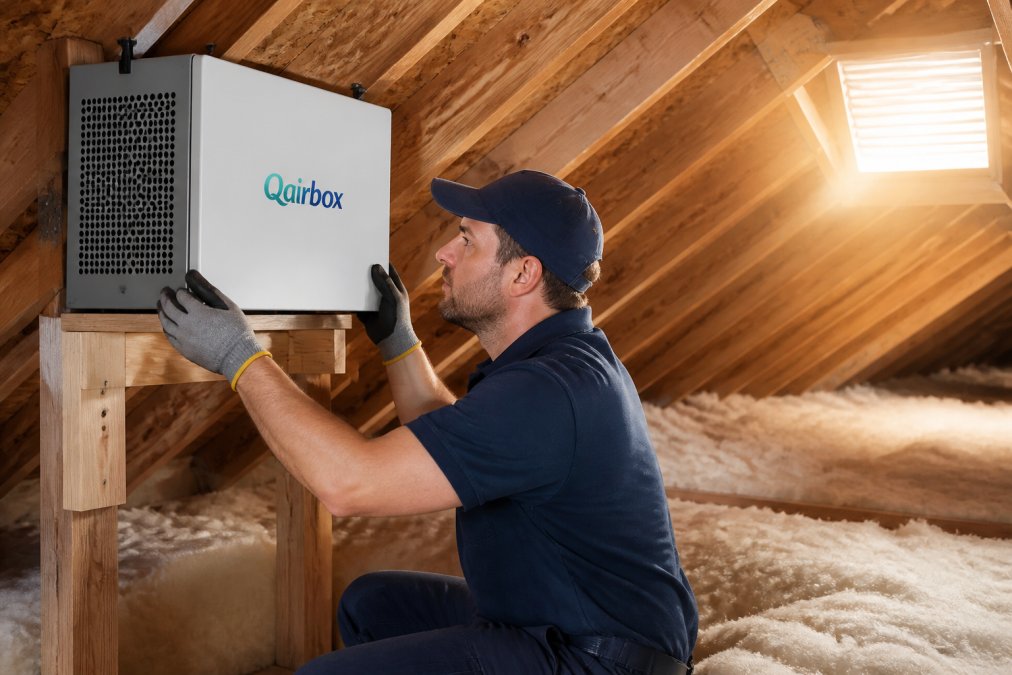
For desert homeowners, this independence is particularly valuable. Tightly sealed homes that keep heat out also trap indoor pollutants, and a system that runs 24/7 addresses this constant source of airborne contaminants. Attic-mounted installation keeps the equipment out of living spaces, eliminating the visual clutter and floor space consumption of portable units while avoiding the noise that room purifiers generate. Professional installation means the system is sized correctly for your home's square footage and airflow characteristics from day one.
What Whole-Home Purifiers Cannot Do
Whole-home air purification remove viruses effectively from the air, but it cannot eliminate every route of transmission. Surface contamination remains a concern because viruses can settle on countertops, doorknobs, and other frequently touched areas. Purification systems address airborne transmission, not surface contact, so regular cleaning and hand hygiene remain essential parts of a complete mitigation strategy.
Another limitation involves timing. Air purification reduces viral load over time through repeated air exchanges, but it cannot instantly sterilize a room the moment a contagious person coughs or sneezes. The system works continuously to bring concentrations down, yet some exposure risk exists during the period before the air completes several full filtration cycles. Additionally, no residential purification system can guarantee complete protection against every airborne pathogen, which is why public health guidance emphasizes ventilation, masking, and vaccination alongside air cleaning. The EPA guidance on air cleaners and HVAC filtration confirms that air cleaners can help reduce airborne contaminants including viruses, but should be part of a layered approach.
How to Choose a System That Reduces Airborne Pathogens
Choosing a whole-home system that reduces airborne pathogens starts with matching the purification capacity to your home's total volume. Look for a system rated for your square footage with a clean air delivery rate that supports multiple air exchanges per hour. Professional sizing ensures the unit does not struggle to keep up with your home's air volume.
Consider the filtration media quality and whether the system includes supplemental technologies like UV-C for pathogen inactivation. Maintenance requirements matter too, since a filter that is difficult to access or replace will likely get neglected, reducing effectiveness over time. Qairbox systems are professionally installed in the attic, out of sight, and designed for low-maintenance operation so the purification continues without demanding constant attention from homeowners.
The Bottom Line on Viruses and Whole-Home Purification
Whole-home air purification remove viruses from indoor air effectively when the system combines high-grade filtration with continuous operation and proper sizing. The technology is well understood, and filtration science supports its ability to capture virus-sized particles. The key is choosing a standalone system that runs 24/7, is professionally installed, and covers your entire home rather than a single room.
For homeowners seeking to reduce airborne pathogens throughout their living space, Qairbox offers a standalone whole-home purification system installed in the attic, running quietly around the clock with hospital-grade filtration. It does not connect to or modify your existing HVAC system, and it is not a portable room unit. It simply cleans the air throughout your entire home, reducing airborne particles and chemical irritants for allergy-sensitive households. To learn whether this approach fits your home, schedule a consultation with the Qairbox team and get a professional assessment of your indoor air quality needs.
Frequently Asked Questions
Do air purifiers get rid of viruses in the air?
Yes, air purifiers with HEPA filtration can capture airborne viruses. HEPA filters are rated to remove at least 99.97% of particles at 0.3 microns, and they capture both larger and smaller particles with even higher efficiency. Since viruses often travel attached to respiratory droplets and dust particles, a whole-home system with HEPA filtration significantly reduces the viral load circulating in your living spaces.
What is the difference between HEPA filtration and other air cleaning methods?
HEPA filtration physically captures particles, including viruses, in a dense filter media. Other methods like UV-C light and ionization work differently: UV-C damages viral genetic material, while ionizers charge particles so they stick to surfaces. HEPA is the most reliable method for removing viruses from the air stream because it does not depend on kill time or particle behavior. Many whole-home systems combine HEPA with UV-C for added protection.
Do I need to modify my HVAC system to install a whole-home purifier?
Not if you choose a standalone system. Standalone whole-home air purification systems install independently in the attic and run on their own, without connecting to or modifying your existing HVAC or central A/C. This means no ductwork changes, no impact on your heating and cooling efficiency, and no need to run your HVAC fan to get purified air. The system operates 24/7 on its own schedule.
Can air purification reduce the spread of illness in the home?
Yes. Air purification reduces the concentration of airborne pathogens, which lowers the chance of transmission. When someone is sick, they release virus-laden respiratory droplets and aerosols into the air. A whole-home purification system continuously filters that air, removing particles before others inhale them. It is not a substitute for handwashing or distancing, but it adds a meaningful layer of protection, especially in tightly sealed homes.