How to Fix Indoor Allergy Symptoms: 7 Steps
Table of Contents
- What Causes Indoor Allergy Symptoms
- Step 1: Reduce Dust Mites in Your Bedroom
- Step 2: Control Indoor Humidity Levels
- Step 3: How to Reduce Indoor Allergens Throughout Your Home
- Step 4: Manage Pet Dander With the Best Air Purifier for Pet Odors
- Step 5: Clean and Vacuum Strategically
- Step 6: Address Mold and Chemical Irritants
- Step 7: Consider Medical Support for Severe Symptoms
Last Updated: August 23, 2026
What Causes Indoor Allergy Symptoms
Indoor allergy symptoms stem from environmental triggers that accumulate inside your home year-round. Unlike seasonal allergies tied to outdoor pollen, indoor allergens persist whether it's summer or winter, affecting you constantly if left unaddressed.
Common culprits include dust mites in bedding and upholstered furniture, pet dander, mold spores in damp areas, cockroach allergens, and volatile organic compounds from cleaning products and paints. In desert climates and tightly sealed homes, these particles concentrate indoors because there's minimal natural air exchange. Your home's HVAC system circulates the same air repeatedly, which can amplify allergen levels if filtration isn't strong enough.
According to the American Academy of Allergy, Asthma & Immunology, indoor allergens trigger reactions year-round for millions of people. The key insight: your home's indoor air quality directly determines whether your allergies improve or worsen. A single dust mite produces roughly 20 waste particles daily, and a single pet can shed enough dander to affect air quality throughout an entire home. When these allergens accumulate unchecked, even strong antihistamines offer only temporary relief because you're treating the symptom, not the environment.
Step 1: Reduce Dust Mites in Your Bedroom
Dust mites thrive in bedding, pillows, and mattresses where they feed on dead skin cells. Your bedroom is ground zero for dust mite colonies because you spend 6-8 hours there nightly, shedding skin continuously.
Start with allergen-proof encasements, specially woven covers that fit over your mattress, box spring, and pillows. They block dust mites and their waste particles while remaining breathable. Wash these encasements monthly in hot water (130°F or higher kills dust mites), and wash all bedding weekly at the same temperature (the CDC). This reduces dust mite populations significantly within 2-3 weeks.
Remove items that harbor dust mites. Thick curtains, upholstered chairs, and wall-to-wall carpeting are dust mite magnets. Replace curtains with washable roller shades, swap upholstered furniture for leather or wood, and consider removing bedroom carpet in favor of hardwood or tile. If carpet removal isn't feasible, vacuum weekly with a HEPA-filter vacuum, which traps fine particles that standard filters miss.
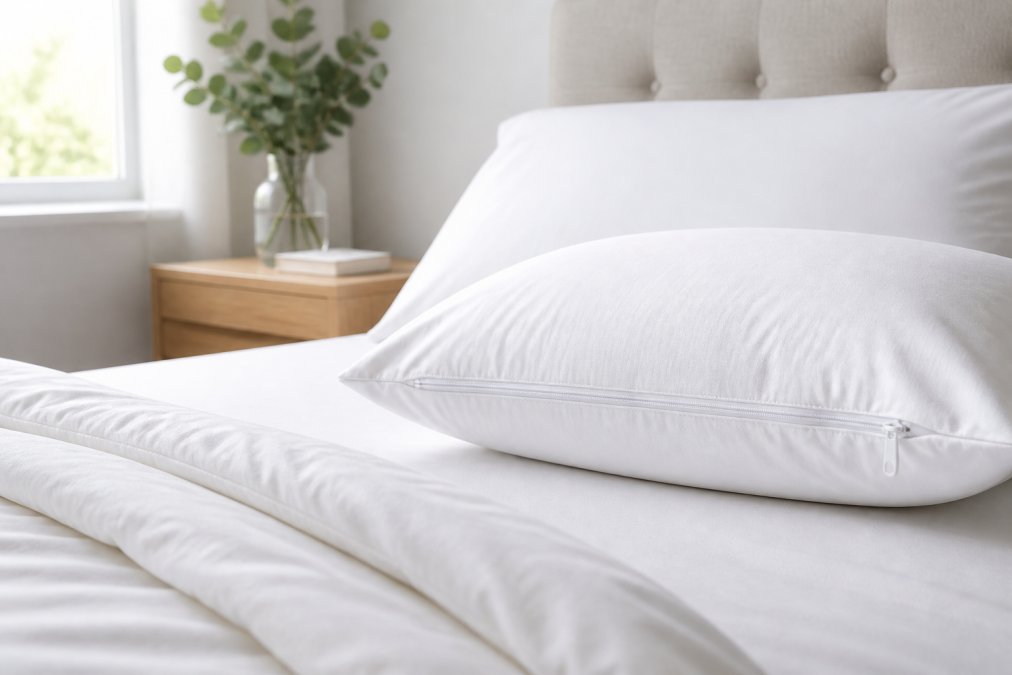
Keep humidity low in your bedroom. Dust mites thrive between 50-80% relative humidity. Use a dehumidifier to maintain levels below 50%, making the environment uninhabitable for dust mites. A simple hygrometer costs under $20 and lets you monitor progress.
Wash pillows and blankets every two weeks to disrupt the dust mite lifecycle. Replace pillows every 1-2 years as they accumulate dust mites faster than other bedding.
Step 2: Control Indoor Humidity Levels
Humidity is a hidden trigger behind many indoor allergy symptoms. High humidity (above 50% relative humidity) creates perfect conditions for dust mites, mold spores, and cockroach allergens. Desert homes often have the opposite problem, but when air conditioning runs heavily, moisture can spike and trigger mold growth.
Target 30-50% relative humidity (the EPA). Below 30%, your respiratory system dries out and becomes more irritated by allergens. Above 50%, mold and dust mites flourish. A simple hygrometer tells you exactly where you stand.
If humidity is too high, run a dehumidifier in bedrooms and basements. Ensure bathroom and kitchen exhaust fans vent moisture outside, not into your attic. Run these fans during and for 20 minutes after showers or cooking. Fix any leaks in roofs, windows, or plumbing immediately, as even small water intrusions create mold growth within days.
If humidity is too low, use a humidifier in your bedroom during sleep hours. Extremely dry air irritates nasal passages and makes them more reactive to allergens. A cool-mist humidifier is safer than warm-mist versions because it doesn't create steam that promotes mold growth.
Check your attic and crawl spaces for moisture problems. Poor ventilation in attics traps humid air, leading to mold colonies that release spores throughout your home. If you notice musty odors or visible mold, address ventilation or moisture sources immediately.
Step 3: How to Reduce Indoor Allergens Throughout Your Home
Reducing indoor allergens requires a whole-home strategy. Allergens circulate through living spaces constantly, settling on surfaces and being inhaled repeatedly.
Vacuum strategically using a HEPA-filter vacuum at least weekly, preferably twice weekly if you have pets or live in a dusty area. Vacuum living rooms, hallways, and bedrooms before family members spend time there. Wear a mask while vacuuming to avoid inhaling stirred-up particles. After vacuuming, leave the room for 30 minutes to allow particles to settle.
Wash hard surfaces regularly with a damp cloth rather than a dry duster, which redistributes particles into the air. Wipe down surfaces weekly, paying special attention to bedrooms and high-traffic areas.
Manage soft furnishings. Upholstered couches, armchairs, and area rugs trap allergens. Wash throw blankets and pillows weekly, and vacuum upholstered furniture with a HEPA vacuum weekly. Consider replacing thick area rugs with hard flooring or thin, washable rugs.
Control chemical irritants. Many household cleaners, air fresheners, and scented products release volatile organic compounds that irritate airways and worsen allergy symptoms. Switch to unscented or naturally scented cleaning products, and avoid aerosol sprays. Open windows briefly after cleaning to ventilate, though be mindful of outdoor pollen during high pollen seasons.
Step 4: Manage Pet Dander With Whole-Home Air Purification
Pet dander is one of the most persistent indoor allergens because it's microscopic and circulates throughout your home. If you have pets and allergies, you need a multi-layered approach.
Groom your pet regularly. Brush dogs and cats at least 3 times weekly, ideally outdoors so dander doesn't settle inside. Bathe pets monthly to reduce loose dander shedding. No dog or cat is truly hypoallergenic; all produce dander regardless of coat type.

Restrict pets from bedrooms and sleeping areas to create at least one allergen-free zone. Use a baby gate or closed door, and wash bedding weekly to remove any dander that gets in.
For whole-home pet odor and dander control, a whole-home air purification system is far more effective than portable room purifiers. A standalone whole-home air purification system like Qairbox runs 24/7 from your attic, filtering air throughout your entire home without taking up floor space or requiring you to move units between rooms. It continuously removes pet dander, odors, and other airborne particles that portable units miss.
Wash pet bedding weekly and vacuum areas where pets spend time daily to prevent dander from spreading.
Step 5: Clean and Vacuum Strategically
Strategic cleaning and vacuuming reduce allergen levels more effectively than sporadic efforts. Vacuum high-traffic areas, bedrooms, living rooms, and hallways, daily or every other day, as allergens settle densest in these spots.
Use proper vacuuming technique. Vacuum slowly, making multiple passes over the same area. Quick vacuuming doesn't pick up deeply embedded allergens. Wear a mask to avoid inhaling stirred-up particles, and ensure your vacuum has a HEPA filter.
Clean ceiling fans and light fixtures monthly with a damp cloth to avoid stirring dust into the air. Wash windows and window sills frequently, especially during high pollen seasons. Clean under furniture and in corners monthly where dust accumulates.
Avoid dry dusting methods like feather dusters or dry cloths, which stir allergens into the air. Always use a damp cloth or a HEPA-filter vacuum.
Step 6: Address Mold and Chemical Irritants
Mold spores are a major indoor allergen, especially in humid climates or homes with moisture problems. Chemical irritants from household products compound allergic reactions by inflaming airways.
Inspect your home for visible mold in bathrooms, basements, crawl spaces, and around windows and doors. Clean mold immediately with a bleach and water solution (1 part bleach to 10 parts water) or commercial mold cleaner. Wear gloves and a mask during cleaning.
Fix moisture sources. Leaking roofs, plumbing, and windows create conditions mold needs to grow. Ensure gutters and downspouts direct water away from your foundation.
Ventilate bathrooms and kitchens by running exhaust fans during showers and cooking, and for 20 minutes afterward. If your bathroom lacks an exhaust fan, install one to prevent mold growth.
Replace chemical-heavy products with safer alternatives. Switch to unscented or naturally scented products, or make your own cleaners using vinegar and baking soda. Avoid scented candles, plug-in air fresheners, and aerosol sprays. Address odor sources directly rather than masking them with fragrances.
Step 7: Consider Medical Support for Severe Symptoms
If indoor allergy symptoms persist despite environmental improvements, medical support can help. Allergies that don't respond to environmental control often require medication or immunotherapy.
Antihistamines are the first-line treatment. Over-the-counter options like cetirizine and fexofenadine work for mild to moderate symptoms. If these don't provide relief, your doctor can prescribe stronger antihistamines or nasal corticosteroids, which reduce inflammation in nasal passages.
Nasal sprays offer targeted relief. Steroid nasal sprays reduce inflammation and congestion, while antihistamine nasal sprays provide quick relief from itching and sneezing.
Consider allergy testing to identify your specific triggers. A doctor can perform skin prick tests or blood tests to determine exactly which allergens affect you, helping you prioritize environmental changes.
Immunotherapy (allergy shots or sublingual tablets) may help if allergies are severe and don't respond to other treatments. This approach gradually desensitizes your immune system to allergens over 3-5 years.
Work with an allergist if symptoms significantly impact your quality of life. They can help develop a comprehensive treatment plan combining environmental control, medication, and immunotherapy.
Persistent indoor allergy symptoms make your home feel like a place where you can't fully relax or breathe easily. Medication helps manage symptoms temporarily, but the real solution is controlling allergen sources in your environment. Environmental control, dust mite reduction, humidity management, strategic cleaning, and whole-home air purification address the root cause rather than just symptoms. A whole-home air purification system like Qairbox runs continuously to remove airborne allergens, pet dander, odors, and chemical irritants throughout your entire home without requiring room placement or constant maintenance. Schedule a consultation with Qairbox to learn how whole-home air purification can transform your indoor environment and reduce your allergy burden.
| Strategy | Best For | Implementation Time |
|---|---|---|
| Allergen-proof encasements | Dust mite reduction | 1 hour setup |
| Humidity control (dehumidifier) | Mold and dust mite prevention | Ongoing monitoring |
| HEPA vacuuming | Allergen removal from surfaces | Weekly, 30-60 minutes |
| Pet grooming | Pet dander reduction | 30 minutes, 3x weekly |
| Whole-home air purification | Complete allergen removal 24/7 | Professional installation |
| Chemical product replacement | Irritant elimination | 1-2 hours |
| Mold inspection and remediation | Mold spore elimination | Varies by severity |
Frequently Asked Questions
What is causing my indoor allergies?
Indoor allergy triggers include dust mites, pet dander, mold spores, cockroach allergens, and volatile organic compounds from household products. Dust mites thrive in bedding and furniture, while pet dander accumulates on surfaces. High humidity levels above 50% promote mold growth. Poor air circulation traps these micro-particulates indoors. A clinical diagnosis from an allergist can identify your specific triggers through testing, helping you target the right solutions.
How does a whole-home air purification system differ from portable units?
A whole-home air purification system cleans air throughout your entire residence continuously, eliminating the need to move units between rooms. Unlike portable room purifiers that only treat localized areas, a standalone whole-home system installed in the attic operates 24/7 without occupying living space. It captures airborne allergens, dust, and chemical irritants at the source before they settle on surfaces, providing consistent environmental control across all rooms simultaneously.
Can poor indoor air quality cause chronic allergy symptoms?
Yes. Poor indoor air quality directly causes chronic inflammation of airways and nasal passages, leading to persistent symptoms like congestion, coughing, and itchy eyes. High levels of micro-particulates, allergens, and volatile organic compounds overwhelm your respiratory system, especially in tightly sealed homes common in desert climates. Improving air exchange rates and reducing airborne allergens through effective filtration and humidity control significantly reduces symptom severity and frequency.
How can I tell if my allergies are caused by my home environment?
Your symptoms are likely environment-related if they worsen indoors, improve when you leave home, or intensify in specific rooms. Dust, pet dander, and mold accumulation in bedrooms often trigger nighttime congestion. High indoor humidity above 50% promotes mold growth and dust mite populations. Allergy testing by a healthcare provider can confirm specific triggers. If symptoms persist despite cleaning and medication, poor indoor air quality is likely the underlying cause requiring environmental control measures.
This article was written using GrandRanker