How to Reduce Cat Dander in Your Home: 7 Steps
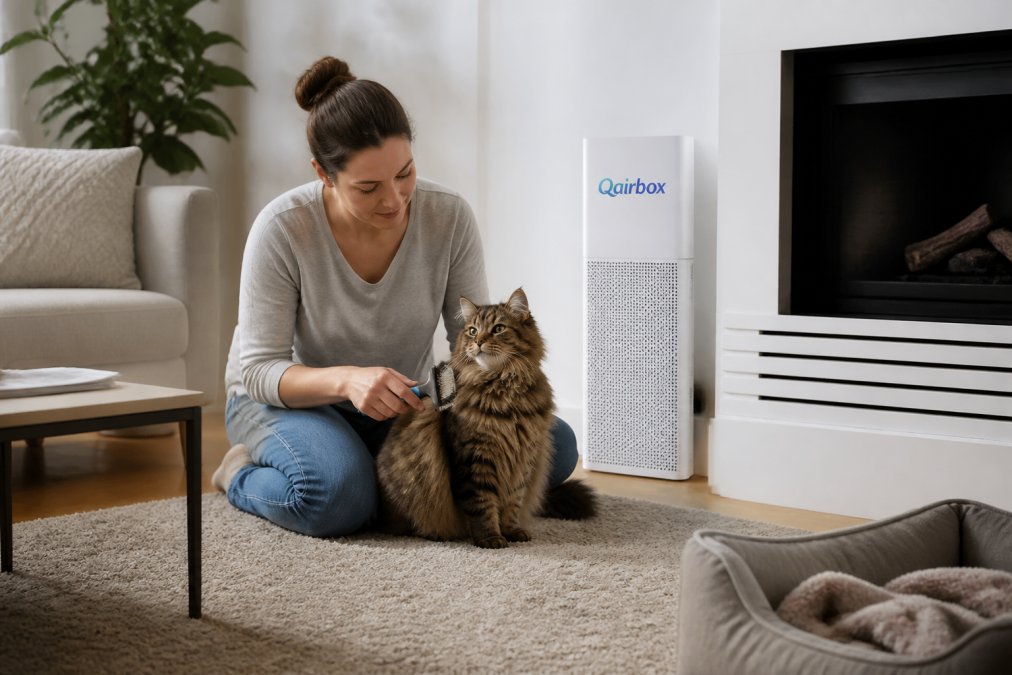
Table of Contents
- Why Cat Dander Lingers and What Actually Removes It
- Step 1: Vacuum With a True HEPA Filter
- Step 2: Wipe Surfaces With Damp Cloths, Not Dry Dusting
- Step 3: Wash Bedding and Soft Furnishings Weekly
- Step 4: Groom Your Cat to Reduce Dander at the Source
- Step 5: Managing Indoor Air Quality With Pets
- Step 6: Choosing the Best Air Purifier for Pet Odors and Dander
- Step 7: Create an Allergen-Free Zone for Sleeping
- Frequently Asked Questions
Last Updated: September 9, 2026
Why Cat Dander Lingers and What Actually Removes It
Cat dander is microscopic flecks of dead skin that carry the protein Fel d 1, the true trigger behind most cat allergies. Because these particles are tiny and lightweight, they stay airborne for hours and settle deep into upholstery, carpets, and bedding. This guide walks through the seven steps that actually reduce cat dander in your home, moving from daily habits to whole-home strategies, and each step is designed to reduce cat dander at its source and in the air.
The key insight most guides miss is that dander control requires a layered approach. No single method works alone, but combining source control, surface cleaning, and air purification creates a measurable difference in how often allergy symptoms appear.
Step 1: Vacuum With a True HEPA Filter
Standard vacuums recirculate fine particles back into the room, undoing your work as you clean. A vacuum with a true HEPA filter traps dander particles and other microscopic allergens rather than blowing them into the air you breathe. But not all vacuuming is equal, the surface you are cleaning changes the protocol.
Carpet and Area Rugs: Slow, Multi-Pass Technique
Carpet is the single deepest reservoir for dander in most homes. For wall-to-wall carpet and large area rugs, use a slow, overlapping pattern: push the vacuum forward, pause, then pull back at roughly half the speed you normally would. Make three passes over high-traffic zones where your cat sleeps or sits.
Vacuum at least twice per week in homes with cats, and increase to every other day during peak shedding seasons (spring and fall). Use the crevice tool along baseboards and the gap between carpet and wall, this strip collects more dander than the open floor because it is shielded from normal air movement.
Hardwood, Tile, and Laminate: Capture, Don't Scatter
Hard floors require a different approach. A vacuum with a beater bar active on hard flooring can scatter particles rather than capture them. Switch to the hard-floor setting if your vacuum has one, which retracts the brush roll and relies on suction alone.
After vacuuming hard floors, follow with a damp microfiber mop. The dampness captures the microscopic residue that suction leaves behind, particularly in the grout lines of tile and the seams of hardwood planks. This two-step sequence, vacuum then damp mop, removes significantly more dander than either method alone.
Upholstery: The Overlooked Reservoir
Sofas, armchairs, and fabric headboards collect dander every time your cat jumps onto them. Use the upholstery attachment with the brush tool at least weekly, running it slowly over the entire surface. Flip removable cushions and vacuum the underside and the crevice where the cushion meets the frame, this hidden pocket traps fur and dander that you cannot see.
Bagged vs. Bagless: What Actually Matters
A true HEPA filter on the exhaust is non-negotiable, but the collection system matters too. Bagged vacuums are generally better for allergy sufferers because emptying the bin on a bagless model re-suspends captured dander into the air. If you use a bagless vacuum, empty it outdoors while wearing a mask, and rinse the bin with water afterward. Never empty it indoors, that single act can undo the allergen reduction you just achieved.
When Vacuuming Isn't Enough
Even the most thorough vacuuming protocol cannot remove dander that has become airborne. Vacuuming disturbs particles, and some will float into the breathing zone regardless of technique. This is why surface cleaning must pair with continuous air purification. In desert climates where homes run sealed for months at a time, dander concentration builds steadily between vacuuming sessions. A whole-home air purification system installed in the attic operates 24/7, capturing airborne dander that vacuuming misses.
Step 2: Wipe Surfaces With Damp Cloths, Not Dry Dusting
Dry dusting simply pushes dander particles from one surface to another, leaving them suspended in the air where they can trigger respiratory symptoms for hours. Damp dusting, by contrast, captures and removes these allergens from your home.
Use a microfiber cloth lightly dampened with water to wipe down hard surfaces, including shelves, window sills, electronics, and baseboards, at least once per week. This method of surface cleaning also picks up dander that has settled on vertical surfaces, which many homeowners overlook entirely.
Step 3: Wash Bedding and Soft Furnishings Weekly
Soft furnishings act as reservoirs for dander, holding onto particles that then release into the air every time someone sits or lies down. Washing these items weekly in hot water removes both dander and the dust mites that feed on it.
| Item | Washing Frequency | Water Temperature | Additional Step |
|---|---|---|---|
| Bed sheets | Weekly | Hot (130°F+) | Use allergen-proof covers on mattress and pillows |
| Cat bedding | Weekly | Hot | Wash separately from family laundry |
| Throw blankets | Every 1-2 weeks | Hot | Air dry if fabric allows |
| Curtains | Monthly | Warm or hot | Vacuum with upholstery attachment between washes |
For items that cannot be washed, such as large upholstery or decorative pillows, vacuum them thoroughly with your HEPA vacuum and consider treating them with a fabric-safe allergen neutralizer.
Step 4: Groom Your Cat to Reduce Dander at the Source
Regular grooming removes loose fur and the dander attached to it before it spreads through your home. This source-control step directly lowers the amount of airborne particles your cat sheds daily.
Brush your cat outdoors when weather permits, or in a room that is easy to clean, at least three to four times per week. For long-haired breeds, daily grooming frequency may be necessary. Wearing a mask and gloves during grooming can help sensitive owners avoid direct exposure.
Step 5: Managing Indoor Air Quality With Pets
Even with diligent cleaning, dander particles become airborne every time your cat moves, jumps, or grooms. Managing indoor air quality with pets means addressing both the particles already floating in your air and the conditions that keep them there. This is where the science of airflow matters more than most guides acknowledge.
The Stack Effect and How It Works Against You
Warm air rises. In a typical two-story home, this creates a natural upward draft called the stack effect. As warm air from the first floor rises, it carries lightweight dander particles with it, depositing them into bedrooms where families sleep. This is why allergy symptoms often feel worse in the morning.
You can interrupt this pattern with strategic ventilation. On mild days when outdoor pollen counts are low, open windows on opposite sides of the home to create cross-ventilation. Open a first-floor window on the windward side and a second-floor window on the opposite side, this creates a pressure differential that pulls air through the entire home.
The 30-50 Percent Humidity Sweet Spot
Controlling indoor humidity directly affects how long dander stays airborne. Above 50 percent relative humidity, dander particles absorb moisture, become heavier, and settle onto surfaces faster, concentrating allergens where foot traffic re-suspends them. Below 30 percent, particles drift longer, but the dry air irritates nasal passages, making symptoms feel worse.
Keep relative humidity between 30 and 50 percent. In desert climates, where summer humidity often drops below 20 percent, a whole-home humidifier can bring the air into the optimal band. In humid seasons, a dehumidifier serves the opposite purpose. A simple indoor hygrometer, available at any hardware store for under $20, tells you which direction you need to adjust.
The Problem With Sealed Homes
Modern homes in hot, dusty climates are built tight to keep cooled air inside. This is excellent for energy efficiency but problematic for allergen control. In a sealed home, the same dander particles recirculate for hours or days, and every time your cat grooms, jumps, or shakes, it adds more particles to an already saturated indoor air supply.
Opening windows helps when outdoor conditions allow, but in desert summers, when outdoor temperatures exceed 100°F for weeks at a time, natural ventilation is not a realistic option. Ceiling fans keep air stirred but do not remove anything. The only way to actually reduce the particle count in a sealed home is continuous filtration.
Why Room-Sized Solutions Fall Short
A portable air cleaner in the living room cleans only the air that reaches its intake. Dander generated in a hallway, a bedroom, or a home office never makes it to that single unit, creating a patchwork of cleaner and dirtier zones throughout the home.
A standalone whole-home air purification system, professionally installed in the attic, draws air from every room through the home's return pathways and filters it continuously. Because it runs 24/7 out of sight, it can help maintain consistently lower particle levels throughout the entire house, potentially preventing dander from accumulating to symptom-triggering levels between cleaning sessions.
Monitoring Your Progress
You do not need expensive equipment to know whether your air quality strategy is working. If you wake up congested but feel better after leaving the house, dander is accumulating in your bedroom overnight. If symptoms spike after vacuuming, you are re-suspending particles faster than your air filtration can capture them. These patterns tell you which part of your layered strategy needs adjustment.
Step 6: Choosing the Best Air Purifier for Pet Odors and Dander
The best air purifier for pet odors and dander is one that matches the scale of your problem. Room-sized units only clean the air where they sit.
For whole-home coverage, a standalone system installed in the attic operates out of sight while continuously filtering air from every room. This approach delivers hospital-grade purification throughout the entire house.
Whole-home purification can be particularly effective in tightly sealed desert homes, where the same air recirculates and dander concentration builds over time. A system that runs 24/7 can help keep airborne contaminants at consistently lower levels.
Step 7: Create an Allergen-Free Zone for Sleeping
Your bedroom should be the one room where you can breathe easily, especially if allergies disrupt your sleep. Establishing an allergen-free zone requires making the room less hospitable to dander and the particles that carry it.
Start by keeping your cat out of the bedroom entirely, particularly off the bed. This single change dramatically reduces your overnight exposure. Wash your bedding weekly as outlined in Step 3, and use allergen-proof covers on your mattress, box spring, and pillows.
Remove carpeting if possible, replacing it with hard flooring that does not trap dander. If carpet must remain, vacuum it twice weekly with your HEPA vacuum. Keep surfaces minimal and dust them weekly with a damp cloth.
For allergy-sensitive households, this layered strategy of source control, surface cleaning, and whole-home air purification can contribute to symptom relief. Combining these habits with a professionally installed system may help families manage allergies and live more comfortably with a cat.
Frequently Asked Questions
How can I stop being allergic to cat dander while keeping my pet?
You cannot stop being allergic, but you can reduce dander levels enough to manage symptoms. Combine weekly HEPA vacuuming, damp dusting, and washing your cat's bedding in hot water. Groom your cat outdoors or in a well-ventilated area to capture loose fur and dander. Run a whole-home air purification system continuously to remove airborne particles. Creating an allergen-free bedroom and keeping your cat out of it gives your body a nightly break, which helps reduce symptoms.
Does vacuuming actually remove cat dander from carpets?
Yes, but only with the right equipment. Standard vacuums can recirculate microscopic dander particles back into the air. A vacuum with a true HEPA filter traps those particles instead of releasing them. For best results, vacuum carpets and upholstery at least twice per week. Pay extra attention to areas where your cat sleeps, since dander accumulation is highest there. If you have hard floors, use a microfiber mop after vacuuming to capture the sticky proteins that cling to surfaces.
Why does cat dander linger in the air longer than other allergens?
Cat dander particles are extremely small, often less than 2.5 microns, and they are sticky. Their tiny size lets them stay airborne for hours after a disturbance, and their sticky nature makes them cling to walls, fabrics, and upholstery. Standard dusting and vacuuming often miss them. This is why managing indoor air quality with pets requires continuous filtration rather than occasional cleaning. A whole-home air purification system can capture these particles as they circulate, rather than waiting for them to settle.
What is the best air purifier for pet odors and dander?
For whole-home coverage, a standalone attic-mounted system like Qairbox's QBox can be an effective choice. Unlike portable units that only clean one room, it is professionally installed out of sight and runs 24/7 to filter air throughout the entire house. It does not connect to or modify your existing HVAC system. This matters because dander and odors circulate through every room, so a single-room unit can leave the rest of your home unprotected. Look for hospital-grade filtration that captures microscopic dander particles and helps reduce pet odors.
Whole-home dander control is not about any single product or habit. It is about building a system where cleaning, grooming, and air purification work together to keep allergen levels consistently low. Qairbox offers a standalone, attic-mounted purification system that runs quietly around the clock, reducing airborne particles throughout your entire home without touching your existing HVAC. Schedule a consultation to learn whether whole-home purification fits your allergy management plan.