HVAC Attic Installation for Air Purification: A 2026 Guide
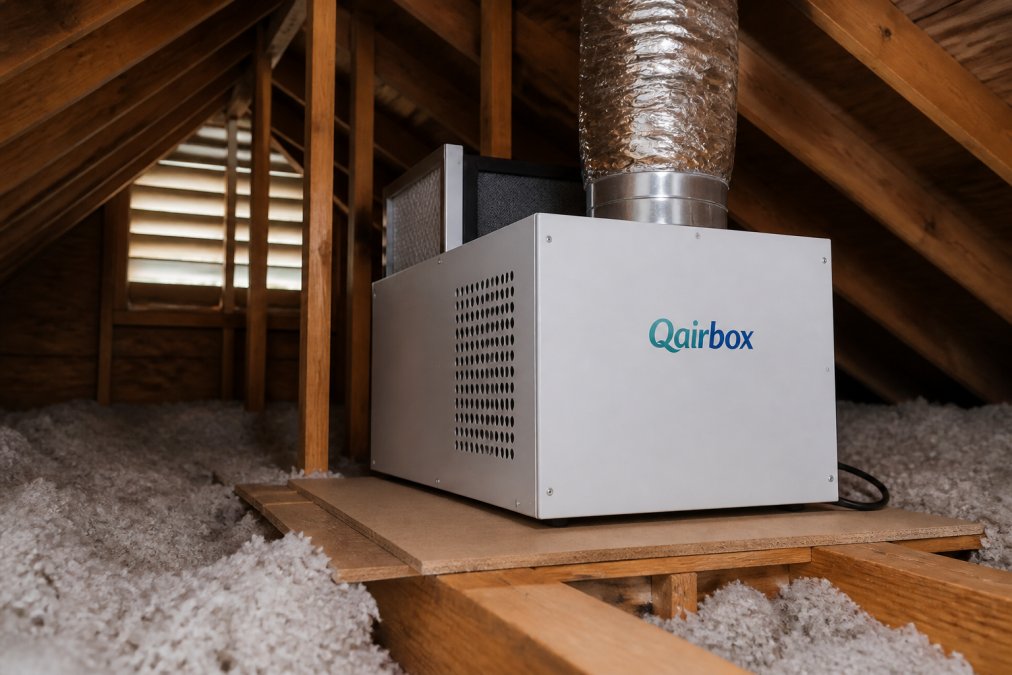
Table of Contents
- Understanding Attic Air Handler Units and Air Purification
- Why Whole-Home Air Purification Benefits Desert Homes and Allergy Sufferers
- Standalone Air Purification vs HVAC Integration: What Homeowners Need to Know
- Key Installation Requirements for Attic-Mounted Air Purification Systems
- Maintaining Healthy Air in Desert Climates: Attic System Performance
- Professional Air Purification System Installation: What to Expect
- Common Attic Installation Mistakes to Avoid
- Frequently Asked Questions
Last Updated: August 29, 2026
Understanding Attic Air Handler Units and Air Purification
An air handler is the HVAC component that circulates conditioned air through your home's ductwork. Located in the attic, basement, or crawlspace, it contains the blower motor that pushes air through return ducts and out through supply vents. Most homeowners assume any air purification solution must integrate with their existing HVAC system. That's not the case.
A standalone whole-home air purification system operates independently, meaning it doesn't alter static pressure, doesn't interfere with your air handler's performance, and doesn't require modification to your existing ductwork or equipment. For homeowners in desert climates or those with allergy-sensitive family members, this distinction is critical. Your HVAC system was designed to heat and cool efficiently. A standalone system eliminates the conflict between cooling demands and purification requirements entirely.
Why Whole-Home Air Purification Benefits Desert Homes and Allergy Sufferers
Desert climates present unique air quality challenges. Dust infiltration, pollen from native vegetation, and particulate matter from construction or agricultural activity penetrate homes continuously. Tightly sealed homes, essential in hot climates to maintain cooling efficiency, trap these contaminants inside without natural air exchange.
For allergy-sensitive households, the problem intensifies. Allergens accumulate in every room throughout the day.
Whole-home air purification solves this by treating air at the source. Rather than chasing contaminants room by room, a professionally installed system in your attic purifies air as it circulates through your home's natural ventilation pathways. This means consistent air quality in every room, every hour, without the maintenance burden of multiple portable units.
For families with young children or older adults, this consistency matters significantly. Older adults with compromised immune systems benefit from continuous, hospital-grade purification.
Standalone Air Purification vs HVAC Integration: What Homeowners Need to Know
Most guides mislead homeowners by presenting HVAC integration as the natural solution. The technical reality is far more complex and far less favorable.
How Standalone Systems Protect Your Existing HVAC
Your HVAC system operates within strict parameters. The blower motor is sized to move air through your ductwork at a specific velocity. The return air grille, ductwork dimensions, and supply plenum are all engineered as an integrated system. When you add filtration to that system, you increase resistance to airflow, what HVAC professionals call static pressure.
Increased static pressure forces your blower motor to work harder, consuming more energy, generating more heat, and reducing motor lifespan. Over time, this creates reduced airflow, less efficient heating and cooling, higher energy bills, and eventual motor failure.
A standalone whole-home air purification system avoids this entirely. Operating independently, it purifies air without imposing demands on your HVAC system. Your existing air handler continues operating exactly as designed. No static pressure increase. No efficiency loss. No motor strain.
Static Pressure and Airflow: Why Independence Matters
Static pressure is the resistance air encounters as it moves through your HVAC system. Every component, return air grille, filters, ductwork bends, and supply plenum, adds resistance. Your blower motor must overcome this resistance to maintain adequate airflow.
When you add high-MERV filtration to an existing system, static pressure increases. The blower motor compensates by running faster, consuming more electricity and generating more heat. In desert climates where cooling demands are already extreme, this additional load can reduce system efficiency by 10-15%.
A standalone system operates on its own static pressure curve without interacting with your HVAC system's pressure dynamics. Your air handler maintains its original performance characteristics while the purification system operates independently.
Key Installation Requirements for Attic-Mounted Air Purification Systems
Installing a whole-home air purification system in your attic requires careful attention to several technical factors. Professional installation ensures these details determine whether your system performs as intended.
Return Air Grille Placement and Ductwork Considerations
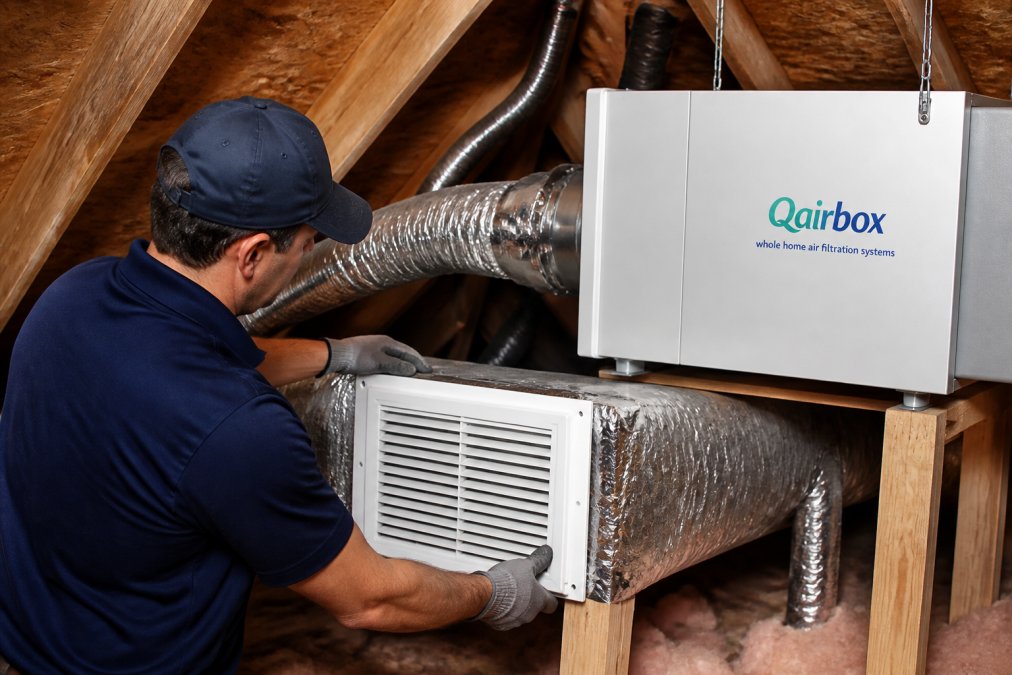
The return air grille is where your system draws air from your home. Placement affects how effectively the system captures contaminants and distributes purified air back through your ductwork.
In attic installations, the return air grille should be positioned to draw from the central return path of your home's ventilation system. Placement too close to supply vents creates short-cycling, where freshly purified air immediately returns to the system without reaching living spaces.
Professional installers assess your home's ductwork layout, identify the optimal return air location, and ensure the grille connects properly to existing return ducts. Sealed ductwork is essential, any leaks mean unfiltered air bypasses your purification system entirely.
MERV Rating Compatibility for Attic Units
MERV (Minimum Efficiency Reporting Value) ratings measure a filter's ability to capture particles of different sizes. Higher MERV ratings capture smaller particles but create greater resistance to airflow.
For standalone attic-mounted systems, MERV rating selection depends on your system's blower capacity and your home's air quality needs. A system designed for MERV-13 filtration shouldn't be retrofitted with MERV-16 filters, the increased resistance will reduce performance and strain the motor.
Professional assessment during installation verifies that your system's motor and ductwork can accommodate your chosen filtration level. Incompatible MERV ratings create a common mistake: homeowners upgrade to higher-rated filters thinking they'll improve air quality, only to discover reduced airflow and system strain.
Condensation and Mold Risk Prevention
Attic installations face unique environmental challenges. Temperature fluctuations and seasonal changes create conditions where condensation can form on system components and ductwork.
In desert climates, this risk is lower than in humid regions, but it's not zero. Attic temperatures can swing 40-50 degrees between day and night. When warm, humid air inside ductwork contacts cold metal surfaces, condensation forms, leading to mold growth.
Prevention requires proper insulation of ductwork, sealed connections to prevent moisture infiltration, and adequate attic ventilation to manage humidity levels. Professional installation includes assessment of your attic's moisture profile and implementation of preventative measures specific to your climate.
Maintaining Healthy Air in Desert Climates: Attic System Performance
Desert climates demand continuous attention to air quality. Low humidity, dust infiltration, and construction activity create conditions where airborne contaminants accumulate rapidly. A whole-home air purification system running 24/7 addresses this, but maintaining peak performance requires understanding what your system is doing.
Monitor your system's performance metrics. Most professionally installed systems include indicators showing filter status and airflow rate. A properly functioning system maintains consistent airflow without noise changes or pressure fluctuations.
In desert climates, filter replacement cycles are shorter than in moderate climates. Higher dust loads mean filters accumulate particles faster. This is normal and reflects your environment's actual air quality demands. The benefit of a standalone whole-home system is that you're managing one professional-grade system rather than multiple portable units scattered throughout your home.
Professional Air Purification System Installation: What to Expect
Installing a whole-home air purification system is a technical process requiring professional expertise.
Pre-Installation Assessment and System Sizing
Before installation begins, your installer should conduct a thorough assessment of your home's air quality needs and HVAC characteristics. This includes measuring your home's square footage, assessing dust and allergen levels, evaluating your existing ductwork, and identifying optimal placement for return air grilles.
System sizing depends on air exchange rates, how many times per hour the system should cycle your home's total air volume. A properly sized system for a 2,000-square-foot home in a desert climate typically exchanges air 4-6 times daily.
Your installer should also evaluate your attic space for adequate room, existing penetrations, obstacles, temperature profile, and ventilation status. A reputable installer explains what they're evaluating and asks about your family's specific air quality concerns, allergies, pet dander, cooking odors, dust sensitivity, to ensure the system specification matches your actual needs.
Installation Process and Timeline
The actual installation typically takes 6-10 hours, depending on your home's complexity and existing ductwork configuration. The installer prepares the attic space, ensuring adequate clearance around the system and establishing proper ventilation.
Return air ductwork is connected to the system's intake with careful attention to sealing all joints and connections. The installer uses mastic sealant and metal tape to ensure airtight connections. The blower motor and filtration components are installed and tested for proper operation.
Finally, the system is integrated with your home's existing ductwork in a way that doesn't interfere with your HVAC system's operation. The purification system operates independently, drawing from and returning to your home's air circulation without modifying your air handler or existing equipment.
Post-Installation Testing and Performance Verification
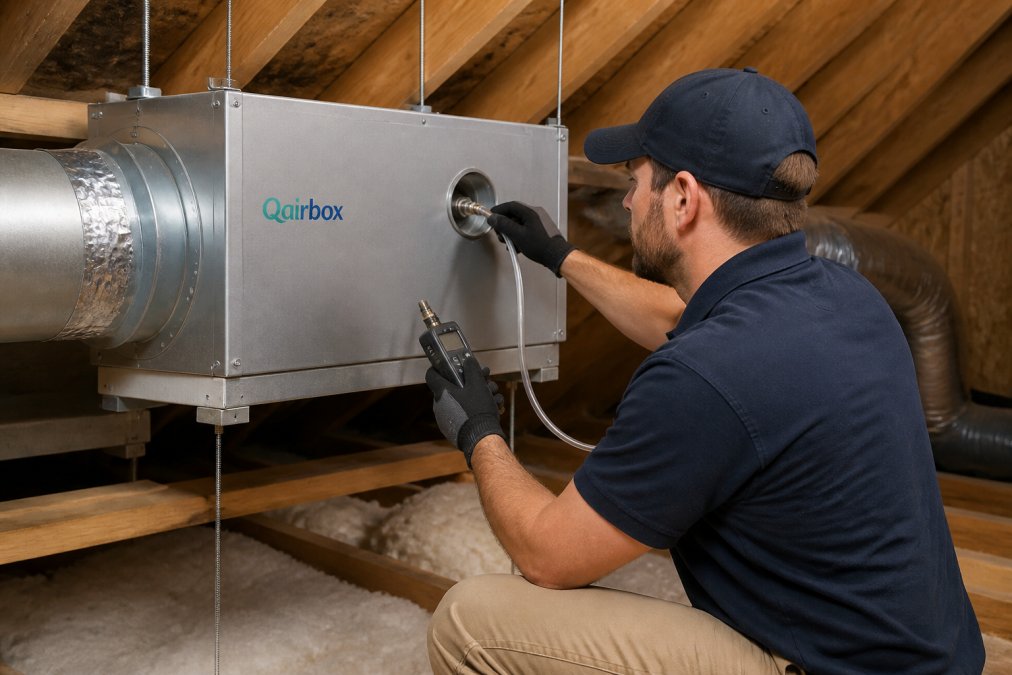
After installation, your system undergoes comprehensive testing. The installer measures airflow rates, verifies static pressure is within acceptable ranges, and confirms that the system operates quietly and efficiently.
You should receive documentation showing baseline performance metrics, airflow rate, filter status, and operating parameters. Your installer should provide clear instructions on filter replacement schedules, system operation, and what normal performance sounds and feels like. A properly installed system runs quietly, unusual noises or vibrations indicate a problem requiring professional attention.
Common Attic Installation Mistakes to Avoid
Understanding common installation mistakes helps you evaluate whether your installer is taking proper precautions.
Inadequate return air ductwork sealing is the most common error. Unsealed ductwork allows unfiltered air to bypass your purification system. Professional installation includes complete sealing of all return ductwork joints using mastic sealant and metal tape.
Oversized or undersized systems create performance problems. An oversized system cycles excessively, increasing energy consumption and wear. An undersized system can't maintain adequate air exchange rates. Proper sizing based on your home's square footage and air quality needs is essential.
Improper return air grille placement creates short-cycling or dead zones. Professional installation includes assessment of your home's airflow patterns to identify optimal placement.
Inadequate attic ventilation creates moisture and heat buildup around the system, accelerating component degradation and increasing condensation risk.
Failing to isolate the system from HVAC equipment creates static pressure problems. Your purification system must operate independently without imposing additional load on your air handler.
Neglecting ductwork insulation in desert climates allows temperature extremes to affect system performance. Insulated ductwork maintains consistent air temperature and reduces condensation risk.
Adding a whole-home air purification system to your home addresses the air quality challenges that desert climates create. A standalone, professionally installed system purifies air continuously without modifying your existing HVAC equipment or creating energy efficiency problems. At Qairbox, we design systems specifically for homeowners in hot, dusty climates who want hospital-grade purification running quietly out of sight in their attic. The system reduces odors, airborne particles, and chemical irritants throughout your entire home, without the maintenance burden of multiple portable units. If you're concerned about indoor air quality for your family's health, Schedule Consultation to discuss how a standalone whole-home system fits your home's specific needs.
Frequently Asked Questions
Will an attic-mounted air purification system work with my existing HVAC system?
Yes. Standalone whole-home air purification systems operate independently, they don't connect to, retrofit, or modify your existing HVAC or central A/C system. Your current system continues to function normally while the attic-mounted purifier runs on its own 24/7, delivering hospital-grade filtration throughout your home. This independence protects your existing equipment and avoids the static pressure and airflow restrictions that occur when purification is added directly to HVAC ductwork.
How does attic-mounted air purification improve indoor air quality for allergy sufferers?
Attic-mounted systems capture airborne pollutants, dust, and allergens throughout your entire home using continuous filtration. Unlike portable room purifiers, whole-home air purification benefits allergy-sensitive households by cleaning air in every room simultaneously, bedrooms, living areas, and kitchens. The system removes particulate matter and chemical irritants 24/7, reducing the allergen load that triggers symptoms. Families with severe allergies, young children, and older adults benefit from continuous purification.
Is professional installation required for attic air purification systems?
Yes. Professional air purification system installation ensures proper sizing, ductwork integration, return air grille placement, and system performance verification. Technicians assess your attic space, account for static pressure and airflow requirements, and verify that the blower motor and filtration efficiency meet your home's needs. Professional installation also prevents common mistakes like condensation buildup, mold risk, and inadequate air exchange rates. Installation includes testing to confirm the system is working correctly and delivering clean air throughout your home.
Will adding an attic air purification system affect my energy bills or HVAC efficiency?
Standalone attic-mounted systems operate independently of your HVAC, so they don't restrict airflow or increase static pressure on your existing air handler. Because they run on their own motor and blower, they don't burden your furnace or air conditioning unit. Energy consumption depends on the system's design and runtime, but professional installation ensures the system is sized and configured to run efficiently. Your existing HVAC efficiency remains unchanged, and the purification system's energy use is separate from your heating and cooling costs.