HVAC Air Cleaners & Existing Systems: What Works

Table of Contents
- How HVAC-Integrated Air Cleaners Work
- Can You Add Air Cleaners to an Existing HVAC System?
- Dangers of Restricting HVAC Airflow
- Whole-Home Air Purification Benefits Without System Modification
- Attic-Mounted Air Purifier Installation: A Standalone Approach
- Comparing Retrofit Systems vs. Standalone Whole-Home Purification
- Conclusion
Last Updated: August 19, 2026
How HVAC-Integrated Air Cleaners Work
HVAC-integrated air cleaners sit inside your home's existing heating and cooling infrastructure, typically in the return air plenum or ductwork, and rely on your central system's blower motor to push air through their filtration media. When your furnace or air handler runs, air gets pulled through the integrated cleaner before circulating through your ductwork and returning to living spaces. The system captures airborne particles, dust, pollen, pet dander, and other contaminants using HEPA filtration, media air cleaners, or activated carbon.
This sounds efficient in theory. In practice, there's a critical catch: integrating an air cleaner into your existing HVAC system adds static pressure to your ductwork. Your blower motor has to work harder to push air through the additional filtration layer. More resistance equals higher energy use, reduced airflow, and potential strain on your system over time. Filter replacement also requires periodic maintenance and accessing your HVAC equipment, which can become a hassle for homeowners unfamiliar with their heating and cooling systems.
Can You Add Air Cleaners to an Existing HVAC System?
Technically, yes, but it's not always practical. Whether you can retrofit an integrated air cleaner depends on three factors: your HVAC system's design, available space in your ductwork, and your blower motor's capacity.
Most modern HVAC systems have a return air plenum where technicians typically install integrated air cleaners. If your home has adequate plenum space and accessible ductwork, retrofitting is technically possible. However, accessibility varies dramatically. Homes with finished basements, attics, or crawl spaces offer easier installation points, while homes with tight, enclosed systems present challenges.
The blower motor capacity is the real constraint. Your HVAC system's motor is sized to move air through your existing ductwork at a specific rate. Adding a media air cleaner or HEPA filter increases the static pressure the motor must overcome. If your blower motor lacks spare capacity, it will run harder, consume more energy, and potentially fail sooner. Professional HVAC technicians can assess whether your system can handle an integrated air cleaner by measuring static pressure and evaluating motor specifications, though this assessment typically requires a service call and may reveal that ductwork modifications, sealing leaks, or reinforcing connections are necessary, adding to total cost and complexity.
Your existing HVAC system was engineered for its current configuration. Adding filtration changes that equation, and it's not always advisable without professional evaluation.
Dangers of Restricting HVAC Airflow
When you restrict airflow in your HVAC system through an integrated air cleaner, clogged filters, or sealed ductwork, you create cascading problems that extend far beyond reduced air circulation.
Static pressure buildup forces air to find alternative routes, often leaking through small gaps or poorly sealed connections. These leaks pull unconditioned air from your attic or crawl space into your living areas, directly undermining your air quality goals. You're filtering some air while simultaneously introducing unfiltered air through leaks, a self-defeating cycle.
Blower motor strain follows naturally. Your furnace's blower motor must work harder to maintain airflow, generating more heat and accelerating wear. Motors that should last 15-20 years may fail in 10, with replacement costs typically running several hundred dollars plus service calls.
Reduced heating and cooling efficiency means your system moves less air per cycle, taking longer to condition your home. Your furnace or air conditioner runs longer to reach your thermostat setpoint, consuming more energy and driving up utility bills. In hot, desert climates where air conditioning runs continuously, this efficiency loss becomes significant.
Temperature stratification occurs when airflow is insufficient to distribute conditioned air evenly. Upstairs rooms may stay warmer while downstairs stays cooler. Your system compensates by running longer, further reducing efficiency and comfort.
Moisture and humidity control can suffer too. Adequate airflow is necessary for proper dehumidification in cooling mode. Restricted airflow means moisture removal becomes less effective, creating conditions where mold and mildew can develop in your ductwork or around your air handler.
This is why HVAC professionals warn against overly restrictive filtration. Your HVAC system is a balanced ecosystem. Change one variable significantly, and you cascade effects throughout the entire system.
Whole-Home Air Purification Benefits Without System Modification
The core challenge is clear: you want whole-home air purification without the complications of retrofitting your existing HVAC system. The solution exists and doesn't involve modifying your heating and cooling equipment.
Standalone whole-home air purification systems operate independently from your HVAC infrastructure. These systems don't connect to your furnace, don't modify your ductwork, and don't add static pressure to your existing equipment. Instead, they create a separate, dedicated air purification pathway that runs continuously on its own schedule, completely isolated from your central heating and cooling system.
A standalone whole-home air purification system delivers several advantages that integrated approaches cannot match. First, there's no HVAC compatibility risk. Your furnace, air conditioner, and blower motor continue operating exactly as engineered. No added strain, no reduced airflow, no efficiency penalties.
Second, filtration capacity scales independently. A standalone system can use hospital-grade HEPA filtration, activated carbon, or UV technology without worrying about static pressure limits imposed by your blower motor. The system's motor is sized specifically for its filtration load.
Third, maintenance becomes simpler. You're not coordinating filter changes with your HVAC service schedule or accessing your furnace. A dedicated system has a clear maintenance cycle you control.
Fourth, installation flexibility is dramatically higher. A standalone system doesn't require specific ductwork configurations, adequate plenum space, or accessible HVAC equipment. It works in older homes, newer homes, and homes with complex ductwork.
For homeowners in hot, dusty desert climates, this independence is particularly valuable. You're not limited by your HVAC system's original design. You get both efficiency and air quality. The trade-off is space: a standalone system requires dedicated installation location, typically the attic, out of sight, running quietly 24/7. The system operates independently of your heating and cooling cycles, meaning it purifies air even when your furnace or air conditioner isn't running. For allergy-sensitive households and homes with young children or older adults, this continuous purification becomes a significant health benefit.
Attic-Mounted Air Purifier Installation: A Standalone Approach
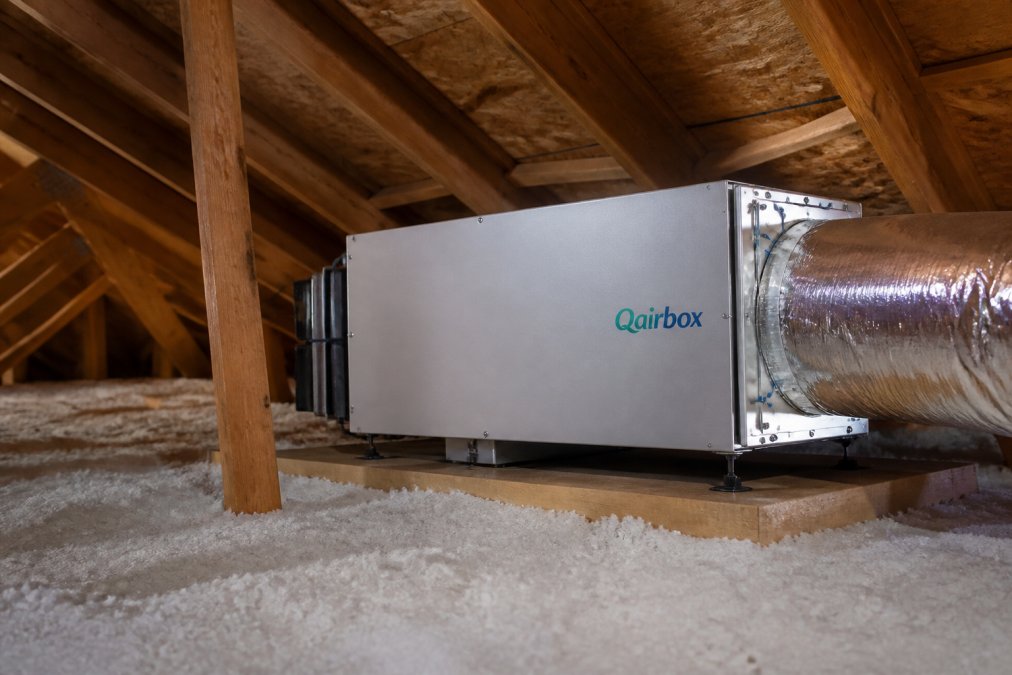
An attic-mounted standalone air purification system represents a fundamentally different approach than integrated HVAC solutions. Rather than trying to work within your existing heating and cooling infrastructure, this system operates as its own independent entity, professionally installed in a location that keeps it completely out of sight.

Installation location and setup. The attic offers the ideal installation point. It's out of living spaces, so noise and vibration never affect your daily experience. It's typically accessible for initial installation and future maintenance without disrupting your home. For tightly sealed desert homes designed to keep heat and dust out, the attic provides a clean, controlled environment where the system runs efficiently.
Professional installation ensures the system integrates properly with your home's air return pathways. The technician assesses your home's layout, determines optimal placement for air intake and distribution, and ensures all connections are properly sealed.
How it differs from HVAC integration. This standalone system doesn't touch your furnace, doesn't modify your ductwork, and doesn't interact with your air handler or blower motor. It creates a completely separate air purification loop. Air enters the system, passes through hospital-grade filtration, and returns to your home through dedicated pathways. Your existing HVAC system continues operating independently. There's no compatibility assessment needed, no static pressure calculations, no risk to your heating and cooling equipment.
Maintenance and filter replacement. A standalone system has a straightforward maintenance schedule. Filters get replaced on a predictable cycle based on your home's dust load and system runtime. You're not coordinating maintenance with your HVAC service schedule or waiting for your furnace technician.
Performance in desert climates. Homes in hot, dusty regions benefit particularly from this approach. The system can run continuously, regardless of whether your air conditioner is running. During hot afternoons when you're running AC constantly, the standalone system continues purifying. During cooler mornings or evenings when your AC cycles off, the system keeps working. For allergy-sensitive families dealing with dust, pollen, or desert particulates, this continuous operation is a genuine advantage over systems that only purify when your furnace or air conditioner happens to be running.
Comparing Retrofit Systems vs. Standalone Whole-Home Purification
Understanding the practical differences between these two approaches helps clarify which solution makes sense for your home.
| Aspect | Retrofit HVAC Integration | Standalone Whole-Home System |
|---|---|---|
| HVAC system modification | Required; adds static pressure | None; operates independently |
| Installation complexity | Depends on ductwork accessibility | Professional installation in attic |
| Blower motor impact | Increased workload and wear | No impact on existing HVAC |
| Energy efficiency | Potential increase in utility costs | No effect on HVAC efficiency |
| Filtration capacity | Limited by HVAC motor capacity | Sized independently for performance |
| Maintenance coordination | Tied to HVAC service schedule | Separate, simple maintenance cycle |
| Operating schedule | Only runs when HVAC cycles on | Continuous 24/7 operation possible |
| Compatibility risk | Varies by existing system | Zero compatibility issues |
The retrofit approach appeals to homeowners who want to consolidate systems. One furnace, one air handler, one blower motor handling both heating/cooling and air purification sounds efficient. In practice, this consolidation creates the static pressure and compatibility issues discussed earlier.
The standalone approach appeals to homeowners who want clarity and independence. You get dedicated air purification that operates on its own schedule, uses its own motor sized for its specific filtration load, and doesn't compromise your HVAC system's performance. There's no compatibility guessing game. There's no wondering whether your blower motor can handle the load. There's no risk of reduced heating and cooling efficiency.
For allergy-sensitive families in desert climates, the standalone approach offers another advantage: continuous operation. Your HVAC system cycles on and off based on temperature. A standalone system can run continuously, providing constant air purification regardless of your heating and cooling needs.
Conclusion
The question "Can HVAC-integrated air cleaners work with existing systems?" has a nuanced answer: technically yes, but practically it involves trade-offs that many homeowners don't anticipate. Static pressure increases, blower motors work harder, energy consumption rises, and compatibility questions linger. These aren't theoretical concerns, they're real consequences that affect your system's efficiency and lifespan.
For homeowners in hot, dusty desert climates seeking whole-home air purification without system complications, a standalone approach eliminates these problems entirely. Qairbox delivers hospital-grade purification through a professionally installed system that operates independently in your attic, out of sight, running quietly 24/7, reducing odors and airborne particles throughout your entire home without touching your existing HVAC or air conditioning equipment. The system works with any home configuration, requires no compatibility assessment, and maintains your heating and cooling system's original performance and efficiency.
Schedule a consultation with Qairbox to explore how a standalone whole-home air purification system can improve your indoor air quality without the complications of retrofitting your existing HVAC infrastructure.
Frequently Asked Questions
Do HVAC-integrated air cleaners restrict airflow in my existing system?
Yes, traditional in-duct air cleaners can restrict airflow, especially HEPA filters. This increases static pressure on your blower motor, forcing it to work harder and consuming more energy. Older HVAC systems are particularly vulnerable to airflow restrictions. A standalone whole-home air purification system avoids this problem entirely by operating independently without modifying your ductwork or air handler.
What are the risks of modifying my existing HVAC system for air purification?
Retrofitting air cleaners into an existing HVAC system carries several risks: static pressure buildup can shorten your blower motor's lifespan, professional ductwork modifications are expensive and invasive, and compatibility issues may void your system's warranty. If your home is tightly sealed (common in desert climates), added filtration can worsen air circulation problems. A professionally installed standalone whole-home air purification system eliminates these retrofit risks.
How does whole-home air purification benefit allergy-sensitive households?
Whole-home air purification systems reduce airborne allergens, dust, and particles throughout your entire residence 24/7, not just in one room. For families with severe allergies, this continuous filtration of airborne contaminants provides consistent relief. Standalone systems deliver hospital-grade purification without the maintenance burden of multiple room units or the airflow complications of HVAC modifications.
Can I add an air purifier to my existing central AC system without professional help?
DIY installation of in-duct air cleaners is not recommended. Improper installation can damage your air handler, create dangerous static pressure buildup, or leave gaps that allow unfiltered air to bypass the system. Professional installation is essential to assess compatibility, modify ductwork safely, and ensure proper airflow. For a simpler solution without system modification, a professionally installed standalone whole-home system is a safer choice.