Improve Indoor Air Quality in Desert Homes: 7 Steps
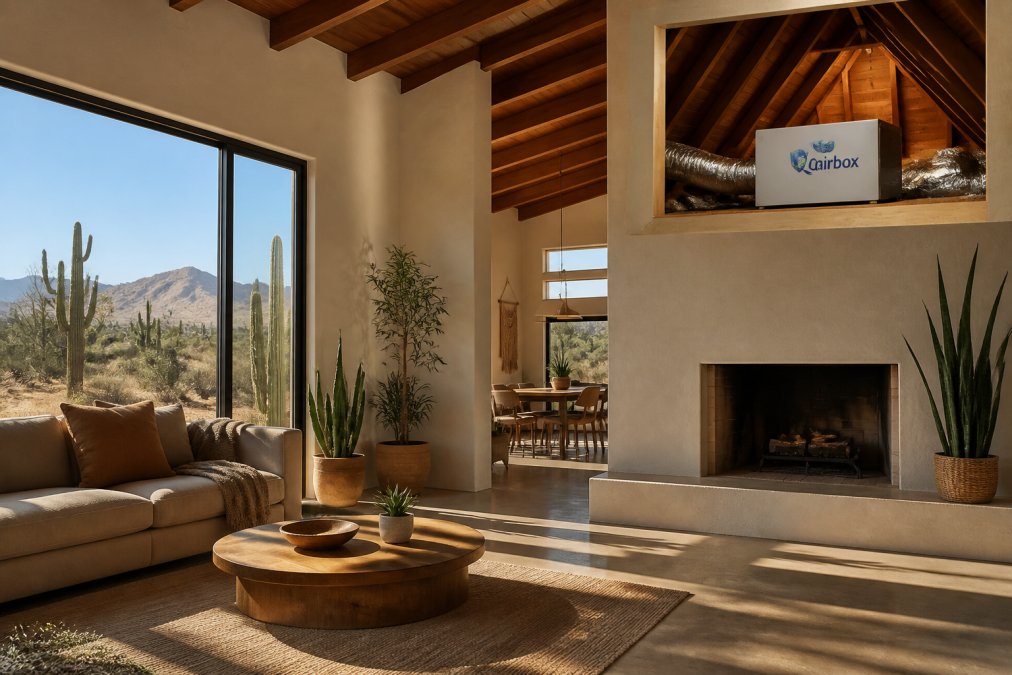
Table of Contents
- Why Indoor Air Quality Matters More in Desert Homes
- Step 1: Seal and Control Desert Dust at the Source
- Step 2: Establish Cross-Ventilation Without Inviting Dust
- Step 3: Manage Humidity and Prevent Mold in Arid Climates
- Step 4: Reduce Chemical Pollutants and Odors
- Whole-Home Air Purification Benefits for Desert Living
- Managing Indoor Allergens in Desert Regions
- Conclusion
Last Updated: August 10, 2026
Why Indoor Air Quality Matters More in Desert Homes
Desert homes face a unique air quality challenge that most homeowners underestimate. The combination of extreme heat, low humidity, and constant dust infiltration creates indoor air quality problems that differ fundamentally from other climates. When you live in a hot, arid environment, understanding how to improve indoor air quality in desert homes isn't just about comfort, it's about protecting your family's respiratory health.
The problem starts at the source: desert dust doesn't behave like dust elsewhere. Fine particulate matter from surrounding terrain, construction sites, and natural erosion penetrates even well-sealed homes. Add to this the prevalence of evaporative coolers (swamp coolers) in desert regions, which actually introduce moisture and can harbor mold spores if not properly maintained. Traditional approaches to indoor air quality, like relying on standard HVAC filters, fall short because they weren't designed for the specific contaminants and conditions of desert living.
At Qairbox, we work with homeowners across desert climates who've struggled with airborne allergens, dust accumulation, and odors that standard solutions don't address. The stakes are higher in these environments. Families with allergy-sensitive members, young children, or older adults face real health risks from poor indoor air quality. The good news: a systematic approach to improving indoor air quality in desert homes delivers measurable results, and it starts with understanding where contamination enters.
Below, we'll walk you through seven actionable steps that address the specific environmental stressors of desert living. These aren't generic tips, they're strategies built for homes where dust control, humidity management, and whole-home air purification work together to create a genuinely clean indoor environment.
Step 1: Seal and Control Desert Dust at the Source
The most effective way to improve indoor air quality in desert homes is to prevent dust from entering in the first place. Desert dust is relentless, and it exploits every gap, crack, and poorly sealed opening in your home's envelope. This is where source reduction begins.
Start with your doors and windows. Weather stripping deteriorates faster in desert heat, creating gaps that allow fine dust particles and sand to infiltrate. Walk around your home's perimeter on a windy day and watch where dust accumulates on sills and frames, that's where air (and dust) is leaking in. Replace worn weather stripping on all exterior doors, and check window seals for cracks or gaps. This single step blocks a significant portion of airborne particles before they ever reach your living spaces.

Next, examine your home's foundation and exterior walls. Desert homes often have small cracks that expand and contract with extreme temperature swings. Seal gaps around utility penetrations (where pipes, electrical lines, and HVAC ducts enter the home) with caulk or expanding foam. These openings are often overlooked but represent major dust infiltration points.
Your attic is another critical area. Many desert homes have attic vents that allow hot air to escape, but they also allow dust to enter. Ensure attic vents have proper screens and that the screens are intact. If your attic access is loose or poorly sealed, dust can settle throughout your home's upper levels and filter down into living spaces.
A common mistake homeowners make is assuming that closing windows and doors solves the problem. In reality, even tightly closed windows allow some dust penetration through microscopic gaps. The goal isn't zero dust, it's minimizing the volume of particulate matter that enters so other air quality strategies can handle what does get through.
Step 2: Establish Cross-Ventilation Without Inviting Dust
This is where desert living gets tricky. You need fresh outdoor air for healthy indoor air quality, but opening windows during dust storms or high-wind periods defeats the purpose of sealing your home. The solution is strategic cross-ventilation combined with controlled intake.
Cross-ventilation works by creating air flow from one side of your home to the opposite side, which helps remove stale air, odors, and volatile organic compounds that accumulate indoors. In desert climates, the best time to open windows is early morning or evening when temperatures drop and dust activity decreases. Open windows on opposite sides of your home for 15-30 minutes to create air exchange, then close them during peak heat hours when dust is most active.
If you have an evaporative cooler (swamp cooler), understand that it pulls outside air through wet pads and circulates it indoors. This introduces moisture, which is actually beneficial in arid climates, but it also means unfiltered desert air is entering your home. Ensure your evaporative cooler has clean intake filters and that the unit itself is well-maintained. Clogged or dirty cooler pads harbor mold spores and reduce air circulation efficiency.
For homes with traditional HVAC systems, keep your system running on the recirculation setting during high-dust periods. This cycles indoor air through your furnace filter without pulling in additional outside air. When dust levels are lower, switch to a setting that brings in some fresh outside air to prevent indoor air from becoming stale.
The key insight most guides miss: ventilation isn't just about opening windows. It's about timing your fresh air intake to avoid peak dust periods and using your home's existing systems strategically. In desert climates, smart ventilation means working with the environment's natural rhythms rather than against them.
Step 3: Manage Humidity and Prevent Mold in Arid Climates
Desert air is dry by definition, which creates a different indoor air quality challenge than humid climates face. While low humidity prevents mold growth in most of your home, certain areas, bathrooms, kitchens, laundry rooms, generate moisture that can concentrate in ways that promote mold if not managed.
Relative humidity in desert homes typically ranges from 10-30%, which is actually below the ideal indoor range of 30-50%. This dryness can irritate respiratory systems, especially for people with allergies or asthma. The goal is to maintain humidity in a healthy range without creating pockets of excessive moisture that enable mold spores to colonize.
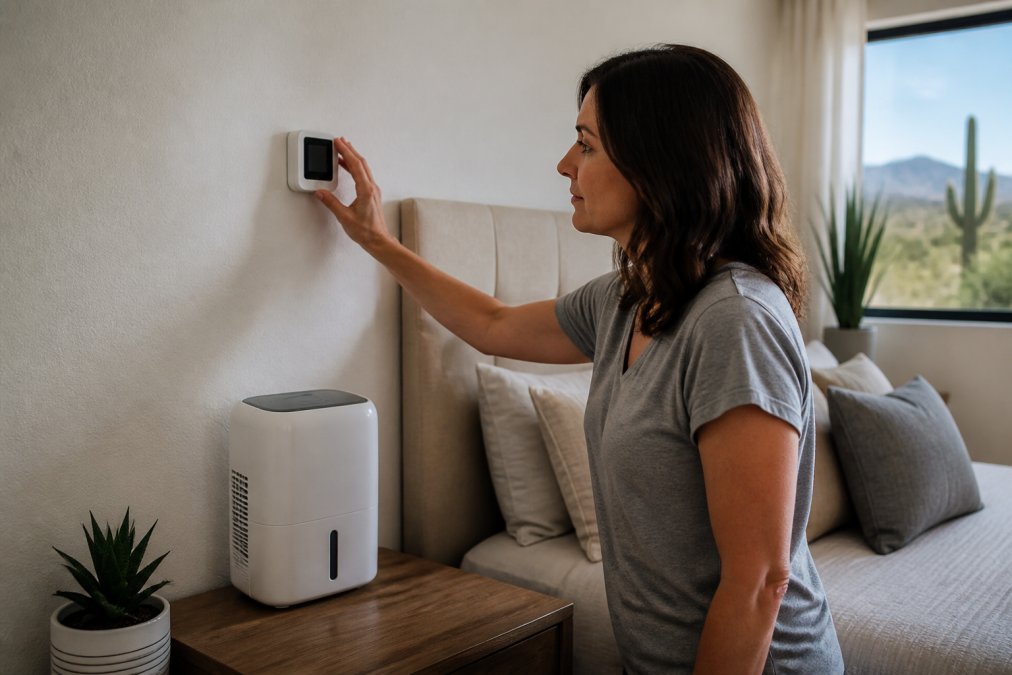
Use exhaust fans in bathrooms and kitchens during and for 20 minutes after showers or cooking. These fans remove moisture-laden air before it can settle on surfaces. If your home doesn't have exhaust fans, installing them is one of the highest-impact improvements for moisture control. Ensure fans vent outside, not into your attic, venting into the attic concentrates moisture where it can damage insulation and create hidden mold.
Monitor humidity levels with an inexpensive hygrometer. If your home consistently falls below 30% humidity, a humidifier can help, but use it cautiously. Portable humidifiers require frequent cleaning to prevent mold and bacterial growth. A better approach is to address the source: ensure your home isn't over-sealed to the point that normal activities (cooking, showering, breathing) can't raise humidity naturally.
In desert climates, the real mold risk isn't widespread, it's localized. Mold thrives in bathrooms, around air conditioning condensation lines, and in areas with water leaks. Inspect these zones regularly. If you see any discoloration or smell mustiness, address it immediately. Mold spores are potent airborne allergens that significantly degrade indoor air quality.
Step 4: Reduce Chemical Pollutants and Odors
Desert homes often have tight building envelopes to maintain cool temperatures, which means volatile organic compounds and odors can accumulate. These chemicals come from paint, furniture, cleaning products, cooking, and pet activities. In a sealed home, they have nowhere to go.
Start by identifying major sources. New furniture and flooring off-gas formaldehyde and other VOCs for months after installation. Cleaning products release chemical vapors. Cooking generates airborne particles and odors. Pet urine and feces create ammonia and other malodorous compounds. Each of these contributes to poor indoor air quality.
For new furniture or flooring, air out pieces in a garage or outdoor space before bringing them inside. This allows initial off-gassing to occur outside your living environment. Choose low-VOC paints and finishes when renovating. Switch to natural cleaning products, vinegar, baking soda, and hydrogen peroxide are effective and don't release harmful chemicals.
Cooking odors and particles are harder to control. Use your range hood exhaust fan during and after cooking, and ensure it vents outside (not recirculated back into your home). If you don't have a range hood, installing one is worthwhile. For persistent odors from pets or other sources, activated carbon filters are effective at absorbing odor molecules that standard filters miss.
The overlooked factor: odors and chemical pollutants often indicate the presence of other airborne contaminants you can't smell. When your home smells stale or has persistent odors despite cleaning, it's a signal that ventilation is inadequate or that a whole-home air purification approach is needed to handle the cumulative load of pollutants.
Whole-Home Air Purification Benefits for Desert Living
After sealing your home, establishing ventilation, managing humidity, and reducing chemical sources, you've addressed the foundational layers of indoor air quality. But in desert climates, these steps alone often aren't sufficient. This is where whole-home air purification becomes essential.
A whole-home air purification system differs fundamentally from portable room purifiers or standard HVAC filters. Unlike room units that clean only the air immediately around them, a whole-home system treats all air circulating through your home. Unlike standard furnace filters (typically MERV 8-13), hospital-grade purification systems use HEPA filtration and activated carbon to capture fine particulate matter, dust mites, pollen, and odors that escape traditional filters.
Qairbox offers a standalone whole-home air purification system installed in your attic, out of sight and out of mind. Because it operates independently of your HVAC system, it doesn't require modifications to your existing air conditioning or heating setup. It runs continuously, 24/7, delivering hospital-grade purification throughout your entire home. For desert homeowners, this means consistent reduction of dust, sand, allergens, and chemical irritants, the specific contaminants that plague arid climates.
The practical advantage: you get whole-home coverage without the maintenance burden of multiple portable units. A single professional system requires minimal upkeep and operates quietly in your attic. For families with allergy-sensitive members or young children, this level of continuous, whole-home purification is transformative. The air quality improvement is measurable, and the peace of mind is real.
Managing Indoor Allergens in Desert Regions
Desert environments generate specific allergens that differ from other climates. Dust mites thrive in low-humidity conditions but concentrate in bedding and upholstered furniture. Desert plants like ragweed and tumbleweeds release pollen that infiltrates homes. Construction dust from surrounding development adds silica particles and other irritants. These allergens, combined with the dust control challenges of desert living, create a unique allergen management problem.
Start with your bedroom, where you spend one-third of your time. Wash bedding weekly in hot water to kill dust mites and remove allergen accumulation. Use allergen-proof mattress and pillow covers, these physically block dust mites from entering your bedding. Reduce upholstered furniture in bedrooms; hard surfaces are easier to clean and don't harbor allergens.
Vacuum with a HEPA-filter vacuum cleaner, not a standard model. Standard vacuums can actually redistribute fine particles into the air. HEPA filters capture particles as small as 0.3 microns, which is where most allergens live. Vacuum high-traffic areas twice weekly and bedrooms at least weekly.
Air purification with HEPA filtration is the most effective method for removing airborne allergens that you can't control through cleaning alone. When you combine source control (sealing, reducing dust entry), environmental management (humidity, ventilation), and continuous air purification, allergen levels drop significantly. For families with severe allergies, this multi-layered approach often provides relief that single strategies cannot achieve.
The thing most guides miss about desert allergens: they're not just about pollen and dust mites. The combination of fine dust, sand particles, and construction debris creates an allergen load that's substantially higher than in other climates. Managing this requires a more aggressive approach than standard allergy advice suggests.
Conclusion
Improving indoor air quality in desert homes requires a different strategy than you'll find in generic guides. Your environment is unique: intense heat, low humidity, relentless dust, and the prevalence of evaporative cooling systems all demand specific solutions. The seven steps outlined here, sealing dust at the source, strategic ventilation, humidity management, reducing chemical pollutants, whole-home purification, and allergen control, work together to create genuinely clean indoor air.
For homeowners in desert climates, especially those with allergy-sensitive family members or young children, the investment in these improvements pays dividends in health and comfort. Qairbox's whole-home air purification system integrates seamlessly into this strategy, providing hospital-grade filtration that standard solutions cannot match. The system operates independently in your attic, requires minimal maintenance, and delivers continuous purification throughout your entire home, addressing the specific dust, allergen, and odor challenges that define desert living.
Frequently Asked Questions
Why is indoor air quality worse in desert environments?
Desert homes face unique air quality challenges: fine dust and sand intrusion through tiny cracks, low humidity that dries airways and increases dust particle suspension, and intense heat that accelerates off-gassing from furnishings and building materials. Evaporative coolers (swamp coolers), common in arid regions, can also introduce outdoor dust and allergens if not properly maintained. Tightly sealed homes designed to keep heat out trap these pollutants inside, concentrating airborne contaminants rather than diluting them.
What is the most effective way to purify air in a large desert home?
A whole-home air purification system installed in the attic delivers hospital-grade filtration throughout your entire residence without occupying living space. Unlike portable room purifiers, a whole-home system captures airborne particles, dust mites, mold spores, and volatile organic compounds at the source before they settle on surfaces. For desert homes, this approach eliminates the need for constant dusting and provides continuous, 24/7 protection, especially valuable for allergy-sensitive households.
How can I maintain clean air in a home without constant dusting?
Reduce dust at the source by sealing air leaks around windows and doors, using high-efficiency air filtration, and maintaining proper humidity levels (30-50%) to prevent dust particles from becoming airborne. Clean or replace furnace filters regularly, use exhaust fans in kitchens and bathrooms, and establish a cleaning routine that focuses on high-traffic areas. A whole-home air purification system captures fine dust particles before they settle, significantly reducing the need for frequent dusting.
Will adding an air purification system affect my energy bills in a desert home?
A standalone whole-home air purification system operates independently and does not modify your existing HVAC or cooling system, so it does not interfere with your air conditioning efficiency. In fact, by reducing the dust load that accumulates on HVAC components, it can help your existing system run more smoothly. The system is designed for energy-efficient operation in hot, sealed desert homes and runs quietly 24/7 without driving up utility costs.
Schedule a consultation with Qairbox to see how whole-home air purification can complete your desert home's indoor air quality strategy.