Improve Ventilation in Airtight Homes: A 2026 Guide

Table of Contents
- Why Airtight Homes Need Better Ventilation
- Signs of Poor Home Ventilation
- Mechanical Ventilation Solutions for Tight Homes
- Managing Moisture and Condensation in Sealed Homes
- Whole-Home Air Purification: Benefits Beyond Ventilation
- Natural Ventilation Strategies That Work
- Retrofitting Ventilation in Older Airtight Homes
- Frequently Asked Questions
Last Updated: September 22, 2026
Why Airtight Homes Need Better Ventilation
Modern homes are built tighter than ever. Builders seal cracks, install vapor barriers, and weatherstrip windows to save energy. This is good for your heating and cooling bills. But it creates a hidden problem: stale indoor air.
When a home is too airtight, fresh air can't flow naturally. Old air gets trapped inside. Moisture builds up. Odors linger. Pollutants accumulate. Your family breathes the same recycled air all day.
This is where ventilation becomes critical. You can't just rely on opening a window in a desert climate, that defeats the whole purpose of your sealed home. You need a mechanical solution to improve ventilation airtight homes without losing energy efficiency.
The good news: solutions exist. From heat recovery systems to whole-home air purification, there are ways to refresh your air while keeping your home comfortable and efficient.
Signs of Poor Home Ventilation
How do you know your home has ventilation problems? Look for these warning signs:
- Condensation on windows, especially in bathrooms and bedrooms
- Musty smells that won't go away even after cleaning
- Stuffy air that feels stale no matter how many times you open a door
- Moisture spots on walls or ceilings
- Allergies or respiratory issues that get worse indoors
- Cooking odors that linger for hours
- Pet odors that seem trapped in the house
- High humidity levels (above 50%) even with air conditioning running
These are all signs that fresh air isn't circulating properly. Stale air is more than uncomfortable, it can harbor dust, allergens, and volatile organic compounds (VOCs) that affect your health.
The relationship between airtightness and indoor air quality is straightforward: the tighter your home, the more deliberate you need to be about bringing fresh air inside.
Mechanical Ventilation Solutions for Tight Homes
When natural ventilation isn't enough, mechanical systems take over. These actively pull fresh air in and push stale air out, maintaining healthy air exchange rates throughout your home.
Heat Recovery Ventilators (HRV) vs. Energy Recovery Ventilators (ERV)
Both HRV and ERV systems solve the same problem: they bring fresh air in while exhausting stale air out. But they handle moisture differently.
Heat Recovery Ventilators (HRV) transfer warmth from outgoing stale air to incoming fresh air. In winter, this recaptures heat you'd otherwise lose. In summer, an HRV can actually make cooling harder because it transfers heat inward. HRVs work best in cold and moderate climates where you want to preserve heat.
Energy Recovery Ventilators (ERV) do what HRVs do, but they also transfer moisture. An ERV recaptures both heat and humidity from outgoing air. This is valuable in dry climates where indoor humidity drops too low. Desert homes benefit from ERVs because they help maintain comfortable humidity levels while recovering energy.
The choice comes down to your climate. In hot, dry regions, an ERV makes more sense. In cold climates, an HRV is typically sufficient.
Balanced Ventilation Systems
A balanced ventilation system brings in as much fresh air as it exhausts. This creates neutral pressure inside your home, no air is being forced in or out faster than the other direction.
Balanced systems prevent pressure problems that can cause:
- Backdrafting (exhaust gases flowing backward into your home)
- Moisture being pushed into walls
- Uncontrolled infiltration through cracks and gaps
For airtight homes, balanced ventilation is the gold standard. It maintains consistent air exchange rates and prevents the pressure differentials that create problems.
Managing Moisture and Condensation in Sealed Homes
Condensation on windows is one of the most visible signs that your home's air barrier is working, perhaps too well.
When warm, moist air inside meets cold glass on the outside, water condenses. In a sealed home, this moisture has nowhere to go. It accumulates on windows, walls, and in cavities where it can cause mold and rot.
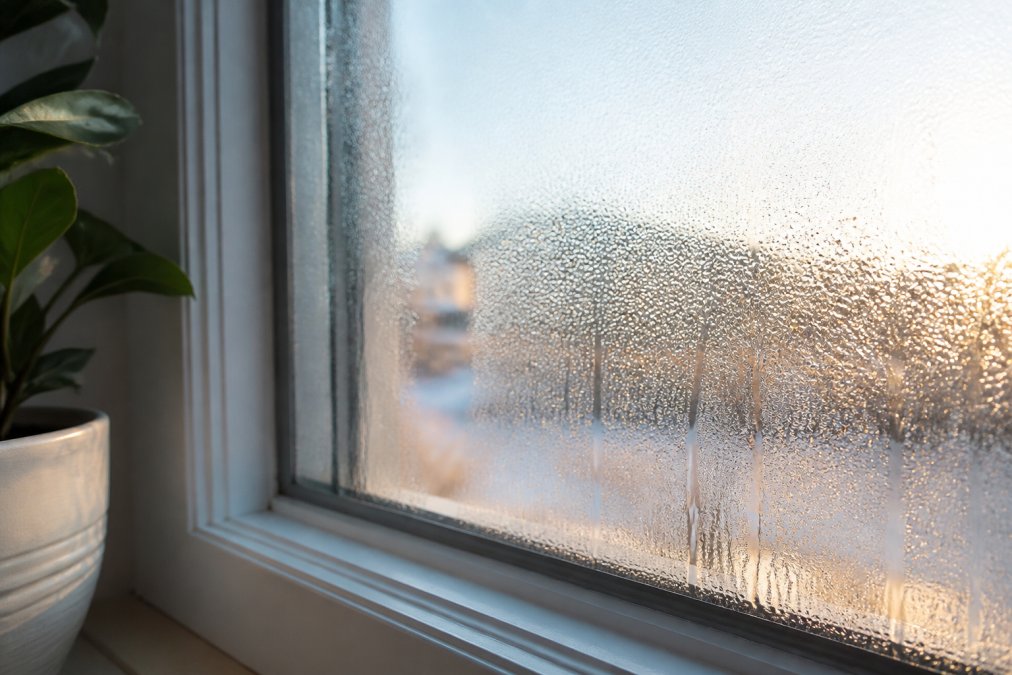
The solution isn't to crack open a window and lose your heating or cooling. Instead, control humidity at the source:
- Use exhaust fans in bathrooms and kitchens to remove moisture immediately after showers and cooking
- Run a dehumidifier if indoor humidity stays above 50% for extended periods
- Ensure proper ventilation so moist air actually leaves the home instead of settling in walls
- Install trickle vents in bedrooms and living areas to allow small amounts of fresh air without major drafts
A mechanical ventilation system with proper humidity control is far more effective than passive measures. It actively removes excess moisture while bringing in dry fresh air, exactly what tight desert homes need.
Whole-Home Air Purification: Benefits Beyond Ventilation
Ventilation brings fresh air in. But fresh air in dusty, desert climates still carries particles, pollen, and dust. This is where whole-home air purification makes the difference.
Unlike portable room purifiers scattered throughout your house, a standalone whole-home air purification system cleans air for your entire home from a single point. When professionally installed in your attic and operating 24/7, it removes odors, airborne particles, and chemical irritants before they settle into furniture and fabrics.
For allergy-sensitive families, this is transformative. Hospital-grade filtration catches what ventilation alone cannot. Your home stays fresh. Your air stays clean. And unlike multiple room units, you're not managing filters in every bedroom and living area.
The best part: a whole-home system works independently. It doesn't modify or depend on your existing HVAC. It's out of sight, running quietly, reducing the maintenance burden compared to managing multiple portable units.
Natural Ventilation Strategies That Work
Not every solution requires mechanical systems. In mild seasons, natural ventilation can help, especially when paired with smart strategies.
Cross-ventilation uses windows on opposite sides of your home to create airflow. Open windows on the windward side and slightly less on the leeward side to create pressure that pushes air through.
Stack effect uses temperature differences to move air naturally. Warm air rises. If you open high windows on upper floors and lower windows on ground level, warm stale air escapes while fresh air enters below.
Trickle vents are small openings above windows that allow continuous fresh air without drafts. They're especially useful in bedrooms where you want ventilation without opening windows wide.
These methods work best in spring and fall when outdoor temperatures are mild. In summer heat or winter cold, they're less practical. This is why mechanical ventilation remains essential to improve ventilation airtight homes year-round.
Retrofitting Ventilation in Older Airtight Homes
Many older homes weren't built airtight. But if you've added insulation, sealed air leaks, installed new windows, or applied weatherstripping, you've made your home tighter than it was designed to be. Now it needs ventilation it never required before, and retrofitting that ventilation into an existing home presents unique challenges that new construction doesn't face.
Diagnosing the Problem: When Retrofitting Is Necessary
Before you invest in ventilation, confirm that airtightness is actually your problem. Ask yourself:
- Did you recently seal your home (new windows, insulation, air sealing)?
- Did ventilation problems appear after those improvements?
- Do you see condensation on windows, especially in bedrooms and bathrooms?
- Is indoor humidity consistently above 50% even with air conditioning running?
- Do odors and cooking smells linger for hours?
If you answered yes to most of these, your home is now too tight for passive air exchange.
Installation Barriers in Existing Homes
- Attic access and space: Most retrofit systems route ductwork through attics or crawl spaces. If your attic is cramped, heavily insulated, or packed with existing equipment, installation becomes more complex.
- Wall penetrations: Bringing fresh air in and exhausting stale air out requires holes through exterior walls. In homes with plaster, masonry, or thick insulation, this is more involved than in modern frame construction.
- Existing ductwork: If you have forced-air heating, the contractor may be tempted to tie a new ventilation system into your existing ducts. Resist this. Mixing ventilation with HVAC creates pressure imbalances and defeats the purpose of controlled air exchange.
- Electrical and structural obstacles: Routing new ducts around wiring, plumbing, and structural members takes planning.
Ventilation Options for Retrofits
Ducted balanced ventilation systems (HRV or ERV) require more installation work but deliver whole-home air quality. Ducts are routed through attics and crawl spaces to bring fresh air to living areas and bedrooms, while exhaust ducts remove stale air from bathrooms and kitchens. In a retrofit, this typically means:
- Attic access for ductwork routing
- 2-4 wall penetrations for fresh air intake and exhaust outlets
- A central unit (usually in the attic) with filters and controls
- 1-3 days of installation time
Cost-Benefit Reality Check
- A balanced ventilation system with heat or energy recovery typically reduces heating and cooling load by 10-20%, depending on climate and how tight your home is.
- In a hot, dry climate, an ERV prevents the need for a separate humidifier, saving money and complexity.
- Over 10-15 years, energy savings often offset installation costs, especially if you live in an area with high heating or cooling demands.
The Path Forward
Frequently Asked Questions
What happens if my house is too airtight?
Overly airtight homes trap stale air, moisture, and indoor pollutants including carbon dioxide, VOCs, and allergens. This creates condensation on windows, mold growth, and health issues like headaches and respiratory irritation. The air barrier that saves energy can also trap odors, pet dander, and cooking fumes. Whole-home air purification systems restore fresh air circulation without losing thermal performance.
What are the signs of poor home ventilation?
Common signs include persistent condensation on windows, musty odors, visible mold or mildew, stuffy air, and increased allergy symptoms indoors. You may notice cooking smells lingering for hours, or feel humidity levels rising. In desert climates, poor ventilation can trap dust and particulates despite outdoor dryness. If family members experience headaches or fatigue indoors, inadequate fresh air exchange may be the cause.
How does whole-home air purification improve indoor air quality?
A whole-home air purification system works continuously throughout your entire residence, removing airborne particles, dust, odors, and chemical irritants. Unlike portable units confined to one room, a professionally installed whole-home system delivers consistent filtration to every space. For allergy-sensitive households and desert homes prone to dust infiltration, this approach eliminates the need for multiple room purifiers and provides hospital-grade air cleaning 24/7.
Can I improve ventilation in an airtight home without major renovations?
Yes. For homes where air quality is a concern, a standalone whole-home air purification system installed in the attic provides filtration without modifying your existing HVAC infrastructure.
EPA guidelines on indoor air quality
American Society of Heating, Refrigerating and Air-Conditioning Engineers (ASHRAE) ventilation standards
CDC recommendations on moisture control and mold prevention in homes