Professional Grade Home Air Systems: A 2026 Guide
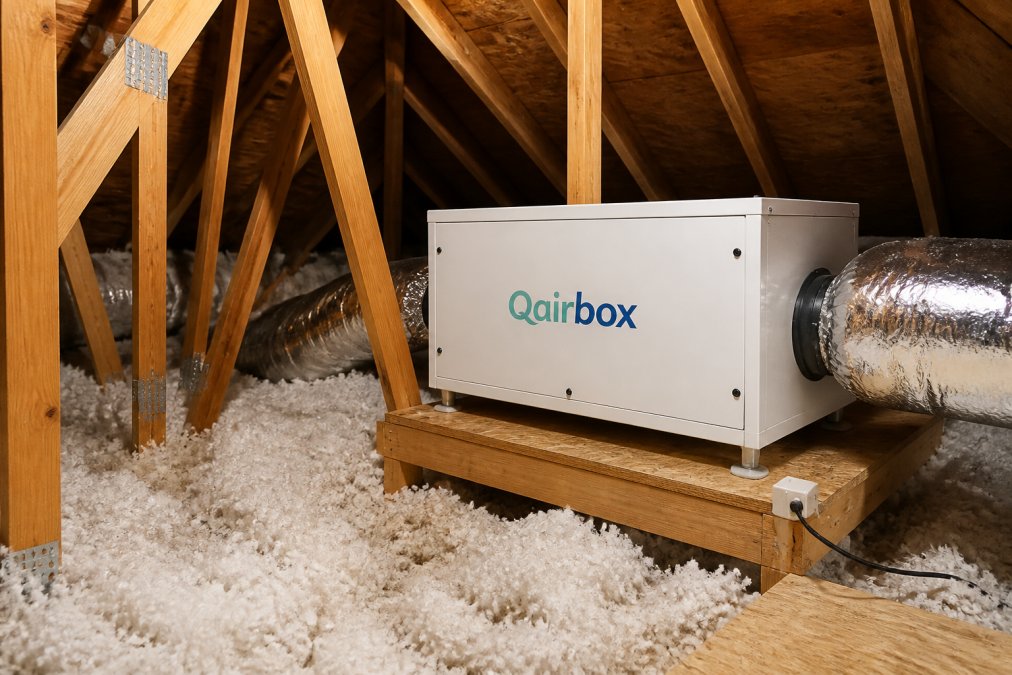
Table of Contents
- What Defines a Professional Grade Home Air System
- Indoor Air Quality Solutions for Allergy Sufferers
- Standalone vs. HVAC-Integrated Purification: What's the Difference
- Benefits of Attic-Mounted Air Purification for Your Home
- How Professional Grade Systems Handle Airborne Contaminants
- Maintenance, Longevity, and Real-World Performance
- Is a Professional Grade Home Air System Right for You
Last Updated: August 18, 2026
What Defines a Professional Grade Home Air System
A professional grade home air system is a medical-grade air purification solution designed to clean the entire home's air continuously, not just a single room. Unlike portable units, a professional system works 24/7 to reduce airborne contaminants, odors, and chemical irritants throughout your entire residence.
Professional-grade systems use hospital-level filtration technology, multi-stage HEPA filters and activated carbon media, to capture particles as small as 0.3 microns. They're built for whole-home coverage, not spot treatment. For homeowners in desert climates dealing with dust infiltration, or families with severe allergies, this difference translates directly into breathing easier every hour of the day.
A professional system is installed once by trained technicians and runs silently in the background. You don't think about it. You just notice that your allergies improve, odors disappear, and the air feels cleaner. That's the hallmark of a properly designed professional grade home air system, it works so well you forget it's working.
Indoor Air Quality Solutions for Allergy Sufferers
If you or someone in your home suffers from severe allergies, you know that indoor air quality is critical. Indoor air can be 2-5 times more contaminated than outdoor air because homes trap pollutants: dust mites, pet dander, mold spores, pollen, and chemical off-gassing from furniture and cleaning products.
Standard HVAC systems weren't designed to handle this. A typical furnace filter catches large particles but misses the microscopic irritants that trigger allergic reactions. Allergy sufferers need something more aggressive, a system that runs continuously and captures the particles that escape standard filters.
Professional-grade air purification changes the equation. A multi-stage filtration approach works like this: pre-filters catch larger dust and debris, HEPA media captures ultrafine particles, and activated carbon removes odors and volatile organic compounds (VOCs) that irritate airways. For someone with allergies, this layered approach means fewer symptoms, better sleep, and less medication dependence.
The real benefit emerges over weeks. Your body stops being in constant defense mode. Nasal congestion eases. You wake up without that scratchy throat. These are the everyday experiences of families who've installed professional-grade purification.
Standalone vs. HVAC-Integrated Purification: What's the Difference
Some air purification solutions retrofit into existing ductwork, claiming to "upgrade" your central system. Others are completely standalone, operating independently from your heating and cooling system. Understanding the difference determines whether you can install a professional-grade system without disrupting your home.
HVAC-integrated systems require modifications to your existing ductwork and furnace. They work by filtering air as it moves through your central system. The cost and complexity are substantial, requiring retrofitting your home's existing infrastructure.
Standalone professional-grade systems operate independently. They're installed in the attic or another out-of-sight location and run on their own schedule, regardless of whether your HVAC is running. This matters for desert homes and tightly sealed residences, your HVAC cycles on and off based on temperature, but your air purification runs continuously. You get uninterrupted filtration without modifying anything about your existing system.
Qairbox systems are standalone, which means zero disruption to your current HVAC setup. Your air conditioning and heating work exactly as they always have. The purification happens in parallel, 24/7, without touching your furnace, ductwork, or air handler. For homeowners asking "Will this require us to rip everything out?", the answer is no.
Benefits of Attic-Mounted Air Purification for Your Home
Installing a professional-grade system in the attic solves one of the biggest objections homeowners have: where does this thing go? An attic-mounted system is simply out of sight, out of mind.
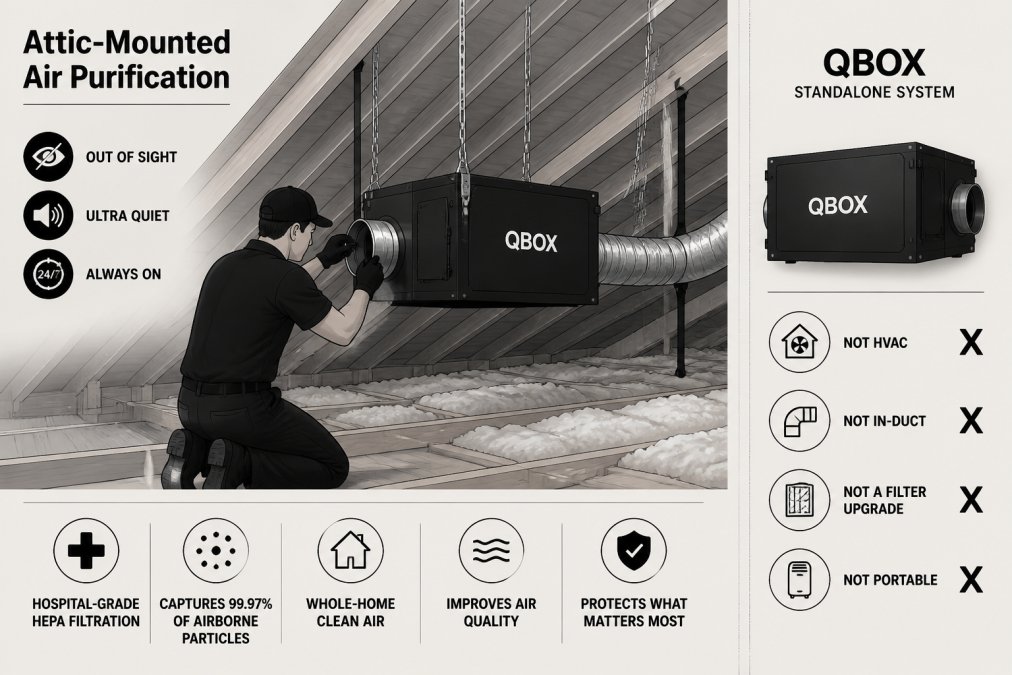
First, you reclaim your living space. No bulky units cluttering bedrooms or living areas. No noise from a motor running in the corner of your bedroom. The system operates silently above your head, filtering continuously while you sleep, work, and live your life.
Second, attic installation makes maintenance simpler. Filter replacements happen once or twice yearly, not monthly like with portable units. A professional technician handles the work. The system is designed for longevity and low-touch maintenance.
Third, attic mounting ensures consistent whole-home coverage. Air circulates through your home naturally, and the system captures contaminants at the source rather than trying to clean one room at a time. This approach is particularly effective in desert climates where dust infiltration is constant, the system runs continuously, preventing buildup rather than reacting to it after particles have already settled.
For families with young children or older adults, this matters. An attic-mounted professional-grade system means better air quality without visible equipment. The health benefits are real: fewer respiratory irritations, better sleep, and less reliance on allergy medications.
How Professional Grade Systems Handle Airborne Contaminants
The effectiveness of a professional-grade system comes down to how it handles the invisible particles that cause problems. Indoor air contains dust, pollen, mold spores, pet dander, bacteria, and chemical compounds. Most are too small to see, but large enough to irritate airways and trigger allergies, asthma, or respiratory infections.
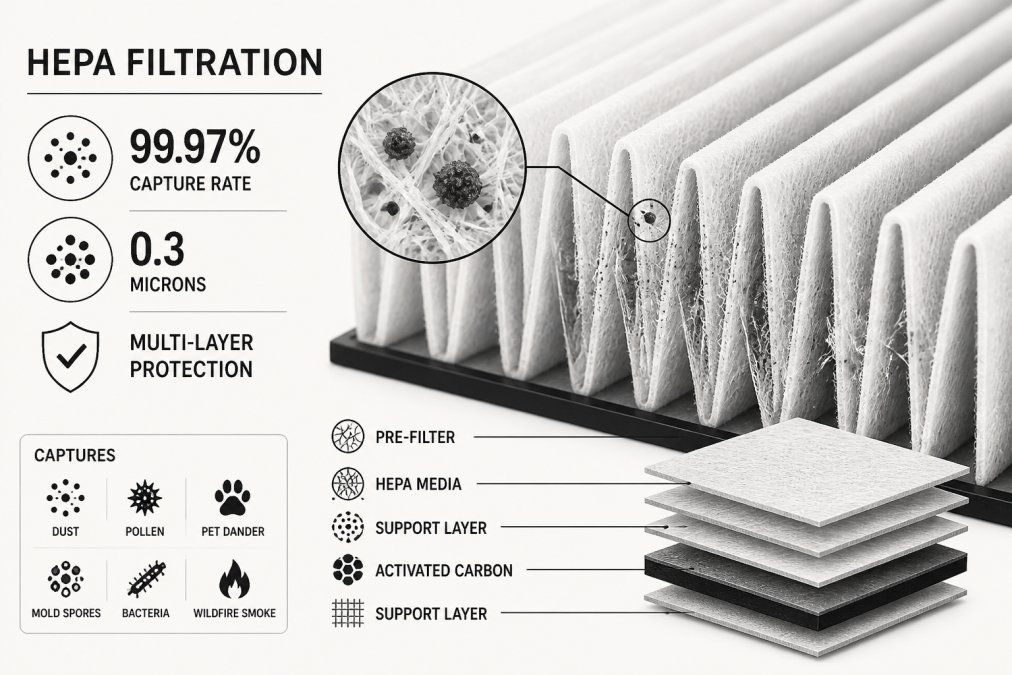
A professional-grade system works through multi-stage filtration. The first stage catches larger particles, dust, hair, debris, using a pre-filter. The second stage is the HEPA filter, which captures particles as small as 0.3 microns with 99.97% efficiency. The third stage is activated carbon, which removes odors, volatile organic compounds (VOCs), and chemical irritants that HEPA alone cannot address.
This layered approach is why professional systems outperform basic filters. A standard furnace filter might catch 20-30% of airborne contaminants. HEPA-based professional systems capture 99.97% of particles in the 0.3-10 micron range, which covers the vast majority of allergens and irritants that affect human health.
For severe allergies and asthma: Dust mites, pet dander, and pollen (5-100 microns) are captured by HEPA filtration. A professional-grade system running continuously removes these allergens before they settle on bedding, furniture, and clothing. Families report measurable symptom reduction within 2-4 weeks of installation, particularly improved sleep quality and reduced nighttime congestion.
For mold sensitivity: Mold spores (4-20 microns) are captured by HEPA filtration, but mold also produces chemical irritants. The activated carbon stage addresses these secondary irritants, which is why families dealing with mold sensitivity benefit from the full multi-stage approach.
For wildfire smoke and outdoor air quality events: Smoke particles are extremely fine (0.1-1 micron range) and contain irritating chemical compounds. HEPA filtration captures the particulate, while activated carbon removes the chemical component. During air quality events, a professional-grade system running 24/7 provides continuous protection.
For chemical sensitivity and off-gassing: New furniture, flooring, and cleaning products release VOCs into indoor air. HEPA filtration does nothing for VOCs. Only the activated carbon stage addresses them. This is why professional-grade systems include both stages, they're designed to handle the full spectrum of indoor air contaminants.
Professional-grade units are engineered for airflow capacity that ensures air cycles through the entire home multiple times daily. The more times air passes through the filter, the more contaminants get removed. For homes in dusty or desert environments, this continuous cycling is critical. The system runs independently, continuously reducing the particulate load in your home's air.
Maintenance, Longevity, and Real-World Performance
One of the biggest objections homeowners raise is maintenance burden and total cost of ownership. Understanding the real-world maintenance picture reveals why professional-grade systems often cost less to own than they appear upfront.
A well-engineered professional-grade whole-home system requires filter replacement one to two times per year, depending on your environment. Desert homes with higher dust loads might lean toward two changes yearly. This is dramatically less frequent than portable units, which can require monthly filter changes.
A professional-grade whole-home system operates on different economics. The system is engineered for 10-15 years of service life with proper maintenance. Filter replacements happen once or twice yearly, and a professional technician handles the work. Over a five-year ownership period, you're looking at 5-10 filter changes total.
Real-world performance data shows that professional-grade systems maintain consistent filtration efficiency over their service life. Unlike portable units that degrade as filters clog, a well-maintained professional system delivers the same air quality month after month, year after year. This consistency is critical for families relying on air purification as part of their health management strategy.
A professional-grade whole-home air purification system is a permanent installation that improves the home's appeal to future buyers, especially in desert climates where air quality concerns are well understood. For families in hot, dusty climates, the maintenance advantage is pronounced. Your home's HVAC system cycles on and off based on temperature, but dust infiltration is constant. A professional-grade system running continuously 24/7 prevents particulate buildup rather than reacting to it after dust has already settled. This proactive approach means less frequent deep cleaning, fewer respiratory irritations, and lower long-term health costs.
Is a Professional Grade Home Air System Right for You
Not every home needs a professional-grade system, but certain situations make it the clear choice. If you live in a desert climate with persistent dust infiltration, a professional system pays for itself through reduced cleaning and fewer respiratory irritations. If someone in your household has severe allergies or asthma, the health improvements justify the investment.
Families with young children benefit significantly. Children's lungs are still developing. Reducing their exposure to airborne irritants and allergens supports healthier respiratory development. Older adults face similar considerations, better air quality means fewer respiratory infections and better overall health outcomes.
The key question is whether you want a solution that works invisibly and continuously, or whether you're comfortable managing portable units and frequent filter changes. If you value simplicity, whole-home coverage, and set-it-and-forget-it operation, a professional-grade system is the answer.
For homeowners in hot, tightly sealed desert homes, the decision is clearer. Your home is already optimized for minimal air exchange to preserve cooling efficiency. That means indoor air quality depends entirely on active purification. A professional-grade system fills that gap perfectly.
Consider also whether you already have a newer HVAC system you want to preserve. If your furnace or air conditioning is relatively new and working well, a standalone professional-grade system lets your existing HVAC do what it does best while purification happens independently.
If you're serious about improving your home's air quality without the complexity of HVAC retrofits or the maintenance burden of portable units, a professional-grade whole-home system is worth exploring. Qairbox delivers hospital-grade purification that runs invisibly in your attic, handling dust, odors, and airborne contaminants 24/7. The result is cleaner air throughout your entire home, fewer allergy symptoms, and the peace of mind that comes with knowing your family is breathing healthier air. Schedule a consultation with Qairbox to see how a professional-grade system fits your home and health needs.
Frequently Asked Questions
What makes a professional grade home air system different from a standard portable air purifier?
A professional grade home air system is engineered to purify air throughout your entire residence using hospital-grade filtration and multi-stage media filters. Unlike portable units confined to a single room, whole-home systems address airborne contaminants, particulate matter, VOCs, and odors across all living spaces. Standalone attic-mounted systems operate independently 24/7 without connecting to or modifying your existing HVAC infrastructure, delivering consistent air quality without the maintenance burden of multiple room-based units.
How effective are professional grade systems for allergy sufferers?
Professional grade systems capture HEPA-filtered airborne contaminants including dust, pollen, pet dander, and microbes that trigger allergic reactions. Continuous 24/7 operation ensures indoor air quality improves over time as particles are systematically removed. Many allergy-sensitive households report noticeable relief within days of installation. The key advantage over portable alternatives is whole-home coverage, every room benefits from the same level of filtration, not just the space where a single unit sits.
Will a standalone whole-home air purification system affect my energy bills or HVAC efficiency?
Standalone attic-mounted systems operate independently and do not modify your existing HVAC or central A/C system, so they do not interfere with your home's energy performance. They run on their own dedicated power supply. In tight, well-sealed homes common in desert climates, a professional-grade purification system actually supports your HVAC by reducing the particulate load it must handle, potentially extending equipment life. Energy consumption depends on system specifications, ask about efficiency ratings when evaluating options.
How do I know if a professional grade home air system is actually working if it's installed in the attic?
Many professional-grade systems include air quality sensors that monitor pollutant levels in real time, displaying results through a control interface or app. You'll notice tangible improvements: reduced odors, cleaner surfaces (less dust settling), and better air quality throughout your home. Professional installation includes a walkthrough explaining system operation and performance indicators. If you have severe allergies, symptom reduction is often the most reliable indicator of effectiveness, most families report noticeable relief within the first week of operation.