Remove Household Odors Without Masking Them

Table of Contents
- The Difference Between Masking and Removing Household Odors
- Identify the Source of the Odor
- Natural DIY Deodorizing Solutions That Actually Work
- Best Air Purifier for Pet Odors and Other Persistent Smells
- How to Improve Indoor Air Quality in Desert Climates
- Ventilation and Airflow Techniques to Prevent Odor Buildup
- Preventative Maintenance for Long-Term Home Freshness
- Frequently Asked Questions
Last Updated: September 17, 2026
The Difference Between Masking and Removing Household Odors
Masking an odor and actually working to remove household odors are two entirely different things. Most people waste time and money on air fresheners, scented candles, and sprays that layer fragrance on top of the problem.
Masking covers the smell with synthetic fragrance that fades quickly, leaving the original odor to return. You're stuck in a cycle of constant reapplication.
Removing household odors means eliminating the source molecules themselves, neutralizing or breaking them down so they can't be detected. Once they're gone, they stay gone.
The difference matters because masking creates ongoing maintenance and expense. Removing odors solves the problem at the root. At Qairbox, we focus on actual removal through whole-home air purification because it's the only approach that delivers lasting results.
Identify the Source of the Odor
You can't remove an odor effectively until you know where it's coming from. This is the critical first step most people skip.
Common sources of household odors include:
- Pet accidents or waste, often hidden in carpets, rugs, or upholstery
- Cooking odors, absorbed into fabrics, curtains, and walls
- Moisture and mold, in bathrooms, basements, or poorly ventilated spaces
- Trash and food waste, decomposing organic matter
- Smoke, from cooking, fireplaces, or previous occupants
- Microbial growth, bacterial breakdown of organic materials in carpets or upholstery
Walk through your home systematically. Crouch down near carpets and furniture where odors concentrate. Check under furniture for pet accidents and inspect bathrooms and basements for moisture.
Once you've pinpointed the source, you can target your removal strategy directly at it. A pet odor in the bedroom requires a different approach than cooking smells in the kitchen.
Natural DIY Deodorizing Solutions That Actually Work
Several household substances can neutralize odors without adding synthetic fragrance. These work by breaking down odor molecules chemically rather than masking them.
Baking Soda as a Neutralizing Agent
Baking soda is alkaline and chemically neutralizes acidic odor molecules, making it effective for removing household odors from pet urine, food waste, and organic sources.
Sprinkle baking soda on carpets, rugs, or upholstery and let it sit 15 minutes to overnight. Vacuum thoroughly. Repeat for stubborn odors.
Mix baking soda with water to create a paste for fabric surfaces. Let it dry completely, then vacuum to neutralize odor molecules trapped in fibers.
Sprinkle baking soda in trash cans and litter boxes to neutralize odors as they form.
Enzymatic Cleaners for Fabric and Upholstery
Enzymatic cleaners contain proteins that break down organic matter at the molecular level, making them especially effective for pet accidents and biological waste.
Enzymatic detergents digest the proteins, fats, and carbohydrates that create odors, eliminating the source material itself.
Apply enzymatic cleaner to affected areas and follow product instructions for dwell time (typically 10-30 minutes). Extract or blot thoroughly to break down odor-causing compounds.
For pet odors specifically, enzymatic cleaners are more effective than baking soda alone because they target the bacterial breakdown products in urine and waste.
Best Air Purifier for Pet Odors and Other Persistent Smells
When DIY solutions and surface cleaning aren't enough, whole-home air purification removes airborne odor molecules throughout your entire home.
For persistent odors affecting multiple spaces, a whole-home air purification system continuously processes all air in your home, removing odor molecules before they settle into fabrics.
Qairbox is a standalone whole-home air purification system professionally installed in your attic. It runs quietly 24/7, working independently from your existing HVAC system. Because it's out of sight and out of mind, you get hospital-grade air purification without clutter or maintenance headaches.
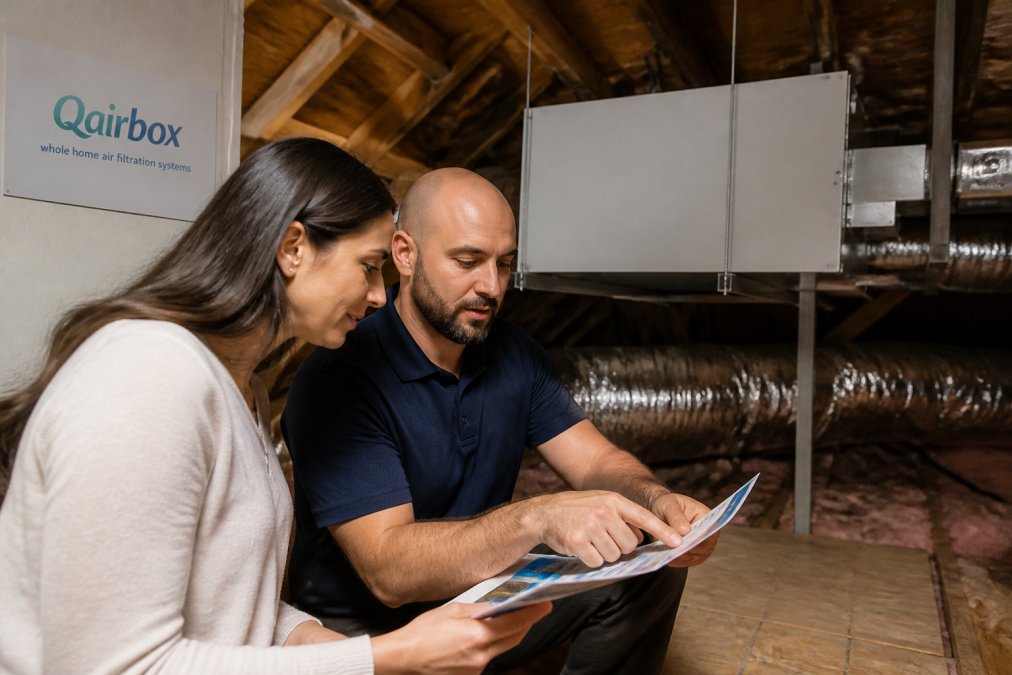
The system removes odor molecules, pet dander, dust, and chemical irritants from the air continuously. For homes with pets, cooking odors, or other persistent smells, this approach eliminates the problem rather than cycling it around your living spaces.
How to Improve Indoor Air Quality in Desert Climates
Desert homes face unique air quality challenges. Hot, dry air carries more dust, pollen, and particulates. Tightly sealed homes designed to keep heat out also trap odors and contaminants inside.
Improving indoor air quality in desert climates requires both ventilation and purification to move fresh air in while removing accumulated contaminants.
Dust storms and dry conditions increase airborne particles that carry odors and allergens deep into homes.
Ventilation and Airflow Techniques to Prevent Odor Buildup
Airflow alone does not remove odors. Ventilation controls moisture and humidity levels that enable odor-causing bacteria and mold to thrive, essential for permanent odor prevention.
The Humidity-Odor Connection
Odor molecules are released by microbial breakdown of organic matter. Bacteria, mold, and fungi thrive in moist environments. When humidity exceeds 50%, microbial growth accelerates exponentially, creating persistent smells that air circulation alone cannot solve.
Practical Ventilation Strategies
Bathroom and kitchen exhaust fans: Run exhaust fans during and 20-30 minutes after showers, cooking, or using the toilet. A properly sized exhaust fan removes 50-100 CFM of humid air directly outdoors. Without this, moisture condenses and promotes mold growth within 24-48 hours.
Why Ventilation Alone Fails Without Humidity Control
Opening windows or running fans moves air but does not address moisture that enables odor-causing microbes. A home with controlled humidity (30-50%) and good air exchange remains fresh even with modest ventilation.
Preventative Maintenance for Long-Term Home Freshness
Preventing odor return requires consistent habits, proper humidity control, and awareness of which 'natural' remedies are safe for pets and children. Many common deodorizing substances can be toxic to animals and young children.
Pet-Safe Odor Prevention
Clean pet areas regularly and safely: Wash pet bedding weekly in hot water. Vacuum carpets and furniture twice weekly. Use enzymatic cleaners monthly on pet areas.
Avoid these common 'natural' remedies around pets:
- Essential oils (tea tree, eucalyptus, peppermint, citrus): Toxic to cats and dogs, causing respiratory irritation and neurological effects. Never apply to pet bedding or rest areas.
- Phenol-based cleaners (pine or lemon cleaners): Toxic to cats and dogs, causing liver damage and respiratory distress.
- Concentrated baking soda: Inhaling powder can irritate pet airways. Use sparingly and vacuum thoroughly.
Child-Safe Odor Management
- Avoid spray air fresheners and scented products in children's play and sleep areas. Inhaled chemicals can trigger asthma and allergies.
- Do not use mothballs or paradichlorobenzene in closets or storage areas. These are neurotoxic to developing brains.
- Baking soda is safe for children but vacuum thoroughly to prevent powder inhalation.
- Enzymatic cleaners should dry completely before children contact treated areas.
Moisture and Humidity Control
Maintaining humidity between 30-50% is the single most effective preventative measure. High humidity enables mold and bacterial growth; low humidity (below 30%) can cause respiratory irritation in children and older adults.
- Use a dehumidifier in bathrooms and basements year-round.
- Run exhaust fans during and 20-30 minutes after showers and cooking.
- Check basement humidity monthly. If it exceeds 55%, increase dehumidification.
- In desert climates, seal air leaks around windows and doors to prevent dust, but ensure bathrooms and kitchens have adequate exhaust ventilation.
Trash and Food Waste Management
Empty trash cans frequently, especially in kitchens. Rinse containers before disposal to prevent bacterial breakdown. In hot climates, take trash out daily rather than weekly.
Air Filter and System Maintenance
For comprehensive, continuous odor prevention, a whole-home air purification system removes airborne odor molecules 24/7. Running independently in your attic, Qairbox works silently while you maintain basic cleaning and humidity control.
The Long-Term Strategy
Permanent odor prevention combines three elements: (1) regular cleaning and pet care, (2) humidity control between 30-50%, and (3) continuous air purification. Any one element alone will fail.
Frequently Asked Questions
What's the difference between odor masking and odor elimination?
Masking covers up odors with stronger scents like synthetic fragrances or air fresheners, but the original odor molecules remain. Elimination removes the source by neutralizing odor molecules through chemical reactions, enzymatic breakdown, or absorption. True elimination stops odors from returning, while masking is temporary. For households with pets, cooking odors, or mold, elimination is the only lasting solution.
How does whole-home air purification impact indoor air quality?
Whole-home air purification systems continuously filter airborne contaminants, odor molecules, and volatile organic compounds throughout your entire residence. A professional whole-home system removes odors, dust, and allergens 24/7 from every space. This is especially effective in tightly sealed homes where stale air and odors accumulate. The system works independently to maintain consistent air quality without relying on your existing HVAC system.
Why do household odors return even after I've cleaned thoroughly?
Odors return because cleaning removes visible sources but doesn't address all odor molecules. Porous surfaces like carpets, upholstery, and drywall trap odor-causing particles deep within their fibers. Pet accidents, cooking residue, and mold spores can hide in places you can't see. Without proper ventilation, air exchange, or continuous purification, these trapped molecules are released back into the air. Addressing humidity levels and improving air circulation helps, but persistent odors often require both source removal and whole-home air purification.
Can professional attic-mounted systems remove pet and cooking odors?
Yes. A standalone whole-home air purification system installed in the attic continuously captures and neutralizes odor molecules from pet waste, food preparation, and other sources throughout your home. Hospital-grade purification removes volatile organic compounds and airborne contaminants that cause persistent smells. These systems work 24/7 without disrupting your existing HVAC setup, making them ideal for homes with pets and active kitchens. They're especially effective in desert climates where tightly sealed homes trap odors inside.