Best Whole-Home Air Purifier for Odors: 2026 Guide
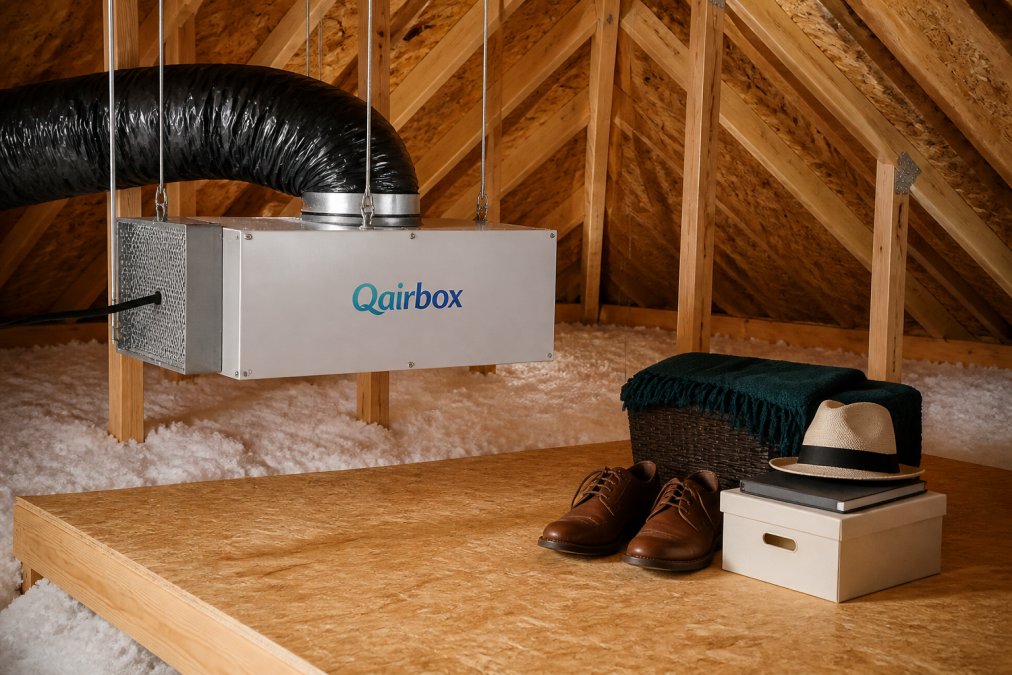
Table of Contents
- What Makes a Whole-Home Air Purifier Effective for Odors
- Benefits of Standalone Air Purification for Whole-Home Coverage
- How to Remove Household Odors with Whole-Home Systems
- Sizing Your Whole-Home System for Maximum Odor Control
- Maintenance and Long-Term Costs of Whole-Home Air Purification
- Whole-Home Air Purification vs. Portable Units
- Conclusion
Last Updated: August 20, 2026
What Makes a Whole-Home Air Purifier Effective for Odors
A whole-home air purification system combines activated carbon filtration with HEPA capture to neutralize odors at the source rather than masking them. Pet accidents, cooking smells, chemical off-gassing from furniture, and mustiness all require continuous treatment throughout your entire home, something room-based solutions cannot achieve.

A system installed in your attic works 24/7 without occupying living space, treating air throughout the entire home rather than a single room. Room-based purifiers fail because they only clean air immediately around them. A family room unit doesn't reach the bedroom hallway. A kitchen unit doesn't touch the basement. Odors migrate through your home's air pathways, leaving pockets of stale air. A whole-home system pulls air from throughout your house, filters it completely, and distributes clean air back to every room simultaneously.
How Activated Carbon and HEPA Filtration Remove Smells
Activated carbon works through adsorption, where odor molecules bond chemically to the carbon's porous surface. A single gram of activated carbon can have a surface area equivalent to a football field. When air passes through, volatile organic compounds like formaldehyde, benzene, and ammonia stick to the material rather than continuing to circulate.
HEPA filtration captures particulate matter that odors cling to, pet dander, dust mites, skin cells, and cooking particles. By removing these particles at 99.97% efficiency for particles 0.3 microns and larger, HEPA filters eliminate significant odor sources. The two technologies work together: HEPA catches physical particles while activated carbon neutralizes gaseous components.
The thickness and weight of activated carbon matter significantly. Thin carbon filters in portable units saturate quickly due to insufficient material. A whole-home system uses denser, heavier carbon media that maintains effectiveness longer. Some systems incorporate zeolite alongside activated carbon, a mineral that excels at trapping larger odor molecules like ammonia from pet urine or cooking odors.
CADR Ratings and Odor Removal Performance
CADR (Clean Air Delivery Rate) measures cubic feet per minute (CFM) of clean air produced. A higher CADR means faster air cleaning. For odor control, focus on the smoke CADR rating, it most closely correlates with gaseous odor removal since smoke contains volatile compounds similar to cooking and pet odors.
A CADR smoke rating of 400 or higher indicates a system capable of handling moderate to heavy odor loads. This translates to roughly 8-10 complete air changes per hour in a 2,000-square-foot home, the threshold where most people notice meaningful odor reduction within 24 hours. Air quality professionals recommend 4-6 complete air changes per hour for odor control, which requires matching your system's CFM to your home's total volume.
Benefits of Standalone Air Purification for Whole-Home Coverage
A standalone whole-home air purification system installed in your attic solves the fundamental problem with room-based purifiers: incomplete coverage. When you place a portable unit in your living room, bedrooms upstairs receive minimal benefit. A whole-home system pulls air from every room and returns filtered air throughout your entire residence, ensuring consistent air quality everywhere simultaneously.
The standalone design means no modification to your existing HVAC or central air system. Your current heating and cooling setup continues operating exactly as it always has. The purification system runs independently on its own schedule, allowing continuous operation without affecting your thermostat settings or energy efficiency. This independence matters in desert climates where your AC already works hard, adding purification doesn't force your system to work harder or create cooling conflicts.
Installation in the attic keeps the system completely out of sight and out of mind. The attic location provides thermal benefits in hot climates, and the system operates quietly because sound stays isolated in the attic rather than filling your living areas.
Why Attic-Mounted Systems Outperform Room Units
Room-based portable air purifiers create uneven air quality. A unit in the living room might reduce living room odors by 60% while the master bedroom remains largely unaffected. You end up buying multiple units to cover your home, multiplying maintenance burden, noise, and space consumption.
An attic-mounted system treats your home as a unified air environment. Ductwork pulls air from multiple rooms and returns filtered air throughout. This approach creates consistent air quality across all spaces. A pet odor in the kitchen doesn't linger in the bedroom. Cooking smells don't settle into the office.
Professional installation ensures optimal ductwork placement and sizing. Installers calculate air volumes, design duct routes for balanced airflow, and position return air intakes strategically. A professionally installed system operates at engineered efficiency from day one.
24/7 Purification Without HVAC Modification
Running a whole-home air purification system continuously doesn't require touching your existing HVAC infrastructure. Your air conditioning and heating operate independently. You can run purification 24/7 while your thermostat manages temperature on its own schedule. This separation means you gain purification benefits without any risk of affecting your cooling efficiency.
The independence also means flexibility in operation. You can run purification continuously for maximum odor control, or set it to operate during peak odor times. You can adjust purification independent of temperature control, optimizing both comfort and air quality without compromise.
How to Remove Household Odors with Whole-Home Systems
Effective odor removal requires understanding that different smells need different approaches. Pet odors, cooking smells, and chemical off-gassing all have distinct molecular profiles. A whole-home air purification system addresses all three simultaneously through layered filtration.

Targeting Pet Odors, Cooking Smells, and Chemical Off-Gassing
Pet odors originate from urine, dander, and bacterial breakdown. The ammonia smell from urine is particularly persistent because it bonds to fabrics and flooring. An activated carbon filter removes ammonia through adsorption. A whole-home system's continuous operation ensures odor molecules encounter the filter repeatedly, with each air cycle capturing more odor. Most homeowners report 70-80% odor reduction within the first week of continuous operation.
Cooking smells contain volatile organic compounds released when food heats. Garlic, fish, and spices produce especially stubborn odors that linger for hours. Activated carbon excels at cooking odor removal because these molecules adsorb readily. The key is sufficient contact time and carbon mass. A system running continuously while cooking and for several hours afterward removes cooking odors before they settle into fabrics.
Chemical off-gassing comes from new furniture, flooring, paint, and adhesives. Formaldehyde, benzene, and toluene are common VOCs released from these sources, particularly in new homes or recently renovated spaces. A whole-home system running continuously during this period captures these chemicals before they accumulate, improving indoor air quality and reducing the chemical smell many people notice in new homes.
Filter Saturation and Replacement Schedules
Activated carbon filters have finite capacity. As they absorb odor molecules, they gradually saturate and can no longer adsorb new smells. Recognizing saturation and replacing filters on schedule prevents performance degradation.
Filter lifespan depends on odor load. A home with multiple pets in a desert climate will saturate filters faster than a single-person household. Most whole-home systems require filter replacement every 6-12 months under normal conditions. Heavy odor loads may require replacement every 4-6 months. Lighter use might extend filters to 12-18 months.
Many homeowners benefit from monitoring filter condition rather than following a strict calendar schedule. Some systems include sensors that indicate when carbon saturation is approaching. Visual inspection can reveal when carbon appears gray or discolored, a sign that adsorption capacity is diminishing. Replacing filters proactively prevents the frustration of running your system only to discover it's no longer removing odors effectively.
Sizing Your Whole-Home System for Maximum Odor Control
Selecting the right system capacity for your home ensures you achieve meaningful odor reduction. An undersized system will struggle to keep pace with odor generation. The correct size balances performance with efficiency.
Start with your home's total square footage and ceiling height to calculate cubic volume. A 2,000-square-foot home with 8-foot ceilings equals 16,000 cubic feet of air. To achieve 6 complete air changes per hour (the target for serious odor control), you need a system with a CFM rating of approximately 1,600.
However, square footage alone doesn't tell the whole story. A heavily loaded home (multiple pets, frequent cooking, dust-prone desert environment) benefits from higher air exchange rates. A lightly loaded home functions well at 4-6 changes per hour.
Room Coverage and Air Exchange Rates
Air exchange rate measures how many times per hour the entire volume of air in your home passes through the filter. A 2,000-square-foot home with a 1,600 CFM system achieves approximately 6 air changes per hour. This means every breath of air in your home passes through the filter roughly six times daily, providing thorough odor removal.
The relationship between CFM and perceived odor reduction is not linear. Doubling your CFM from 800 to 1,600 roughly doubles odor removal speed. This relationship matters when deciding between system sizes. A 1,200 CFM system removes odors noticeably faster than an 800 CFM system.
Room-to-room coverage depends on ductwork design and return air placement. A well-designed system positions return air intakes in multiple rooms and distributes filtered air throughout. Professional installation ensures balanced coverage throughout your home.
Maintenance and Long-Term Costs of Whole-Home Air Purification
Owning a whole-home air purification system requires ongoing maintenance focused primarily on filter replacement. Understanding maintenance requirements helps you budget accurately and avoid performance surprises.
Filter Lifespan and Replacement Frequency
Filter lifespan varies based on your home's specific conditions. A household with multiple pets and frequent cooking might replace filters every 4-6 months. A single-person household in a cleaner environment might stretch filters to 12-18 months. Most manufacturers recommend inspecting filters every 3 months and replacing them when they appear visibly dirty or when performance drops noticeably.
Scheduling filter replacement prevents the common mistake of operating with a saturated filter. Many homeowners set calendar reminders or use filter replacement subscriptions that automatically deliver new filters on schedule. This approach ensures you never experience the frustration of running your system only to discover performance has degraded because filters weren't replaced on time.
Environmental Impact and Filter Disposal
Activated carbon filters contain materials that shouldn't enter landfills. Responsible filter disposal means checking whether your local waste management facility accepts used filters or whether manufacturers offer recycling programs.
Some manufacturers have begun implementing take-back programs where they accept used filters for proper disposal or recycling. When selecting a whole-home system, inquire about filter disposal options and whether the manufacturer supports recycling initiatives.
The environmental argument for whole-home systems compared to portable units is compelling. A single whole-home system requires fewer filter replacements annually than maintaining multiple room-based units. A household running three portable units might replace 12 filters per year. A whole-home system in the same household might require 4-6 filter replacements annually.
Whole-Home Air Purification vs. Portable Units
Portable units offer flexibility and lower upfront cost. You can place them in the room where you spend most time or move them between rooms. No installation is required.
However, portable units have inherent limitations. A unit in your living room doesn't purify your bedroom. A unit in the kitchen doesn't reach the basement. You're purchasing and maintaining multiple devices to achieve whole-home coverage. Each unit requires its own filter replacement and maintenance schedule. The cumulative cost of three or four portable units often exceeds a single whole-home system.
A whole-home air purification system addresses your entire home from a single installation. Every room benefits simultaneously. Filter replacement is centralized. Noise from the system stays isolated in the attic rather than filling your living spaces. The system runs continuously without occupying any living area.
The choice depends on your priorities. If you rent or move frequently, portable units make sense. If you own your home, want comprehensive odor control throughout every room, and plan to stay long-term, a whole-home system delivers superior results and lower total cost of ownership.
Persistent household odors frustrate homeowners because portable solutions address only partial coverage. A whole-home air purification system designed for odor removal treats your entire home continuously, capturing pet odors, cooking smells, and chemical off-gassing before they settle into fabrics and flooring. Qairbox delivers hospital-grade purification through activated carbon and HEPA filtration working together, removing both gaseous odors and the particulate matter that carries them. The system installs in your attic, runs quietly 24/7 without modifying your existing HVAC, and requires minimal maintenance compared to managing multiple portable units. For homeowners in desert climates, allergy-sensitive families, and anyone frustrated by lingering odors, a standalone whole-home system provides the comprehensive coverage that room-based solutions simply cannot match. Schedule a consultation with Qairbox to discuss how whole-home air purification can transform your home's air quality and eliminate odors throughout every room.
Frequently Asked Questions
Do whole-home air purifiers really work for removing odors throughout the entire house?
Yes, whole-home air purification systems work continuously to remove odors when properly sized and maintained. Activated carbon filters capture volatile organic compounds (VOCs) and odor molecules, while HEPA filtration removes particulate matter. Standalone systems deliver consistent purification across all rooms, unlike portable units limited to single spaces. Filter saturation does occur over time, so regular replacement ensures sustained odor removal performance.
How does a standalone attic-mounted system compare to portable room air purifiers for odor control?
Standalone whole-home systems operate 24/7 without occupying living space and deliver purified air throughout your entire home. Portable units only clean the room they occupy and require repositioning for coverage elsewhere. Attic-mounted systems provide consistent air exchange rates and higher CADR ratings for odor removal. They also eliminate the need for multiple units and reduce maintenance complexity across your home.
Will installing a whole-home air purification system require changes to my existing HVAC or A/C system?
No. A standalone whole-home air purification system operates independently and does not connect to, modify, or integrate with your existing HVAC or central A/C system. Professional installation places the system in your attic where it runs on its own, leaving your current heating and cooling equipment untouched. This means no disruption to your existing system and no compatibility concerns.
What maintenance is involved with a whole-home air purification system?
Whole-home systems require periodic filter replacement based on usage and air quality. Pre-filters typically last longer than activated carbon and HEPA filters. Most systems include air quality sensors to indicate when replacement is needed. Maintenance is significantly lower than managing multiple portable units, and professional installation ensures proper setup for optimal filter lifespan and performance.